
Review · PACAYA VOLCANO HIKES
From Antigua: Pacaya Volcano Tour in English/Spanish
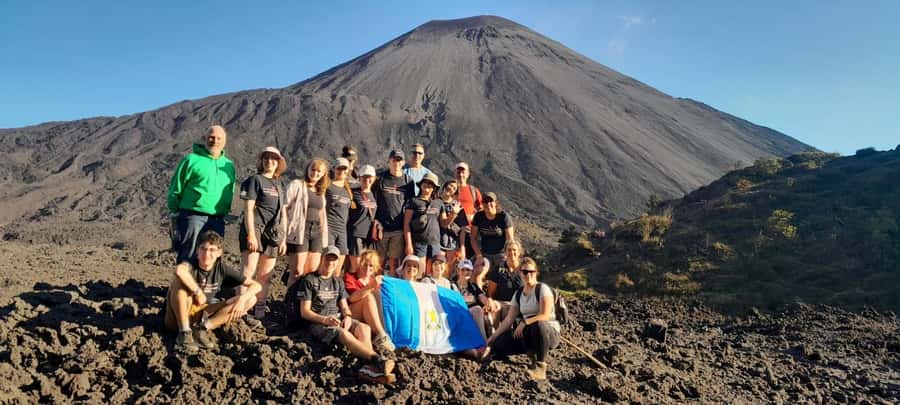
A volcano hike with a sweet reward. This six-hour trip from Antigua takes you into Pacaya Volcano National Park for a guided climb through forest, hardened lava, and steam vents. I like the excellent value and the chance to see Agua, Fuego, and Acatenango from one high viewpoint. I also like that the route includes a memorable stop for marshmallows warmed over volcanic steam.
The main catch is simple: this is not an easy stroll. The uphill sections are steep, the loose volcanic rock can make the descent slippery, and transport may feel cramped when the vans fill up. You also pay the $15 entrance fee separately, so the real basic cost is about $38 per person before food or a horse ride.
In This Review
- Key points to know before booking
- Leaving Antigua for Pacaya National Park
- Starting the hike through forest and volcanic soil
- Reaching the hardened lava and crater viewpoint
- Agua, Fuego, and Acatenango from the top
- Toasting marshmallows over volcanic steam
- Descending by a different route
- What the $23 price really covers
- Is the English guiding reliable?
- Who will enjoy this Pacaya hike?
- Should you book the Pacaya Volcano Tour?
- FAQ
- How long does the Pacaya Volcano tour take?
- What is included in the tour price?
- Is the Pacaya entrance fee included?
- Is the hike difficult?
- Can I ride a horse up Pacaya?
- Is the tour available in English?
Key points to know before booking
- The climb is short but strenuous: Expect roughly 45 minutes to 1.5 hours of uphill walking, with rest stops along the way.
- The route changes near the top: You hike through forest, then along dark volcanic rock and hardened lava toward a plateau facing Pacaya’s main crater.
- The views depend on weather: Agua, Fuego, and Acatenango can appear dramatically, or disappear behind clouds.
- Marshmallows are included: The steam vents warm and soften them, but they may not brown like marshmallows over a campfire.
- Horses are available locally: You can pay for a horse if the climb becomes too much, but expect repeated offers along the trail.
- Bring food and water: No meal is included, and several people found a snack useful during the uphill push.
Leaving Antigua for Pacaya National Park
Pickup is offered from 18 locations around Antigua, including hotels, hostels, cafés, and churches such as Ermita San Jeronimo and Ermita de Santa Lucia. That wide choice is useful because you do not need to cross town before sunrise or rush across Antigua to find a meeting point.
The driver collects people from several stops, so the departure may not feel instant. One pickup can also run late because of traffic or because the vehicle is gathering a full group. Allow some patience at the start. The return has 18 drop-off options as well, which makes the final ride easier after a tiring hike.
The bus ride takes about an hour in the itinerary, though the full trip can take closer to 1.5 hours each way once pickup stops and road conditions are counted. Some rides are comfortable, while others involve a packed vehicle or small jump seats. The road can also be bumpy. This is not a luxury transfer, but it gets you from Antigua to the park without arranging a separate taxi or private driver.
I would bring water and a small breakfast or snack before boarding. The tour provides no food, and there is no dependable meal stop built into the outing. Some morning departures may pause briefly for coffee or breakfast, but you should not rely on that as your main meal.
More things to do in Antigua Guatemala:
- From Antigua: Adventure, 2-Day Hiking to Acatenango Volcano
★ 4.4 · 1,189 reviews - From Antigua: Pacaya Volcano Trek
★ 4.4 · 798 reviews - Antigua Cultural Walking Tour
★ 4.5 · 725 reviews
Starting the hike through forest and volcanic soil
At the park entrance, you have time to stretch and use the restroom before meeting the local guide. The hike begins through a broad forested area, with regional plants and countryside views replacing the stone streets of Antigua.
The guide sets the pace and stops to explain the volcano and the surrounding area. The better guides stay with the slower members of the group, and the trip normally has support at both the front and back. Carlos, Karina, Leslie, and José received special praise for being patient and attentive. José was especially helpful with older hikers on a steep, loose descent, while Carlos and Karina were noted for letting everyone move at a comfortable pace.
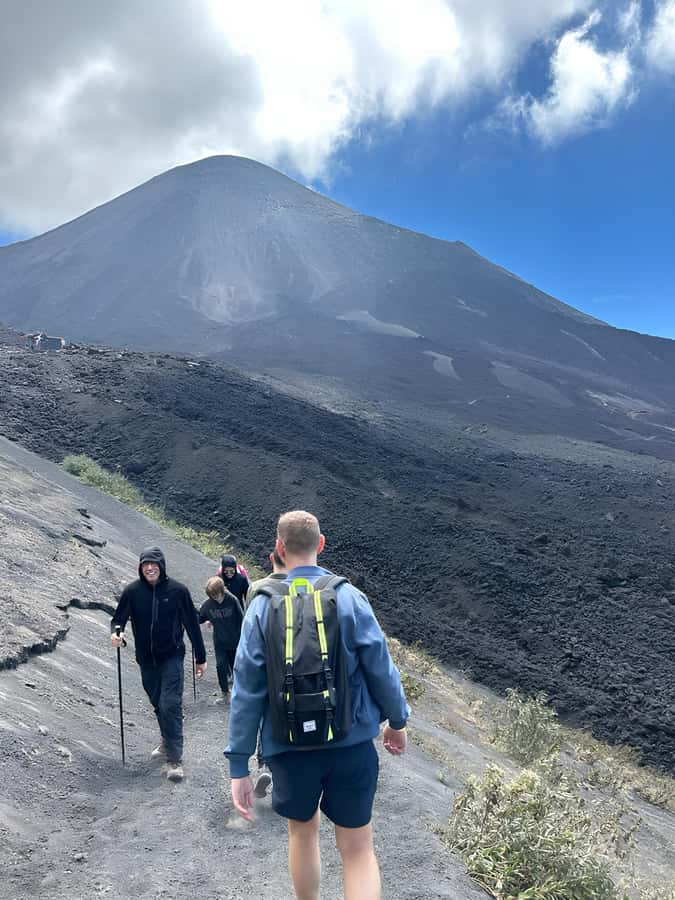
The trail itself is not technically difficult in the mountaineering sense. You do not need climbing equipment or advanced hiking skills. The challenge comes from the sustained uphill grade, altitude, heat, and loose ground. If you live in a flat area or rarely hike, the climb can feel much harder than its distance suggests.
Several rest stops make the climb manageable. You may see children and families on the trail, but family-friendly does not mean effortless. Children need to cope with the uphill section, and the tour is not suitable for babies under one year old. It is also not suitable for pregnant people or wheelchair users.
Reaching the hardened lava and crater viewpoint
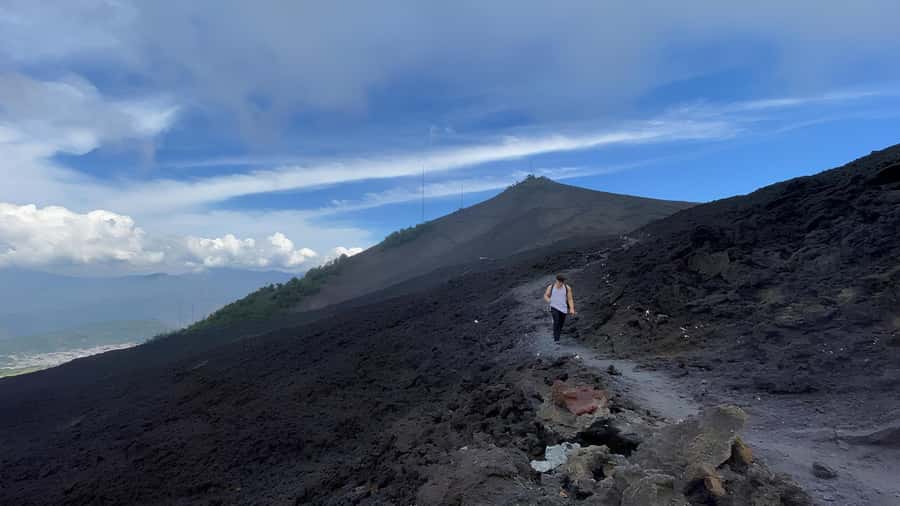
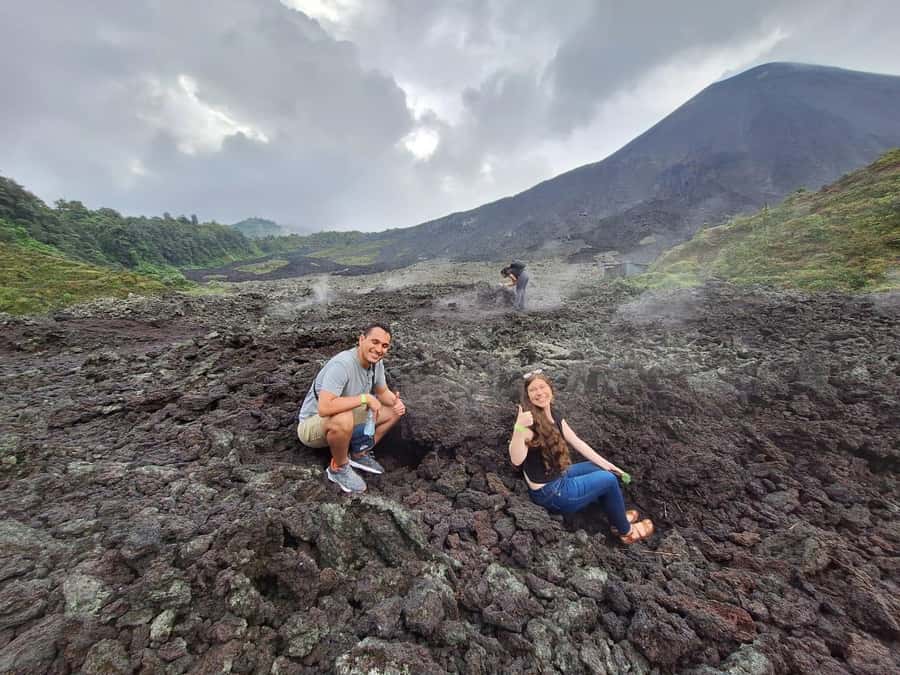
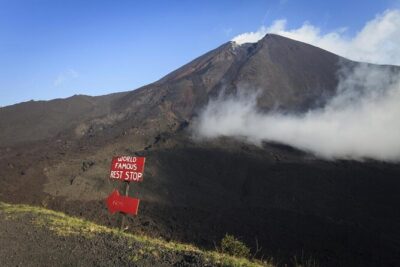
Higher up, the forest gives way to Pacaya’s volcanic terrain. You wind along rocky paths cut between walls and fields of hardened lava. This is the part that makes the outing feel different from a standard mountain walk. The ground is dark, rough, and visibly shaped by earlier eruptions.
Depending on Pacaya’s activity, you may see a lava flow or fresh signs of volcanic heat. The tour does not promise flowing lava, and conditions can change. You will, however, see steam vents and volcanic rock, which remain interesting even when clouds hide the distant crater.
The main crater is viewed from a plateau rather than reached directly. That distinction matters. This is a volcano experience, not a climb into the crater or an encounter with exposed molten lava. You still get a strong sense of the volcano’s power, especially when you hear its rumble in the distance and walk across rock formed by past eruptions.
The final sections can be steep. Good grip matters more than expensive hiking boots. Wear shoes with a firm sole and avoid smooth trainers. A simple wooden walking stick, often available near the entrance from local children for about Q10, can help with balance and takes pressure off your knees.
Agua, Fuego, and Acatenango from the top
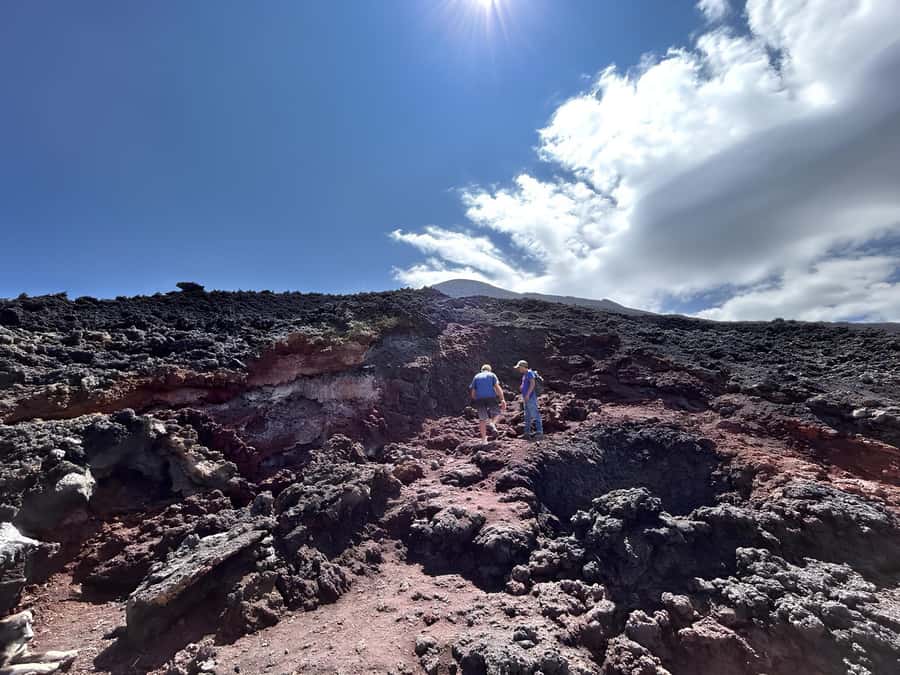
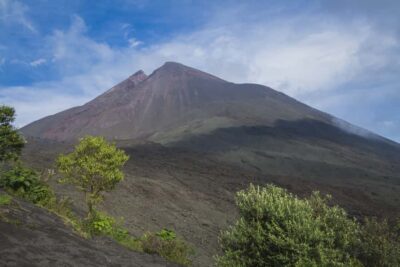
The reward is the view. From the upper area of Pacaya, you can look toward Agua, Fuego, and Acatenango, three of Guatemala’s famous volcanoes. On a clear day, the sight is broad and dramatic, with the volcanic terrain in the foreground and the larger peaks rising in the distance.
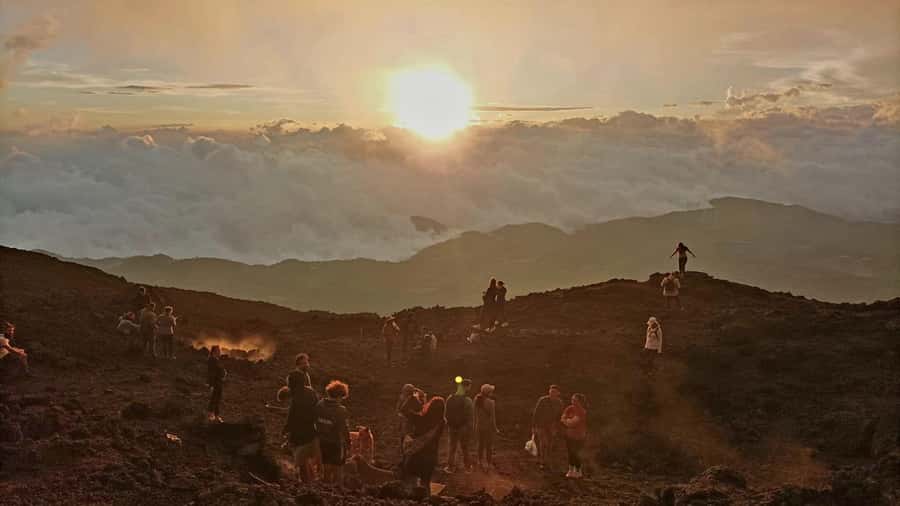
Weather controls how much you see. Clouds may cover the summits when you arrive, then shift quickly to reveal the view a few minutes later. Some people reached the top with no clear outlook but saw the volcanoes on the way down. Others caught a beautiful sunset from the afternoon departure.
For the best chance at warm evening light, choose the 2pm version if that time is available. The afternoon trip can return after dark, so carry a phone with a charged flashlight or bring a small torch. The sunset timing is a fine bonus, not a guarantee. Clouds and rain can change the view completely.
You should also allow time for the group to gather at the upper stops. Large groups can move at different speeds, and a slower hiker may have less time at the viewpoint if the schedule is tight. The guides generally provide breaks, but the amount of quiet time at the top can depend on pickup delays, group size, and weather.
More Pacaya volcano hikes:
- Hike to Pacaya Volcano from Antigua
★ 4.5 · 502 reviews - Pacaya Volcano ATV Tour
★ 5.0 · 244 reviews - Antigua: Pacaya Volcano ATV Tour
★ 4.6 · 120 reviews - ¡Pacaya Volcano Tour from Antigua!
★ 5.0 · 114 reviews
Toasting marshmallows over volcanic steam
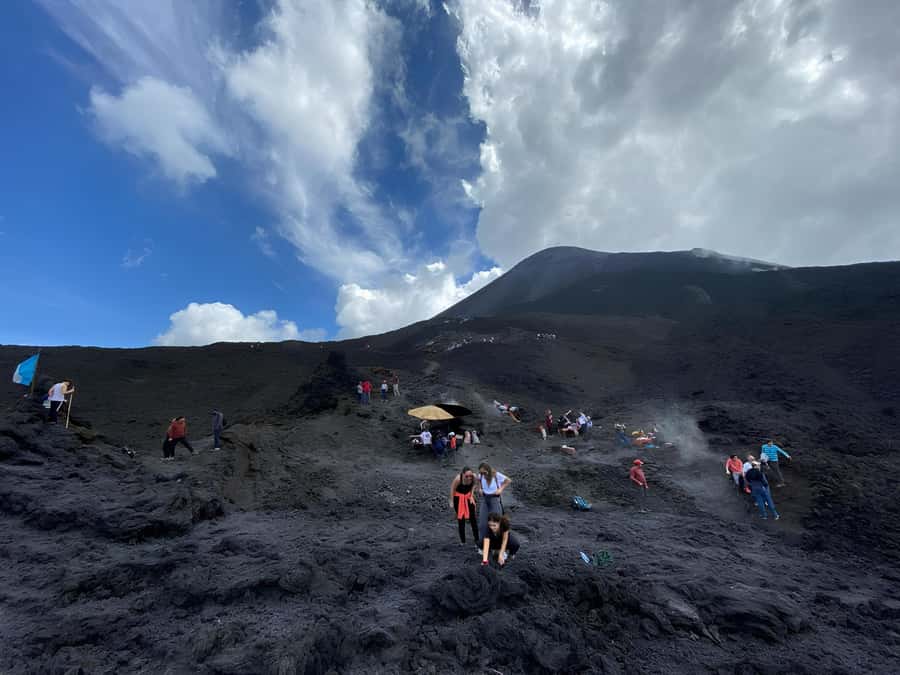
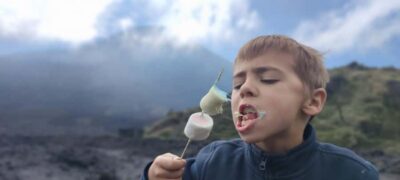
The marshmallow stop is the tour’s most playful feature. At a steam vent in the lava field, the guide provides marshmallows for you to warm over the volcanic heat. It is a small activity, but it gives you something to do while taking in the strange setting.
Do not expect a campfire-brown marshmallow. The vents often warm and soften the sweets rather than toast them properly. You may receive about two marshmallows, depending on the outing. They are still fun to eat, especially when you are standing on volcanic rock beside a steaming opening.
The vents can feel warm, but some people found the rocks less hot than expected. The point is not a dramatic cooking show. It is the novelty of using natural volcanic heat for a snack, and it creates an easy moment for photographs and conversation.
Food beyond the marshmallows is not included. Bring a sandwich, fruit, nuts, or another snack that can survive a hike. You should also carry enough water for the full outing.
Descending by a different route
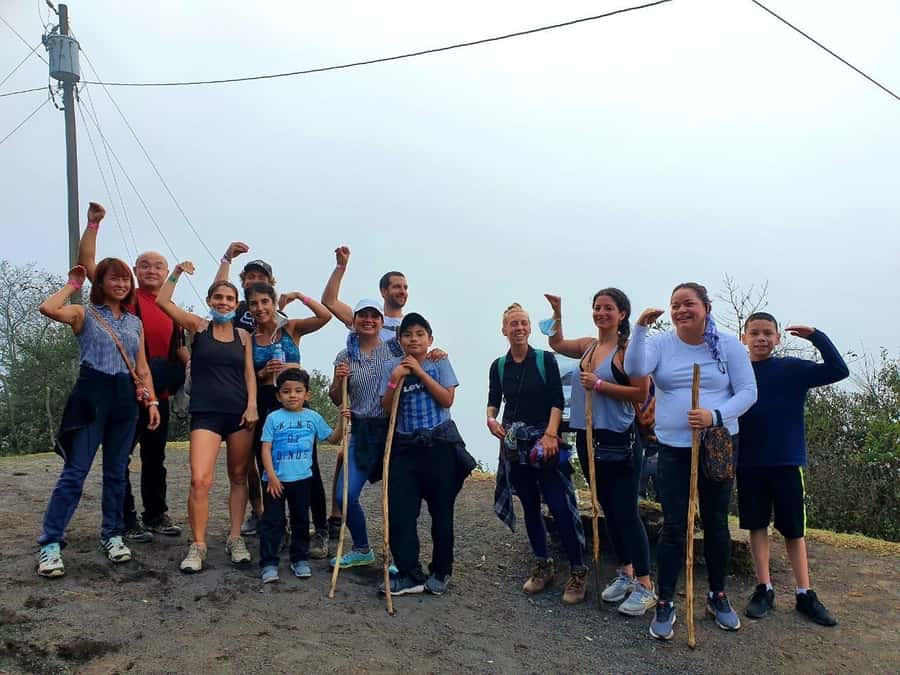
The descent is usually much easier on your lungs, but it has its own problems. Loose volcanic sand, pebbles, and rock can slide beneath your feet, especially on the steeper parts. The walking stick becomes useful here, even if you did not need it on the way up.
Some outings return by a different side of the volcano. This adds variety and gives you new views rather than sending you back over exactly the same ground. The route may also offer a clearer outlook as clouds shift. On an afternoon trip, the light can turn golden and the sunset may appear over the clouds.
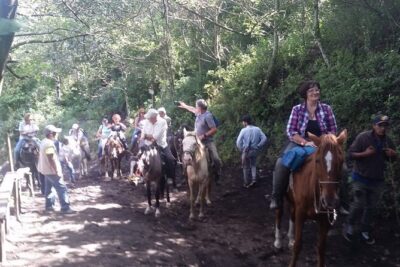
Horses accompany the group in case someone needs help. You can arrange a horse ride at the entrance or along the climb, and the cost varies by distance and local arrangement. Figures in the supplied experiences range from about Q200 for a ride to Q250 or Q300 in some cases, so confirm the price before accepting.
You do not need a horse if you are reasonably active and willing to take breaks, but it is sensible to treat it as a genuine backup. Several people used one after finding the altitude or steep grade harder than expected. If you prefer to walk, you may need to firmly decline repeated offers from the horse handlers. Horse droppings can also make parts of the trail unpleasant.
At the bottom, you return to the bus for the ride back to Antigua. Afternoon groups may finish the final stretch in fading light, so keep that flashlight handy. Drop-off follows the same general network of hotels, cafés, hostels, and landmarks used for pickup.
What the $23 price really covers
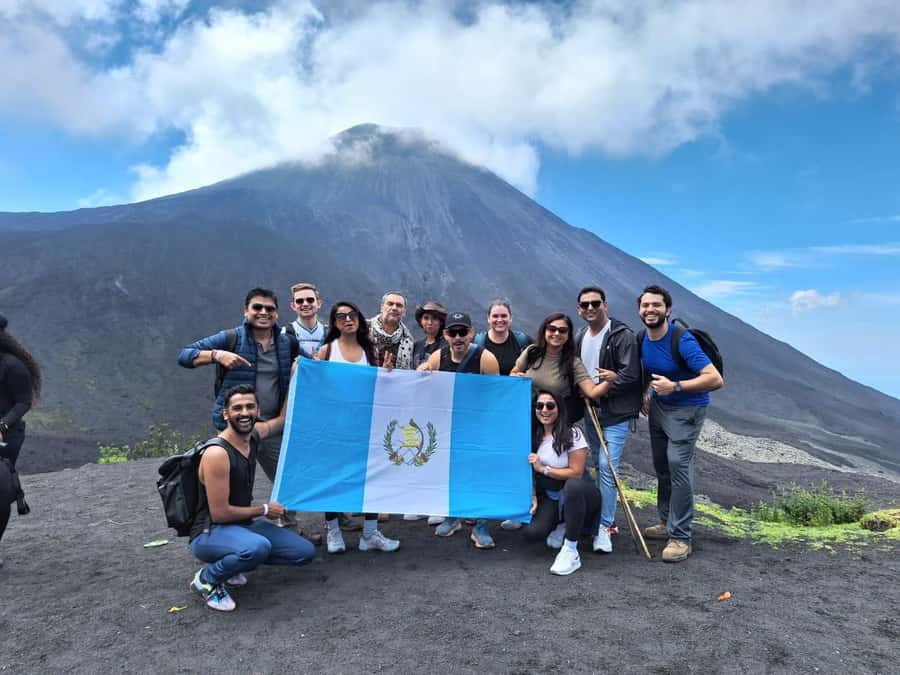
At $23 per person, the tour is priced well for a six-hour outing that includes roundtrip transport, hotel pickup and drop-off, a bilingual English and Spanish guide, and marshmallows. You also avoid the trouble of coordinating transport to a national park outside Antigua.
The mandatory entrance fee is extra: $15, or Q100. That brings the basic outing to roughly $38 per person. Food is not included, and a horse is an additional expense. A walking stick may cost around Q10 if you choose to rent or buy one locally.
That total remains good value if you want a one-day volcano experience without committing to the much longer two-day Acatenango trek. Pacaya gives you volcanic rock, steam, views, and a real uphill workout in a single day. You should not book it expecting a private tour or spacious transport at this price. Groups can be large, and the bus may be full.
The strongest value comes from the combination of convenience and variety. You get nature, geology, mountain views, local guides, and a memorable food stop in one half-day outing. If your main goal is guaranteed lava or a quiet summit, the price may not compensate for the uncertainty.
Is the English guiding reliable?
The experience is sold with live guiding in English and Spanish. English ability can vary by guide, however. Some guides explain the volcano and local area clearly in English, while others speak mostly Spanish and use gestures or simple explanations.
If you need detailed English commentary, ask for an English-speaking guide when you meet the group. Do not assume every guide will give a full English talk throughout the hike. The practical safety support is still useful even when the commentary is limited, and the guides generally check on people who are struggling.
Names that have been associated with especially strong care include Carlos, Karina, Leslie, and José. Your guide may be someone else, but the best service looks the same: a steady pace, regular rests, a leader at the front, and someone keeping an eye on the back.
Who will enjoy this Pacaya hike?
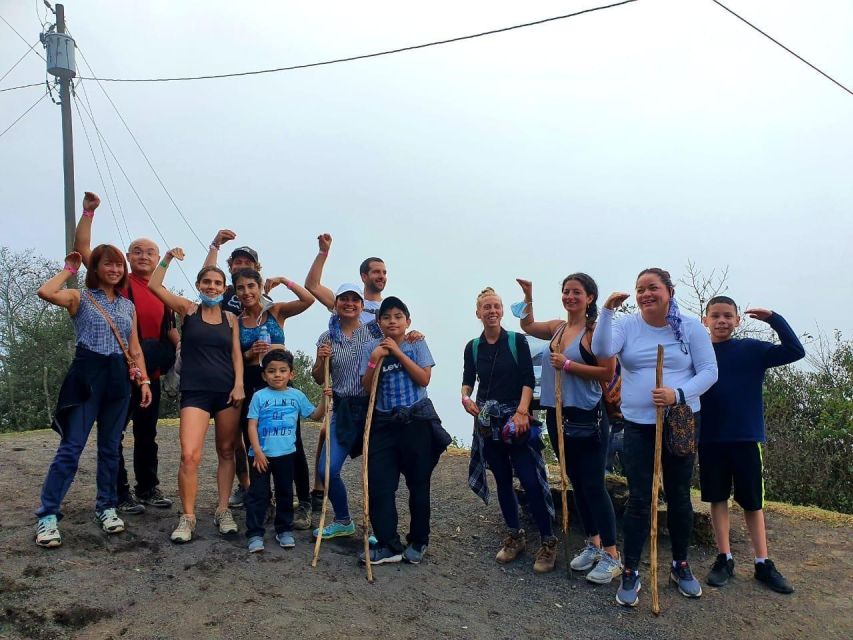
I would choose this trip if you want to see a Guatemalan volcano but do not want a two-day mountain expedition. It suits active families with older children, casual hikers who can manage a steep climb, couples looking for a sunset outing, and anyone who prefers a guided day trip from Antigua.
You should think twice if you have knee, balance, or serious mobility problems. The trail includes steep uphill sections and a loose, slippery descent. A horse may help with the climb, but it does not turn the outing into an accessible excursion.
Pack:
- Shoes with strong grip
- Water and a filling snack
- Sunscreen and a sun hat
- A light jacket or sweater
- A phone flashlight for a late afternoon return
- A walking stick if you prefer extra balance
The temperature can change between the sunny lower trail and the cooler upper area. A light coat is a better choice than heavy clothing, since you may warm up quickly on the climb.
Should you book the Pacaya Volcano Tour?
Yes, if you want a manageable alternative to Acatenango and understand that manageable still means steep. The volcano views, lava field, steam vents, and marshmallow stop make this more than a routine hike, and the $23 tour price is strong once you know to budget separately for the entrance fee.
Book it for the natural setting and the chance of clear views, not for guaranteed lava or perfect weather. Choose the afternoon departure for a possible sunset, bring good shoes and food, and keep a horse ride in reserve if your legs or lungs say enough. If a full vehicle and variable English commentary would bother you, consider a private outing instead. For most fit visitors based in Antigua, this is a memorable and fairly priced day outside town.
FAQ
How long does the Pacaya Volcano tour take?
The activity lasts about six hours, including transport from Antigua, the guided hike, time around the volcanic area, and the return journey.
What is included in the tour price?
The price includes hotel pickup and drop-off, roundtrip bus transportation, a bilingual guide, and marshmallows for warming over a steam vent.
Is the Pacaya entrance fee included?
No. The entrance fee is separate and costs $15, listed locally as Q100. Food and horse rides are also not included.
Is the hike difficult?
The hike is moderately challenging, with steep uphill sections and loose volcanic ground. Rest stops are provided, but you should have a basic level of physical fitness and wear shoes with good grip.
Can I ride a horse up Pacaya?
Yes. Local horse handlers offer rides as an optional service, including during the climb. Prices vary, so confirm the cost before agreeing. You can also complete the hike on foot.
Is the tour available in English?
Yes. The tour offers live guiding in English and Spanish. English ability can vary by guide, so ask for an English-speaking guide if you need detailed explanations.
Just added in Antigua Guatemala
- Full day Antigua Guatemala from Quetzal Port★ 4.5 · 7 reviews
- Private transfer from Panajachel to Antigua Guatemala★ 5.0 · 2 reviews
- Guatemala Airport Roundtrip Transfer to Antigua Guatemala★ 3.5 · 5 reviews
- Colonial Antigua Guatemala walking tour & Hot Springs from Guatemala City★ 3.0 · 2 reviews
- Antigua Guatemala Full Day Tour★ 3.0 · 2 reviews
- Visit Antigua Guatemala and its colorful towns around – Private full-day tour★ 4.5 · 4 reviews
- Airport Transfer to Antigua Guatemala★ 3.0 · 2 reviews
- Iximché : Spiritual Ritual with a Mayan Priest★ 5.0 · 1 review
Pacaya Volcano Hikes, compared.
Marshmallows Roasting at Pacaya Volcano 6-hour Tour
Read our review →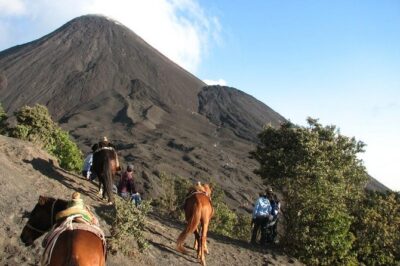
From Guatemala City or Antigua: Pacaya Volcano Day Tour
Read our review →Browse the lists this tour appears in