
Review · WALKING TOURS
Guatemala city Walking Tour and public bus
Guatemala City rewards a closer look. This two to two-and-a-half-hour outing links the modern Centro Cívico with the old streets of Zone 1, using public transport to cover more ground than a walking tour alone. I like the easy start at the Westin Camino Real, the clear finish at Plaza de la Constitución, and the chance to see the city in the same way many residents do.
I also like the small maximum of 15 people, the included bus fare, and the strong 4.8 rating from 63 reviews, with 97 percent recommending the experience. The main thing to consider is the pace: some stops receive only a short explanation, while the overall route can feel slow if you prefer to move quickly.
- A rare look at Guatemala City by public bus: Your fare is included, and the guide helps you use local transport rather than keeping you inside a private vehicle.
- A route from modern government buildings to old Zone 1: You see the Centro Cívico, churches, post office, National Palace, cathedral, market, and Sixth Avenue in one outing.
- Guides Armando and Fidencio receive especially warm praise: Both are described as friendly, informative, and patient, with Armando adding personal insight from his work in the city and as a former firefighter.
- Central Market is one of the strongest stops: You have time to look around, and you may choose to eat there afterward, though lunch is not included.
- The route ends in the best place for further exploring: Plaza de la Constitución puts you beside the cathedral, National Palace, Central Market, and other central sights.
- The $30 price is fair for a first orientation: It combines a guide, public transport, and a broad route, but coffee, lunch, and admissions are extra.
In This Review
- Starting at Centro Cívico with a useful city lesson
- Seeing the Miguel Ángel Asturias connection
- The National Typography and Guatemala’s printed voice
- El Calvario and San Francisco, two very different churches
- The old Post and Telegraph Building
- Casa Ibargüen and the slower part of Zone 1
- Plaza de la Constitución, the heart of the route
- The cathedral and the story of a changing capital
- Central Market, where the route feels most local
- Finishing with coffee on Sixth Avenue
- How the public bus changes the experience
- The guides and the value of local knowledge
- Is $30 a fair price?
- What to bring and how to plan the day
- Who should book this Guatemala City route?
- Should you book it?
- FAQ
- Where does the Guatemala City walking tour begin?
- Where does the tour finish?
- Is public transportation included?
- Are food, coffee, or tea included?
- How many people can join the tour?
- Can I cancel for a full refund?
Starting at Centro Cívico with a useful city lesson
The meeting point is outside the Westin Camino Real on Avenida La Reforma, and the scheduled start is 10:30 a.m. This is a practical arrangement for anyone staying in the hotel zone because you do not have to find a small street or a hard-to-identify monument.
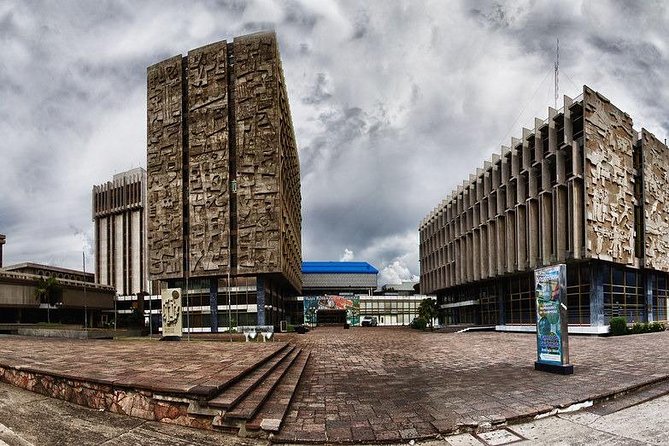
From there, the route reaches Estación Centro Cívico. In this part of the city, the focus is on the large public buildings around the station: City Hall, Banco de Guatemala, Banco Crédito Hipotecario Nacional, and the Social Security offices.
You are not simply ticking off façades. This is where the guide can explain how the capital functions today, and it gives you a useful contrast with the colonial center later in the morning. The Centro Cívico also connects to the Guatemalan Cultural Center Miguel Ángel Asturias, whose construction and creative development were overseen by the engineer Recinos.
The listed stop lasts about 15 minutes, and admission is not included. The route appears designed mainly for exterior viewing, so do not expect a long indoor museum visit at this point.
Seeing the Miguel Ángel Asturias connection
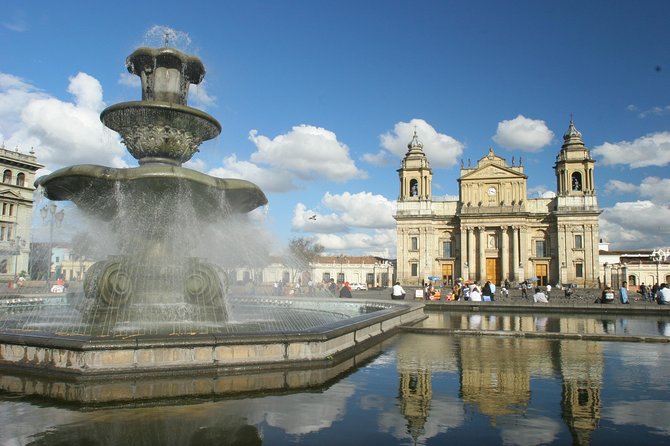
The mention of Recinos Engineer adds a welcome architectural note to the tour. The Guatemalan Cultural Center Miguel Ángel Asturias is not just another building on the route. Its planning and construction reflect the city’s modern cultural ambitions and its interest in large civic projects.
This is one of the places where a guide adds real value. On your own, you might photograph the building and move on. With a guide, you can connect the structure to Guatemala City’s public institutions and to the political period in which several major buildings were developed.
The tour information does not promise entry to the cultural center, so plan on learning from the outside unless the guide says otherwise. That keeps the route moving, but anyone looking for a full architectural visit should make a separate plan.
More things to do in Guatemala City:
- Private Shuttle in Guatemala
★ 5.0 · 262 reviews - Guatemala City Tour
★ 5.0 · 256 reviews - PRIVATE SHUTTLE AIRPORT/ANTIGUA – LAKE ATITLAN or VICEVERSA
★ 5.0 · 220 reviews
The National Typography and Guatemala’s printed voice
The next major stop is the Dirección General del Diario de Centro América y Tipografía Nacional. The first National Typography building operated from 1894 to 1918 on what was then called Hospital Street, at 2nd South Avenue and 10th Street.
In 1935, President Jorge Ubico ordered a new building for the National Typography. The current structure connects the printed word with the government’s role in communication. A 20-minute stop gives the guide enough time to explain that shift without turning the outing into a long lecture.
I find this kind of stop useful because it takes you beyond the most obvious churches and plazas. Newspapers, official printing, postal systems, and telegraphs all reveal how a capital city organized public life. The building may be less immediately familiar than the cathedral, but it helps explain the city you are walking through.
Again, admission is not included. Treat this as an exterior and historical explanation rather than a formal museum visit.
El Calvario and San Francisco, two very different churches
The Parroquia Rectoral Nuestra Señora de los Remedios, commonly called El Calvario, is scheduled for a 10-minute stop. Its story includes a major change to the city itself.
The original church stood at the top of Cerro del Cielito, at the end of Sixth Avenue in the Historic Center. In 1936, the building became the National Museum of History, and it was later demolished to allow one of Guatemala City’s main roads to expand.
That loss gives the stop more weight than its short timing suggests. You are looking at a church connected not only to religious life but also to urban change, road building, and the reshaping of central Guatemala City.
The route then continues to Iglesia San Francisco, another 10-minute stop. This Catholic temple belongs to the conventual Franciscan friars and forms part of the territory of the Parish of Our Lady of Remedies.
The two churches work well together. El Calvario shows how the city changed around an older religious site, while San Francisco remains a working Catholic place in the Historic Center. If you want detailed interior visits, the time may feel limited. If you want a broad introduction to the city, the short stops keep the route varied.
The old Post and Telegraph Building
The General Directorate of Posts and Telegraphs is one of the route’s most distinctive civic buildings. Formerly called the Palacio de Comunicaciones, it was designed by Rafael Pérez de León and Enrique Riera during the government of Jorge Ubico.
Construction began in 1938. The first phase opened two years later as part of a birthday celebration for the president, and two more phases followed over the next five years.
The building gives you a quick lesson in how governments use architecture to project order and authority. It also links Guatemala City to an earlier age of communication, when postal services and telegraphs were central to business and public administration.
The stop lasts about 15 minutes. That is enough for a clear explanation and some photographs, but not a full tour inside. Since no admission is included, you should expect to remain outside unless an additional arrangement is made.
More walking tours in Guatemala City:
- Guatemala City: Walking Tour
★ 4.9 · 42 reviews - Guatemala city walking tour only weekends. 2 persons and up
★ 4.5 · 11 reviews - Graffiti Walking Tour in 4 Grados Norte Guatemala City
★ 5.0 · 9 reviews - Historic and Cultural Tour of Guatemala City – Panoramic & Walking Experience
★ 4.5 · 4 reviews
Casa Ibargüen and the slower part of Zone 1
Casa Ibargüen receives the longest scheduled stop before the main plaza, about 30 minutes. The building was once the Beltranena palace, constructed in 1778, and now houses the Foundation of the Historic Capital Center.
This is a good place to slow down. The change from a private palace to a foundation linked to preservation reflects the wider effort to care for the old center and give historic buildings a useful modern role.
The longer stop may help families and first-time visitors who want time for questions. It may frustrate you if you prefer a brisk walk, especially since one review described the whole outing as moving too slowly and suggested it could have taken half the time.
That criticism is worth taking seriously. The advertised duration is roughly two to two-and-a-half hours, yet the listed stop times add up to a longer, more relaxed experience. The exact length may depend on bus connections, group size, and how much explanation your guide gives. If your schedule is tight, confirm the expected finish time before booking.
Plaza de la Constitución, the heart of the route
Plaza de la Constitución is the natural center of the experience. Also called Central Park, it is Guatemala’s largest square and is surrounded by the National Palace to the north, the Metropolitan Cathedral to the east, the Portal of Commerce to the south, and Centennial Park and the National Library to the west.
This is where the city’s public life gathers. Independence celebrations, parades, concerts, speeches, protests, and student events connected with the Huelga de Todos los Dolores have all used the plaza.
The main entrance of the National Palace is also considered kilometer zero for roads across the Republic of Guatemala. That small detail gives the square a practical role as well as a symbolic one.
The tour allows about 15 minutes here. That is enough for an orientation and a look at the main buildings, but you will probably want to stay longer after the guide leaves. The end point is a major strength because you are already positioned for independent exploration.
The cathedral and the story of a changing capital
Catedral Metropolitana de Santiago de Guatemala sits beside the plaza and brings together religion, government, disaster, and national change. The cathedral has endured more than 200 years that included two major earthquakes, independence, and a revolution.
Its Carrara marble altar was installed on July 23, 1860. That detail gives the interior and furnishings a direct connection to the period when Guatemala City was developing into the country’s central political and religious seat.
The scheduled visit is about 15 minutes, and admission is not included. The guide can set the building in context, but you should not expect an extended cathedral tour. If the doors are open and you want more time, stay after the official route ends.
For me, this stop works best when paired with the National Palace and the plaza. Together, they show how religious and political power shared the same public square.
Central Market, where the route feels most local
Mercado Central is likely the most rewarding stop for anyone who wants daily city life rather than only grand buildings. The market’s story reaches back to the years before Guatemala’s independence.
The area east of the cathedral once included an abandoned square called the old Plazuela de El Sagrario, a partly ruined chapel, and a cemetery that had become overcrowded after the capital moved to the Valley of La Ermita. Dr. Mariano Gálvez proposed turning the unhealthy square into a market.
That plan met serious problems. Authorities had to move the cemetery, and the premature exhumation of newly buried bodies was linked at the time to an outbreak of morbid cholera. Church officials also resisted because the land was considered sacred and belonged to the Church.
The stop lasts about 20 minutes. I would use the time to watch, listen, and follow the guide’s advice about where to walk. One family used the visit as a chance to eat lunch at the market like local residents. That is not part of the $30 price, but it may be a sensible way to continue the experience after the formal tour.
Lunch is not included, and the same applies to drinks. Keep some extra money available if you want to eat or buy something.
Finishing with coffee on Sixth Avenue
The final stop is San Martín in the Historic Center, located in the old Pavón House on Paseo de la Sexta and 10th Street. The building was revitalized to house a bakery and restaurant from the San Martín chain.
The planned finish includes a moment for a cup of Guatemalan coffee. Coffee and tea are not included in the tour price, so think of this as an optional pause rather than a prepaid tasting.
This ending is comfortable and practical. After several civic buildings, churches, and market lanes, you get a place to sit, ask final questions, and decide what to do next. You are also close to the central sights, so it is easy to continue walking after the guide departs.
How the public bus changes the experience
The included public transportation is more than a way to save money. It gives you a short look at ordinary movement through Guatemala City and helps you understand the distance between the modern hotel district, Centro Cívico, and Zone 1.
The tour begins at the Westin Camino Real and ends at Plaza de la Constitución, so the route does not leave you searching for a distant finish point. The guide can also take you to the Transmetro and point out where to get off for the hotel area.
That final help matters if you are not familiar with Guatemala City’s bus system. You still need to pay attention, stay with the group, and follow local guidance, but the structure makes the first ride less intimidating.
The tour has a maximum of 15 people. Smaller groups make it easier to hear explanations in busy streets and ask questions. On quieter dates, the group may be much smaller. One couple had a private outing because they were the only people booked that day, while a family with a small child also received a private tour.
The guides and the value of local knowledge
Armando receives especially strong praise for his friendly manner and broad understanding of the city. His background working in Guatemala City and as a former firefighter gave one private group useful personal context about the capital, government structure, Mayan history, and architecture.
Fidencio also made a strong impression with a family traveling with a small child. He answered questions patiently, helped the family feel comfortable, and handled the public bus portion with care.
The experience depends heavily on the guide. This is not a self-guided audio route where every stop will feel the same. A good guide can turn a building façade into a clear story, while a slower or less focused presentation may make the short stops feel drawn out.
English is available based on the comments from the tour, and one visitor specifically praised the guide’s good English. The provider is GTM Tour Guide and Travel Services.
Is $30 a fair price?
At $30 per person, the tour offers reasonable value if you want orientation, transport, and local explanation in one package. Your bus fare is included, and the route covers a wide section of the capital in less than half a day.
The value is strongest for first-time visitors, people staying around Avenida La Reforma, and anyone who does not want to work out the public bus route alone. You also avoid spending time deciding which Zone 1 sights fit together.
The price does not cover coffee, tea, lunch, or admission tickets. Since the route appears focused on exterior viewing and short stops, you are paying mainly for the guide and the route design, not for paid attractions.
I would compare the cost with the price of arranging separate transport and a private guide. For a small group, the included bus ride and broad coverage make the fee sensible. For someone who already knows Zone 1 and prefers a fast walk, the value is weaker.
What to bring and how to plan the day
Wear comfortable shoes. The route combines walking, standing, public transport, and stops on hard urban surfaces.
Bring water, sunscreen, and a hat. The heat was a clear concern for one group, and the route includes open plazas and outdoor viewing. You should also carry money for coffee or food because neither is included.
Leave room in your schedule after the official finish. Plaza de la Constitución is a strong base for more time at the cathedral, National Palace area, Central Market, or nearby streets. The guide can help direct you toward the Transmetro for the hotel zone.
Confirmation arrives at booking, and most people can participate. The tour requires suitable weather and a minimum number of bookings. You can cancel for a full refund up to 24 hours before the start time. A weather or minimum-booking cancellation offers a different date or a full refund.
Who should book this Guatemala City route?
I would recommend it to first-time visitors who want a quick but meaningful introduction to Guatemala City. It suits people who enjoy architecture, public squares, churches, civic buildings, and market life more than a polished sightseeing bus.
It also works well for families, especially if you appreciate a patient guide and a small group. The private outings reported with Armando and Fidencio show how flexible the experience can feel on a quiet date.
I would be more cautious if you have only a narrow window before a flight or another fixed appointment. The itinerary includes many stops, and the pace can vary. Ask about the expected finish time if every minute matters.
Should you book it?
Book this tour if you want to understand how Guatemala City fits together, not simply photograph its best-known buildings. The public bus, Central Market, churches, civic architecture, and final stop at Plaza de la Constitución create a useful first-day introduction.
Skip it if you want long indoor visits, a fast-moving checklist, or a tour built around included food and drinks. For most first-time visitors, though, the $30 cost is justified by the route, local transport, and access to guides such as Armando and Fidencio. I would book it early, since the experience is often reserved about 15 days ahead, and I would keep the rest of the day open for more time in Zone 1.
FAQ
Where does the Guatemala City walking tour begin?
It begins at the Westin Camino Real on Avenida La Reforma in Guatemala City. The scheduled start time is 10:30 a.m.
Where does the tour finish?
The tour ends at Plaza de la Constitución in central Guatemala City. From there, you have your own time to continue walking, and the guide can direct you to the Transmetro for the hotel area.
Is public transportation included?
Yes. Public transportation is included in the $30 tour price.
Are food, coffee, or tea included?
No. Coffee, tea, and lunch are not included. The route finishes with an optional coffee stop at San Martín, and you may also choose to eat at Central Market.
How many people can join the tour?
The maximum group size is 15 people. On some dates, the group may be smaller or even private if no other bookings are made.
Can I cancel for a full refund?
Yes. You can cancel at least 24 hours before the local start time for a full refund. Poor weather or failure to meet the minimum number of bookings may also result in an alternative date or a full refund.
Just added in Guatemala City
- Shared Transport from Panajachel, Lake Atitlan to Guatemala City★ 3.0 · 3 reviews
- Graffiti Walking Tour in 4 Grados Norte Guatemala City★ 5.0 · 9 reviews
- Adventure in Lake Atitlan Zip lines and towns. Overnight.★ 5.0 · 1 review
- Tour of Scenic Villages: Santa Catarina and San Antonio Palopó★ 5.0 · 1 review
- Tikal Hart of Mayan World by air.★ 4.0 · 8 reviews
- Private Transportation from Guatemala City to La Antigua★ 4.5 · 10 reviews
- Tikal and Yaxha Overnight Trip by Air from Guatemala City★ 5.0 · 10 reviews
- Transfer from Airport to Antigua★ 5.0 · 4 reviews
Walking Tours, compared.
Antigua Classic Cultural Walking City Tour – the best
Read our review →
Walking Tour of the Wonders of La Antigua Guatemala
Read our review →
Browse the lists this tour appears in