
Review · WALKING TOURS
Walk Antigua Like a Local
Antigua makes its first impression on foot. This half-day walk brings you to major sights such as Central Park, San Francisco Church, Santo Domingo, La Merced, and the Santa Catalina Arch, while guides add useful context about food, architecture, Mayan traditions, and daily life. I like the broad mix of stops, and I also like that guides such as Roberto, Carlos, Felix, Esteban, Tony, and Manuel have adapted the route to personal interests.
At $32 per person, the tour offers solid value if you want a fast introduction to Antigua rather than a long museum visit. Bottled water, all taxes, and an artisanal beer tasting are included. The main consideration is the pace: you may walk a lot in three to four hours, and lunch is not included. Good shoes matter.
In This Review
- What makes this Antigua walk worthwhile
- Starting at Central Park at 9:00 am
- San Francisco El Grande and Guatemala’s only saint
- Santo Domingo ruins and a convent reborn
- La Merced’s earthquake-ready Baroque design
- The Santa Catalina Arch and the classic Antigua photograph
- Chocolate, cacao, and local flavors
- Jade and the meaning of a Guatemalan stone
- A guide who adds more than dates
- Walking distance, group size, and the real pace
- What $32 includes, and what it does not
- Who should book this half-day walk?
- Should you book Walk Antigua Like a Local?
- FAQ
- Where does the tour start?
- What time does the tour begin?
- How long does the experience last?
- Where does the tour end?
- Is lunch included?
- What is included in the $32 price?
- Can I cancel for a full refund?
What makes this Antigua walk worthwhile
- A useful first-day route: See Antigua’s central sights in one morning and get your bearings quickly.
- Local guidance: Guides explain architecture, religion, food, coffee, Mayan customs, and practical matters such as ATMs and places to eat.
- More than churches: The route adds Santo Domingo ruins, chocolate tasting, jade, and possibly a market or chicken-bus ride.
- Small-group format: The maximum group size is 15 people, large enough for a social outing but still manageable on foot.
- Good value at $32: Fees, water, and an artisanal beer tasting are included, though you pay separately for lunch and the San Francisco Church admission.
- A flexible feel: Guides have adjusted outings for personal requests, making the walk useful for solo visitors, couples, friends, and families.
Starting at Central Park at 9:00 am
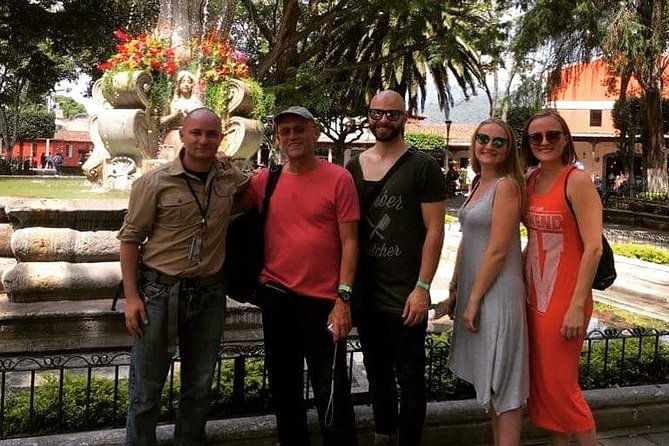
The tour starts at Casa de la Mandarina on 2a Calle Poniente at 9:00 am and returns there at the end. Beginning in the center of Antigua makes sense. Central Park, or Parque Central, is the city’s main reference point, surrounded by the municipal building, the former palace, religious buildings, and the Cathedral.
You get about 20 minutes here. That is enough time to look around, hear why the square has long been Antigua’s main meeting place, and watch the city wake up. Vendors, people meeting friends, and coffee or juice stops give the park a practical role beyond sightseeing.
I would pay attention to the rhythm of the square rather than treating it as a quick photo stop. On weekends, activity increases, and the park becomes especially good for people-watching. It is also the place where the guide can begin explaining how colonial Antigua was organized around civic and religious buildings.
The park is free, and you do not need a ticket. Since the tour returns here at the end, you can also use the starting point to plan the rest of your day.
More Walking Tours in Antigua Guatemala
- Antigua Cultural Walking Tour
★ 4.5 · 725 reviews - Antigua Guatemala: City Highlights Guided Walking Tour
★ 5.0 · 462 reviews - Antigua Classic Cultural Walking City Tour – the best
★ 4.5 · 227 reviews
San Francisco El Grande and Guatemala’s only saint
San Francisco El Grande Church is one of the more meaningful stops because it combines architecture with a specifically Guatemalan story. The church suffered serious damage in the earthquakes of 1874 and 1917. It was later rebuilt during the second half of the 20th century after religious orders were again allowed to own property in Guatemala.
The Franciscans returned in 1960 and began a restoration that focused on creating a structurally sound church. That approach was controversial because restoration can involve a choice between preserving damaged remains and rebuilding a usable religious space. Your guide can help you read the building with that question in mind.
The main reason for the visit is the tomb of Pedro de San José de Betancur, known as Guatemala’s only saint. He was a Franciscan monk who founded a hospital for poor people in Antigua. His story gives the church a human focus, moving the stop beyond walls, arches, and earthquake damage.
Allow about 25 minutes. Admission is not included, so confirm the current entrance cost before you set out. That extra charge is small compared with the value of the explanation, but it is still worth knowing about when you are comparing the tour price with a free self-guided walk.
Santo Domingo ruins and a convent reborn
Casa Santo Domingo offers a different look at Antigua. In the 17th century, the Convent of Santo Domingo was among the largest in the Americas. The 1773 Santa Marta earthquake destroyed almost all of it.
Today, the site has developed into Hotel Museo Spa Casa Santo Domingo. Its rooms, ruins, and museum spaces connect pieces of the old complex with modern use. You spend about 20 minutes here, with admission listed as free for this experience.
I like this stop because it shows how Antigua handles its damaged colonial buildings. The ruins are not simply left as empty shells, but they are not erased either. The site lets you see how religious buildings, museums, hotels, and preserved fragments can occupy the same historic setting.
Twenty minutes is enough for an introduction, not a full museum visit. If you are especially interested in the collections or want to examine every ruin carefully, you may wish to return independently later. The tour gives you the setting and the main story, then keeps moving.
La Merced’s earthquake-ready Baroque design
La Iglesia de la Merced is one of Antigua’s best-known churches. Its Baroque design is easy to recognize, but the most interesting feature is practical: the bell towers are unusually low.
That was not an accident. Antigua sits in an earthquake-prone region, so the church was designed with a lower profile to reduce the risk of damage. This is the kind of detail that makes a walking guide useful. Alone, you might admire the yellow facade. With an explanation, you understand why it looks the way it does.
The church sits in the heart of the city, so it fits naturally into a walking circuit. The information provided does not give a separate time allowance or admission policy for La Merced. Plan to see it as part of the route rather than assuming you will have a long interior visit.
More things to do in Antigua Guatemala:
- From Antigua: Adventure, 2-Day Hiking to Acatenango Volcano
★ 4.4 · 1,189 reviews - From Antigua: Pacaya Volcano Tour in English/Spanish
★ 4.5 · 930 reviews - From Antigua: Pacaya Volcano Trek
★ 4.4 · 798 reviews - Antigua, Guatemala: Volcano Acatenango Overnight Hiking
★ 4.6 · 645 reviews
The Santa Catalina Arch and the classic Antigua photograph
The Santa Catalina Arch is Antigua’s signature image, a yellow arch often framed by Volcán de Agua on clear days. It was built in the 17th century to connect the Santa Catalina Convent with a school.
The passage allowed cloistered nuns to move between buildings without going outdoors. That small architectural solution tells you something about convent life and the strict rules that shaped it. The arch, cloister, and church nave form the former convent complex of Santa Catalina Virgen y Mártir.
This is likely to be one of the busiest photo stops on the route, especially when the volcano is visible. You will want to look up at the arch, but also listen for the explanation of why it was built. The photo is memorable, yet the original purpose is what gives the monument meaning.
If the sky is clear, Volcán de Agua provides the ideal backdrop. If clouds cover it, the arch remains worth seeing, but the famous composition may not be available. Since the experience requires good weather, poor conditions can lead to a new date or a full refund.
Chocolate, cacao, and local flavors
The Chocolate Museum adds a welcome change from churches and colonial ruins. Here, you learn about cacao’s history, the cacao tree, and its importance in Guatemala. The museum also has an artisanal factory producing chocolate from organic Guatemalan cacao beans.
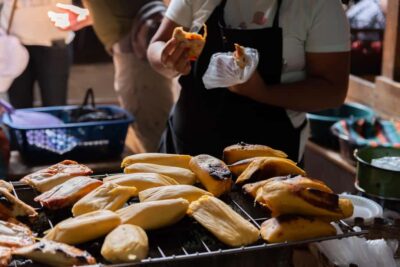
You sample several kinds, from pure dark chocolate to blends flavored with cardamom, cinnamon, and coffee. These tastes make the stop more than a short retail visit. They connect a familiar food to local agriculture, traditional flavor combinations, and Guatemala’s place in the wider story of cacao.
I would treat this as both a cultural stop and a pleasant break in the walking route. The information supplied does not specify how many samples you receive or whether purchases are expected, so plan to enjoy the tasting without assuming a full workshop.
This is also one of the better stops for families and anyone who prefers culture with a hands-on element. The chocolate gives you something concrete to remember, and the local flavors may help you notice similar ingredients in Guatemalan drinks and cooking later in your visit.
Jade and the meaning of a Guatemalan stone
The jade stop introduces a material with a very long connection to human culture. Jade has been used for more than 5,000 years in China and Mesoamerica for ornaments, utensils, weapons, and tools. Because it is hard and durable, it has also carried symbolic value.
Jade is associated with good luck, eternal life, abundance, and hope. Guatemala is one of only four countries in the world with deposits of jadeite jade. That fact gives this stop a clear local focus, rather than making it a generic shopping detour.
You learn why jade mattered to earlier societies and why it remains important in Guatemalan culture. The supplied details do not promise a purchase, so you should see the stop as an educational part of the route. If you are interested in buying something, ask about stone type, origin, and workmanship before spending money.
Together, the chocolate and jade visits broaden the tour. You get two ways to understand Guatemala: one through food and agriculture, the other through geology, craft, belief, and trade.
A guide who adds more than dates
The strongest feature of this experience is the guide. The named guides connected with the tour include Roberto, Carlos, Felix, Esteban, Tony, and Manuel Barrios. The exact person leading your walk may vary, but the feedback points to a consistent goal: personal explanation rather than a memorized list of dates.
Roberto has been praised for his humor, organization, and practical advice about ATMs and places to eat. Carlos has explained history, coffee, culture, and food. Felix has discussed Mayan traditions and spiritual ideas. Esteban has tailored routes and helped with photographs. Tony has taken requests seriously, while Manuel has made the experience feel warm and personal.
That range matters because Antigua rewards questions. Ask about why a church was built low, how earthquakes shaped the city, where to eat, or which local flavors to try. The guides have also adjusted routes for personal interests, so you should speak up early if there is a particular place you hope to see.
Some outings have included an added chicken-bus ride and a walk through a market. These extras are not listed as fixed parts of every departure, so consider them pleasant possibilities rather than guaranteed inclusions. If that local transport experience matters to you, ask when booking or at the meeting point.
Walking distance, group size, and the real pace
The tour lasts about three to four hours and covers much of central Antigua on foot. One past account specifically advised wearing good shoes because there is a lot of walking. Take that seriously.
Antigua’s streets and plazas reward slow exploration, but the route’s many stops mean you are not standing still for long. Families with older children, couples, solo visitors, and friends who enjoy city walks should manage well. If you have limited stamina, ask the guide about the walking plan before starting.
The maximum group size is 15. That is not a private tour, but it is small enough for questions and conversation. A smaller group may move faster, while a full group may take longer at photo stops. The guide’s ability to adapt is one of the tour’s strengths, though flexibility naturally depends on time and group interest.
Service animals are allowed, and the experience is near public transportation. Most people can participate. The supplied information does not describe step-free access, restroom breaks, or exact street conditions, so ask directly if those details are important for you.
What $32 includes, and what it does not
At $32 per person, this is a fair price for a guided introduction to Antigua. You are paying for several hours of local orientation, explanations at major sites, a chocolate tasting, a jade visit, and an artisanal beer tasting. All fees and taxes, plus bottled water, are included.
The beer tasting is a useful extra for adults who enjoy trying local products. It is not a substitute for lunch, which is not included. San Francisco El Grande also lists admission as separate, so bring some extra money for that visit and any food, drinks, or purchases.
The value is best if you are new to Antigua and want to understand the city before exploring alone. If you have already toured every central church and prefer to set your own pace, you may find the group format less appealing. At this price, though, the guide’s local advice can save you time during the rest of your stay.
Free cancellation is available up to 24 hours before the 9:00 am start time. Changes or cancellations made later are not refundable. The experience depends on good weather and a minimum number of participants. If the operator cancels for either reason, you are offered another date, another experience, or a full refund.
Who should book this half-day walk?
I would recommend it most strongly for a first visit to Antigua, especially if you have only a day or two. The route gives you a useful mental map, introduces major sights, and helps you choose where to return for a longer visit.
It also suits solo visitors who want company without committing to a full-day excursion. Couples and friends can use the tour to combine sightseeing with food and drink stops. Families may appreciate the chocolate, jade, and short stop format, though younger children may tire from the walking.
You should be comfortable with a fairly active morning. Wear sturdy shoes, bring sun protection, and carry a little extra cash for San Francisco Church, lunch, and personal purchases. If you want a private, slow photographic tour, this is probably not the right format. If you want a friendly orientation with room for questions, it is a strong choice.
Should you book Walk Antigua Like a Local?
Book it if you want Antigua explained by someone who knows its buildings, food, customs, and practical side. The tour covers the essentials without spending the entire morning in one museum, and the included tastings add variety.
The best reason to go is the guide’s local perspective. Roberto, Carlos, Felix, Esteban, Tony, and Manuel have each brought flexibility, humor, cultural knowledge, and useful day-to-day advice to the experience. Just expect plenty of walking, a separate charge at San Francisco Church, and no included lunch.
For $32, this is a sensible first-day investment. It helps you see more, understand more, and spend the rest of your Antigua visit with a clearer sense of place.
FAQ
Where does the tour start?
It starts at Casa de la Mandarina, located at 2a Calle Poniente 2, Antigua Guatemala 03001.
What time does the tour begin?
The tour starts at 9:00 am.
How long does the experience last?
The walking tour lasts approximately three to four hours.
Where does the tour end?
The activity ends back at the meeting point at Casa de la Mandarina.
Is lunch included?
No. Lunch is not included in the tour price.
What is included in the $32 price?
The price includes all fees and taxes, bottled water, and an artisanal beer tasting with taxes.
Can I cancel for a full refund?
Yes. You can cancel at least 24 hours before the local start time for a full refund. Poor weather or failure to meet the minimum number of participants may also lead to another date, another experience, or a full refund.
Just added in Antigua Guatemala
- Full day Antigua Guatemala from Quetzal Port★ 4.5 · 7 reviews
- Private transfer from Panajachel to Antigua Guatemala★ 5.0 · 2 reviews
- Guatemala Airport Roundtrip Transfer to Antigua Guatemala★ 3.5 · 5 reviews
- Colonial Antigua Guatemala walking tour & Hot Springs from Guatemala City★ 3.0 · 2 reviews
- Antigua Guatemala Full Day Tour★ 3.0 · 2 reviews
- Visit Antigua Guatemala and its colorful towns around – Private full-day tour★ 4.5 · 4 reviews
- Airport Transfer to Antigua Guatemala★ 3.0 · 2 reviews
- Iximché : Spiritual Ritual with a Mayan Priest★ 5.0 · 1 review
Walking Tours, compared.
Antigua Classic Cultural Walking City Tour – the best
Read our review →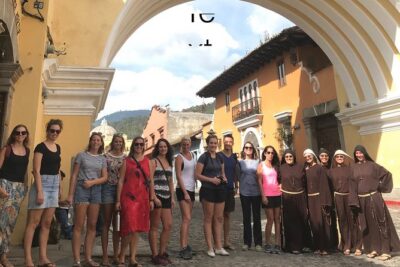
Walking Tour of the Wonders of La Antigua Guatemala
Read our review →
Browse the lists this tour appears in