
Review · WALKING TOURS
Antigua Guatemala: City Highlights Guided Walking Tour
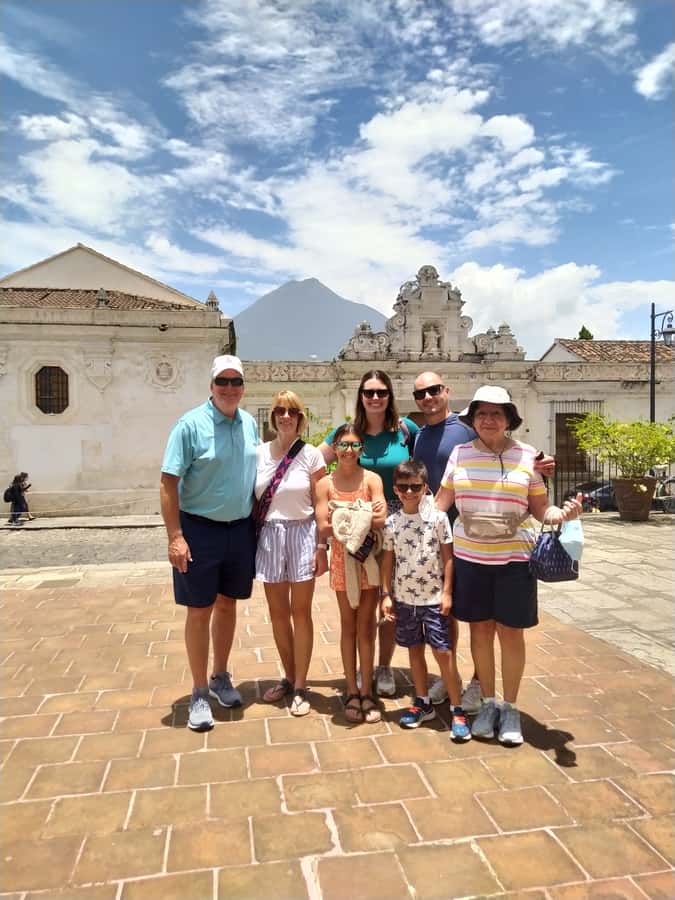
Antigua rewards a slow first look. This 150-minute walk is a strong introduction to the former Guatemalan capital, combining major churches, colonial landmarks, ruins, local culture, and practical suggestions for the rest of your stay. I especially like the small groups of up to eight people and the way guides such as Luis Francisco González Chávez turn dates and architecture into an easy, entertaining conversation. I also like that the route includes useful stops such as Nim Pot Craft Market, rather than showing you only grand monuments.
The main consideration is simple: this is an orientation tour, not a series of long museum visits. You will see important sites from the outside or along the route, but the value comes from understanding the city and deciding where to return later. Meeting details can vary by booking option, so check your confirmation carefully, even though the usual meeting point is La Merced Church.
In This Review
- Key details before you book
- Why this walk works best early in your stay
- Starting at La Merced Church
- Arch Street and the city’s famous views
- Nim Pot Craft Market and Guatemalan handicrafts
- Central Park and Antigua’s civic heart
- Ruins, convents, and the city’s earthquake story
- The Union Tank and San Francisco Church
- The guides make the difference
- Is $25 a fair price?
- What to bring for the 150-minute walk
- Who should take this tour?
- Should you book it?
- FAQ
- How long does the Antigua City Highlights Walking Tour last?
- How much does the tour cost?
- Where does the tour meet?
- What places are included on the route?
- What languages are available?
- How large is the group?
- Are food and drinks included?
- What should I bring?
- Can I cancel for a full refund?
Key details before you book
- A 150-minute introduction to Antigua: The pace gives you time to see many central landmarks without using up an entire day.
- The route links major churches and ruins: La Merced, San Francisco, convent remains, Central Park, and other colonial sights fit into one walk.
- Nim Pot Craft Market adds a local shopping stop: It is a practical place to see colorful Guatemalan handicrafts and note items you may want to buy later.
- Guides add useful city advice: Luis, Delmy, Gerardo, and Axel are repeatedly praised for history, humor, food tips, museum suggestions, and help with questions.
- Groups are limited to eight people: That makes it easier to hear the guide and ask about architecture, culture, and daily life.
- Sun and rain protection matter: Bring water, sunblock, a cap, and a raincoat from May through October.
Why this walk works best early in your stay
Antigua can look easy to understand at first. The streets are laid out in a compact center, and the yellow, white, and ocher buildings make wandering pleasant. Yet the churches, courtyards, broken walls, and civic buildings carry layers of Spanish colonial rule, religion, earthquakes, Mayan culture, and modern Guatemalan life.
A guide gives those details a place in the picture. You learn why an apparently simple building matters, what a ruined convent once did, and how Antigua served as Guatemala’s third capital for more than 200 years. That background changes the way you see the city later.
I would book this on your first full day if possible. Several people who took the walk early found it easier to return to favorite churches, museums, markets, restaurants, and ruins afterward. One person who took it on the last day wished they had done it sooner, which is a useful lesson for planning.
The small-group format also helps. With no more than eight participants, the guide can keep the group together without turning the walk into a speech delivered to a crowd. Emily from the United States even ended up with what was essentially a private tour when she was the only person booked for her morning departure.
More Walking Tours in Antigua Guatemala
- Antigua Cultural Walking Tour
★ 4.5 · 725 reviews - Antigua Classic Cultural Walking City Tour – the best
★ 4.5 · 227 reviews - Antigua Walking Tour
★ 4.5 · 96 reviews
Starting at La Merced Church
The usual meeting point is La Merced Church, one of Antigua’s most recognizable religious buildings. Starting here gives the walk an immediate sense of place. You are not beginning with an abstract history lecture. You are standing beside a major church in a city shaped for centuries by Catholic institutions and Spanish colonial design.
The Church of Mercy also helps establish the tour’s focus on architecture. Your guide can point out details that are easy to miss when you are taking photographs or simply moving through the street. Melissa’s seven-year-old daughter kept noticing cotton candy during the walk, yet the guide, Luis González, kept the experience engaging with trivia and patience. That suggests the tour can work for families, though young children may still need occasional help staying focused for two and a half hours.
This first stop is also a good place to settle into the group and ask practical questions. If you want recommendations for museums, cafés, bakeries, bars, or restaurants, ask early. Guides are happy to shape their suggestions around what interests you.
Arch Street and the city’s famous views
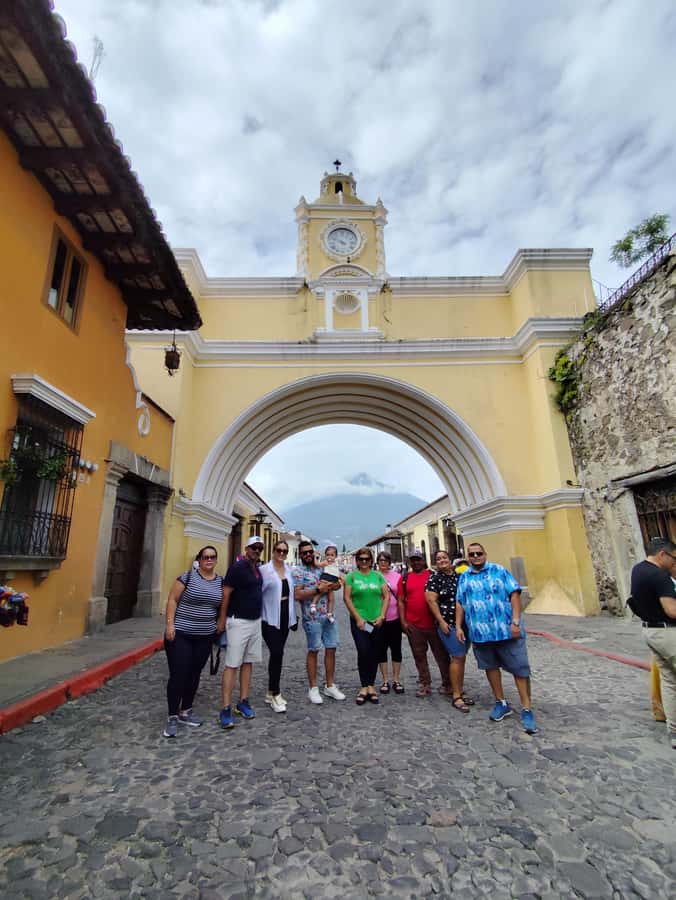
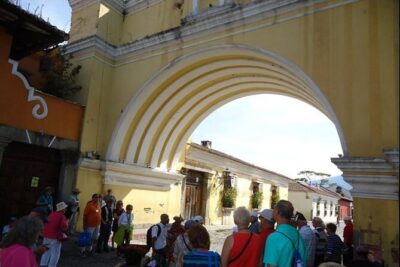
From La Merced, the route continues along Arch Street, one of Antigua’s best-known photographic locations. The arch frames the street and volcano views, but its real value on this walk is the explanation around it.
A guide can help you see Arch Street as part of the city’s structure, not just as a picture stop. You will hear about the colonial setting and the way Antigua’s churches, civic buildings, and streets relate to one another. Guides also use this part of the route to point out smaller details that you might miss while walking alone.
You should have time for photographs, but this is still a moving walking tour. If you want a long, quiet session at the arch, return later. The walk gives you the context and the orientation, then leaves you free to come back when the group has moved on.
Luis is especially praised for making this kind of history light and interactive. He answers questions, uses humor, and explains the city without overwhelming people with facts. Delmy receives similar praise for sharing personal experience and allowing time for questions.
Nim Pot Craft Market and Guatemalan handicrafts
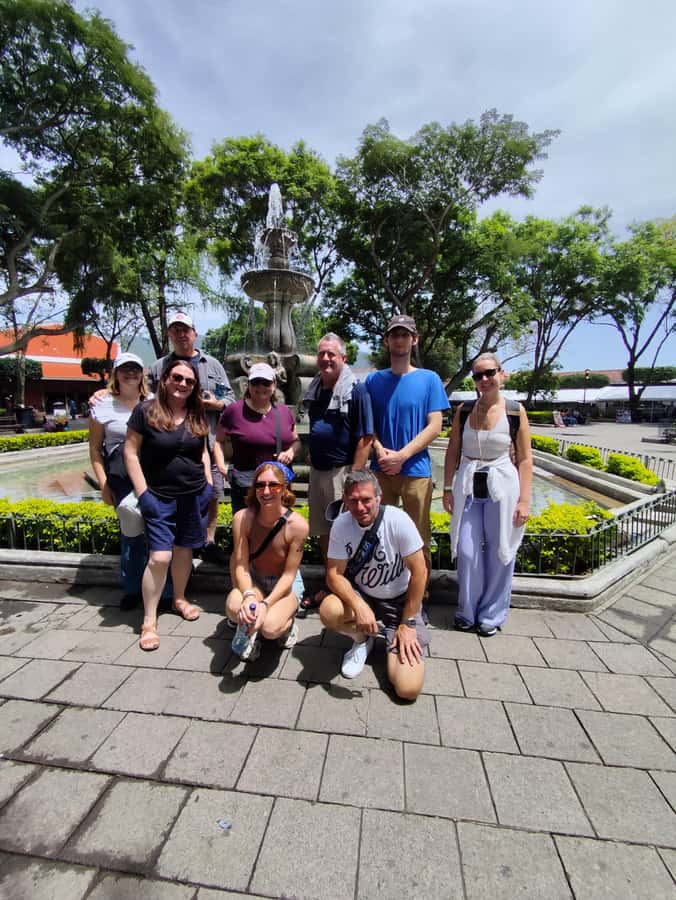
Nim Pot Craft Market brings a different side of Antigua into the route. The market is known here as one of the city’s most colorful places for handicrafts, so you get a useful pause from churches and colonial ruins.
This stop matters because Guatemala’s culture is not limited to old stone walls. Handcrafts provide a direct connection to living traditions and local shopping. You can look at textiles, decorative items, and other colorful goods, then decide if you want to return with more time later. The supplied information does not promise a dedicated shopping session, so treat Nim Pot as a guided introduction rather than your main buying opportunity.
I like this balance in the route. A city tour made up only of monuments can feel detached from present-day life. Adding a craft market gives you a better sense of how Antigua functions now, while the guide can explain cultural background along the way.
Keep your spending separate from the tour price. Food, drinks, and purchases at the market are not included. If you find something you like, compare items calmly and remember that you can return later instead of buying in a hurry.
More things to do in Antigua Guatemala:
- From Antigua: Adventure, 2-Day Hiking to Acatenango Volcano
★ 4.4 · 1,189 reviews - From Antigua: Pacaya Volcano Tour in English/Spanish
★ 4.5 · 930 reviews - From Antigua: Pacaya Volcano Trek
★ 4.4 · 798 reviews - Antigua, Guatemala: Volcano Acatenango Overnight Hiking
★ 4.6 · 645 reviews
Central Park and Antigua’s civic heart
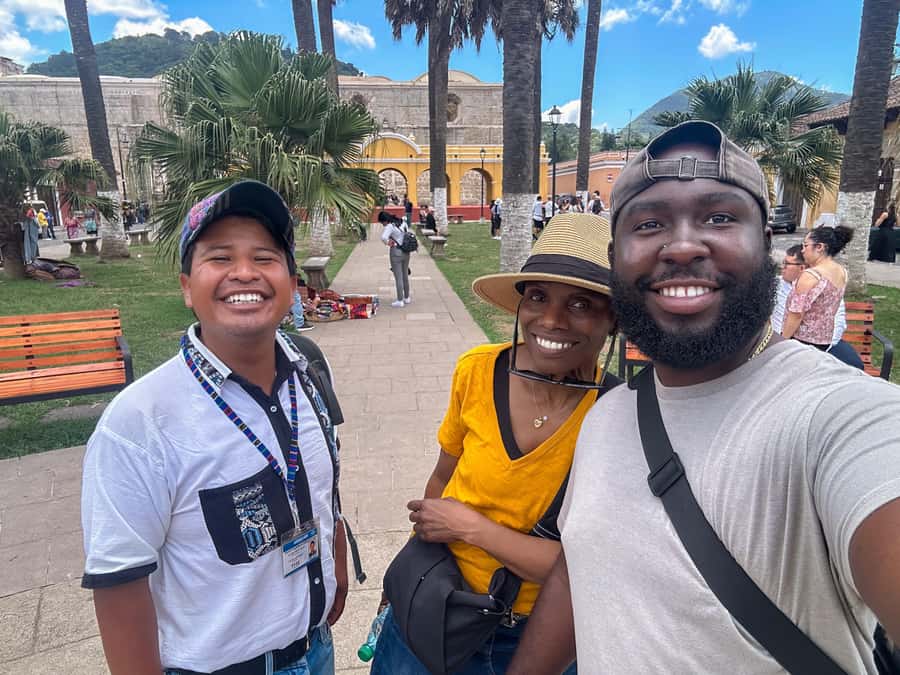
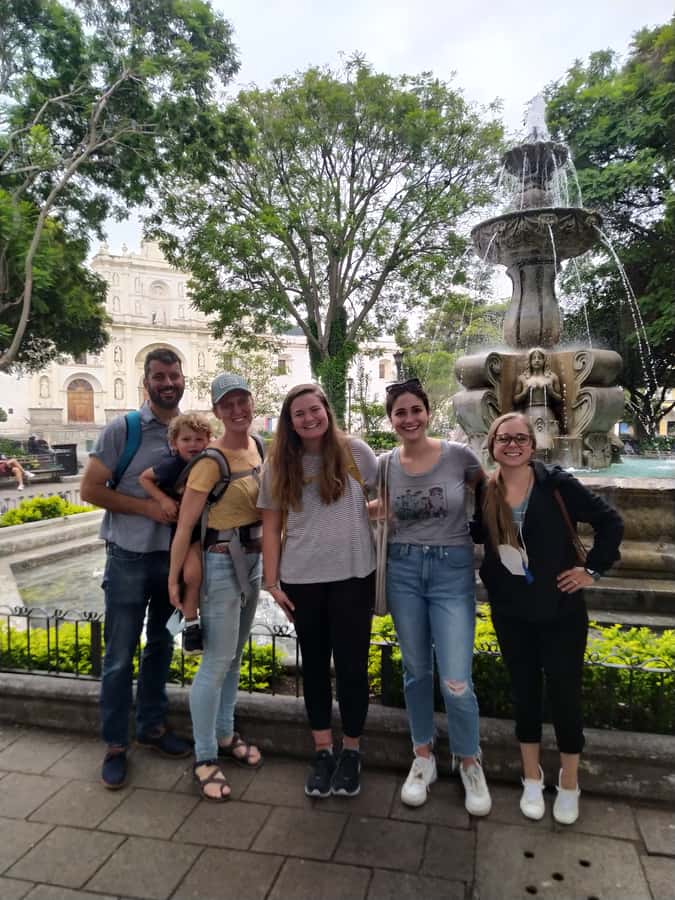
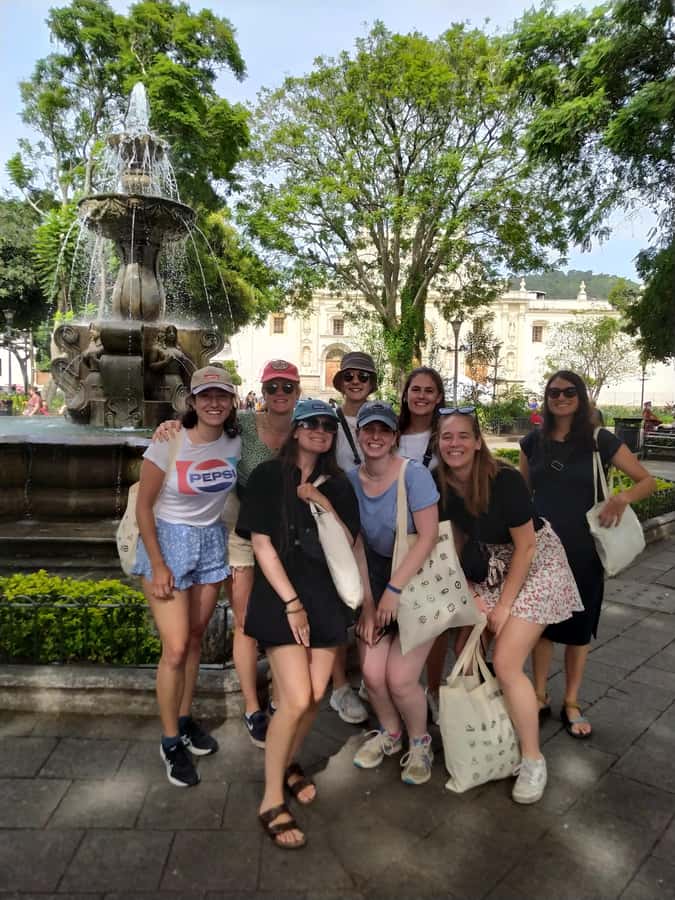
Central Park is the route’s most useful concentration of landmarks. Around this open central space, you will see the Fountain of the Sirens, the General Palace, the Cathedral, City Hall, and the Bakers’ Portal.
This is where the walk’s historical pieces begin to connect. Religious power, government, public gathering, and ordinary commerce all meet around the square. The guide can explain how the buildings functioned together and how Antigua’s colonial society was organized.
The Cathedral is especially important for understanding the city’s religious role, while the General Palace and City Hall bring government into the story. The Bakers’ Portal adds a more everyday note. It reminds you that historic cities were not built only for officials and clergy. Workers, shopkeepers, and residents also shaped daily life around these public spaces.
The Fountain of the Sirens makes a memorable visual stop, but the story behind it is the reason to listen closely. This is one of the places where a guide’s legends and local interpretation can add something you would not get from a quick photograph.
Central Park can also be a useful reference point for the rest of your visit. After the tour, you will know where several central sights are and how to reach nearby cafés, restaurants, and museums. That practical orientation is one of the best reasons to take the walk early.
Ruins, convents, and the city’s earthquake story
The tour includes different ruins and convents along the route, though the supplied details do not name every ruin or promise interior access to each one. What you can expect is a visual introduction to Antigua’s damaged colonial buildings and the religious institutions that once shaped the city.
The ruins are not simply picturesque backdrops. They help explain why Antigua feels both carefully preserved and partly broken. The guide places the remains within Guatemala’s historical story, including the city’s former role as a capital and the forces that changed it.
The religious connection is a recurring theme. One person particularly enjoyed learning about Antigua’s relationship to religion, while others appreciated explanations of Spanish influence in the architecture and building details. This is helpful if you have already walked past elaborate façades and wondered what you were looking at.
Do not expect the same depth as a specialist archaeology tour. You are getting a broad city introduction, with several stops and plenty of movement. If a convent or ruin captures your attention, write down its name and return later for a slower visit.
The Union Tank and San Francisco Church
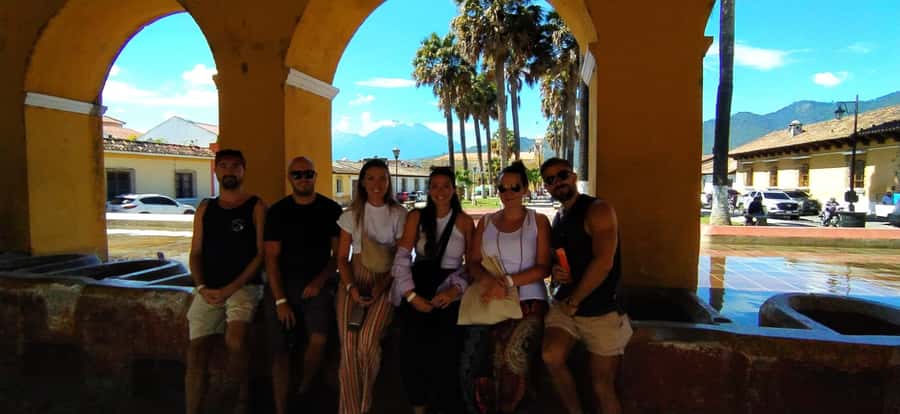
The Union Tank offers another change of pace. It connects the city’s historic setting with practical public life, giving you a chance to see how water and community spaces fit into Antigua’s past.
The final major stop is the Church of San Francisco. Like La Merced, it reinforces the importance of religious orders in the city’s development. By this point, you should have seen enough churches, civic buildings, ruins, markets, and public spaces to understand Antigua as a working city rather than a collection of isolated attractions.
San Francisco is also a fitting place to ask final questions. Guides often use the end of the route to suggest what you might do next. Luis has been praised for recommendations covering restaurants, bakeries, cafés, bars, stores, museums, and ruins. He has also suggested free salsa classes and offered to take photographs at notable points, details that make the experience feel more personal than a strict point-to-point walk.
Some people received a small bracelet at the end. It is not listed as a formal inclusion, so you should not book the tour expecting a gift, but it is a thoughtful touch when offered.
The guides make the difference
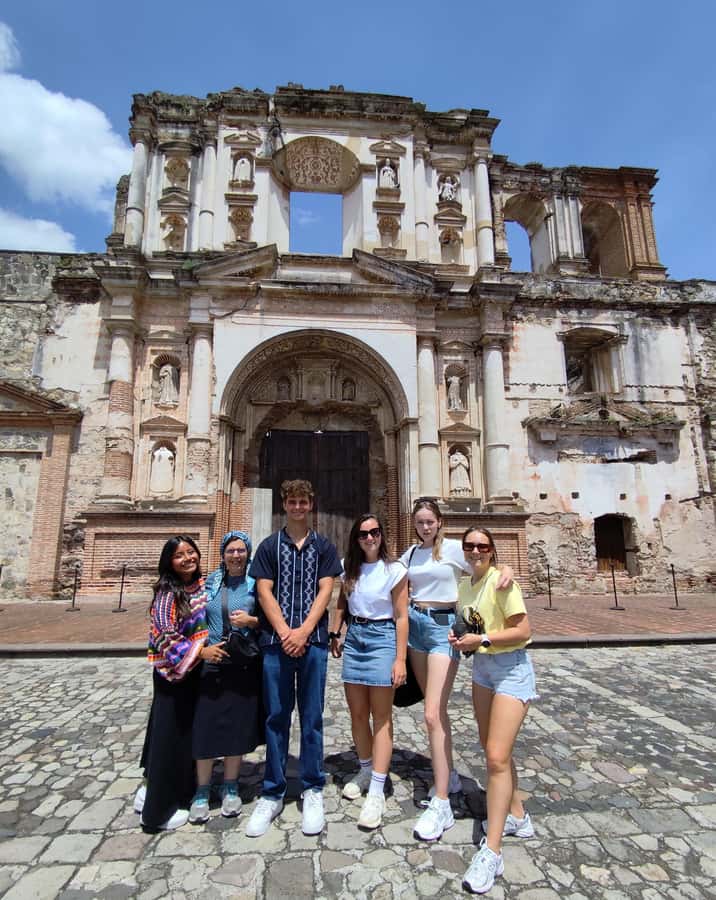
The strongest part of this experience is the guiding. Luis Francisco González Chávez receives the most praise, with people describing him as funny, friendly, patient, organized, and easy to question. He also sent clear meeting instructions before one tour, which is useful when you are finding a meeting point in an unfamiliar city.
Delmy is praised for making historical information interesting and for sharing personal experience. Axel Zabeleta is noted for allowing plenty of time for questions and explaining Guatemala, Antigua, and their history clearly. Gerardo is also praised for giving people a better sense of the country, not just the town.
The listed languages are English, Spanish, and German. The guide assigned to your departure may vary, so check the language option when booking. If you want to practice Spanish, Emily found Luis willing to help, even while joking about her poor Spanish.
The style is friendly rather than formal. That suits most people who want a clear introduction, but it may not satisfy you if you prefer a scholarly lecture or a narrowly focused architectural study. The strength here is the mix of facts, legends, questions, humor, and practical advice.
Is $25 a fair price?
At $25 per person, the tour offers good value if you use it as a city orientation. You receive 150 minutes with a certified guide, a small group capped at eight, and a route that covers many of Antigua’s best-known central sights.
The value is not in paid admissions, meals, or transportation. Food and drinks are not included, and the tour is a walk rather than a vehicle-based excursion. You are paying for interpretation, structure, and local suggestions. That can save you time, especially if you are in Antigua for only a few days.
I would be less enthusiastic if you already know Antigua well or plan to spend several days reading and visiting each site independently. In that case, the broad route may repeat places you have already seen. For a first visit, though, the combination of landmarks and local advice makes the price reasonable.
Free cancellation up to 24 hours before the activity and reserve-now, pay-later booking also make it easier to fit into a changing schedule. Those terms are useful, but still confirm the exact meeting point and start time for your selected option.
What to bring for the 150-minute walk
Prepare for outdoor conditions. Bring:
- Water
- Sunblock
- A cap
- A raincoat from May through October
The activity information specifically warns about rain during the May to October wet season. The tour does not include food or drinks, so carry what you need before starting.
Weapons, sharp objects, alcohol, and drugs are not allowed. Wear something suitable for a walk and keep your hands free enough to listen, take photographs, and follow the group.
Who should take this tour?
I would recommend it to first-time visitors, couples, solo visitors, families, and anyone who wants a fast but useful sense of Antigua. It is also a good choice if you want restaurant and museum ideas before spending your own time exploring.
Families can do well here because Luis has shown patience with children and used trivia to keep a young participant involved. Still, the walk lasts two and a half hours, so consider your child’s interest in history and city walking before booking.
It also suits people who enjoy asking questions. The small group makes that easier, and several guides are praised for giving people time to ask about history, religion, culture, architecture, volcanoes, food, and daily life.
I would choose something else if you want extensive time inside every church, a private vehicle, a food tour, or a specialist archaeology experience. This is a broad introduction, and its success depends on your guide’s storytelling and your willingness to walk between stops.
Should you book it?
Yes, if you are new to Antigua and can schedule it near the start of your stay. The route covers the city’s essential landmarks, but the best benefit is the context that helps you decide where to return. Luis, Delmy, Axel, and Gerardo have each been praised for making the history clear, friendly, and enjoyable.
Book it later only if your first days are already full. Bring water and sun protection, check the meeting point, and treat the market and monuments as an introduction rather than a complete visit. At $25, it is a sensible way to get your bearings before exploring Antigua on your own.
FAQ
How long does the Antigua City Highlights Walking Tour last?
The tour lasts 150 minutes, or two hours and 30 minutes.
How much does the tour cost?
The listed price is $25 per person.
Where does the tour meet?
The usual meeting point is La Merced Church. The meeting point may vary depending on the option booked, so check your booking information.
What places are included on the route?
The route includes the Church of Mercy, Arch Street, Nim Pot Craft Market, Central Park, the Fountain of the Sirens, the General Palace, the Cathedral, City Hall, the Bakers’ Portal, the Union Tank, and the Church of San Francisco. It also includes different ruins and convents along the way.
What languages are available?
The tour is offered in English, Spanish, and German.
How large is the group?
The activity is described as a small-group tour limited to eight participants.
Are food and drinks included?
No. Food and drinks are not included in the tour price.
What should I bring?
Bring sunblock, a water bottle, and a cap. A raincoat is recommended during the rainy season from May through October.
Can I cancel for a full refund?
Yes. You can cancel up to 24 hours in advance for a full refund. You can also reserve now and pay later, according to the activity details.
Just added in Antigua Guatemala
- Full day Antigua Guatemala from Quetzal Port★ 4.5 · 7 reviews
- Private transfer from Panajachel to Antigua Guatemala★ 5.0 · 2 reviews
- Guatemala Airport Roundtrip Transfer to Antigua Guatemala★ 3.5 · 5 reviews
- Colonial Antigua Guatemala walking tour & Hot Springs from Guatemala City★ 3.0 · 2 reviews
- Antigua Guatemala Full Day Tour★ 3.0 · 2 reviews
- Visit Antigua Guatemala and its colorful towns around – Private full-day tour★ 4.5 · 4 reviews
- Airport Transfer to Antigua Guatemala★ 3.0 · 2 reviews
- Iximché : Spiritual Ritual with a Mayan Priest★ 5.0 · 1 review
Walking Tours, compared.
Antigua Classic Cultural Walking City Tour – the best
Read our review →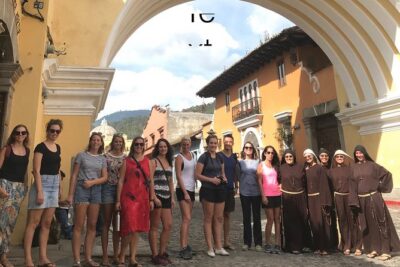
Walking Tour of the Wonders of La Antigua Guatemala
Read our review →
Browse the lists this tour appears in