
Review · COFFEE EXPERIENCES
Coffee farm experience
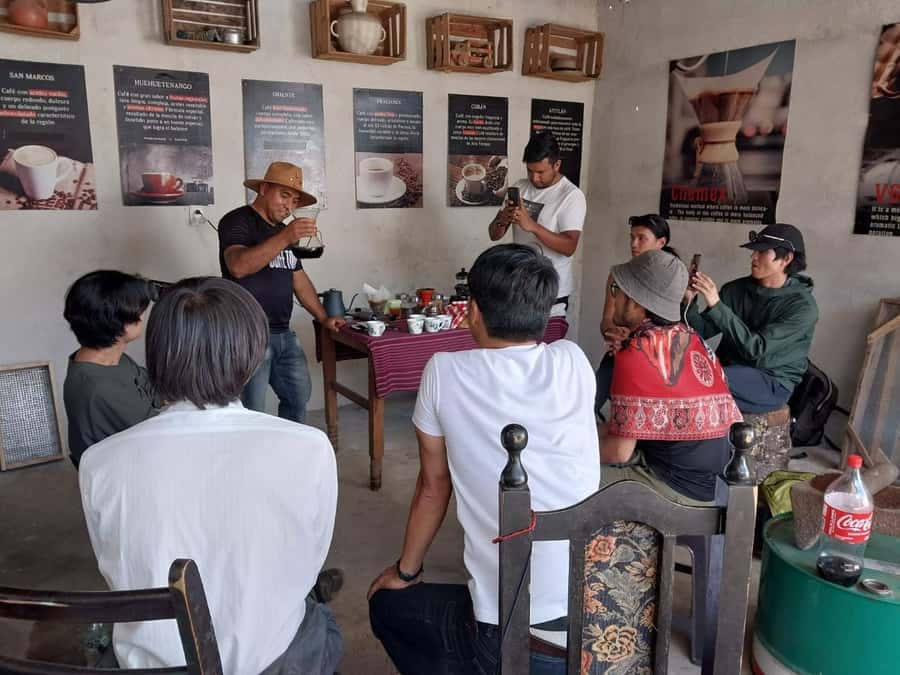
Coffee tells a bigger story than the cup suggests. This three-hour visit from Antigua Guatemala takes you into Ciudad Vieja to see how coffee is grown, cared for, processed, roasted, and shared. I like the family-run setting and the chance to learn directly from Baudilio and his wife. I also like that transportation and a tasting are included. The main consideration is that this is an educational farm visit, not a large plantation attraction with elaborate facilities.
You will spend about 105 minutes on the guided visit and walk in Ciudad Vieja, then return to Antigua. The pace should suit anyone who wants a close look at daily farm work, though sun, insects, uneven ground, and outdoor conditions mean you should bring a hat, closed shoes, and comfortable clothing.
In This Review
- Key Points Before You Book
- Leaving Antigua for Ciudad Vieja
- Meeting a Coffee-Growing Family
- Seeing How Coffee Plants Are Cared For
- From Plant to Processed Coffee
- Learning About Guatemala’s Eight Coffee Regions
- Finishing With a Two-Coffee Tasting
- What $55 Really Gets You
- Practical Comfort and Age Restrictions
- Who Will Enjoy This Coffee Farm Visit
- Booking Flexibility and Languages
- Should You Book This Antigua Coffee Tour?
- FAQ
- Where does the coffee farm experience take place?
- How long does the coffee tour last?
- Is transportation included?
- Which languages are available?
- What will I learn about coffee?
- Is a coffee tasting included?
- Can I buy coffee during the visit?
- What should I bring?
- Can I cancel for a refund?
Key Points Before You Book
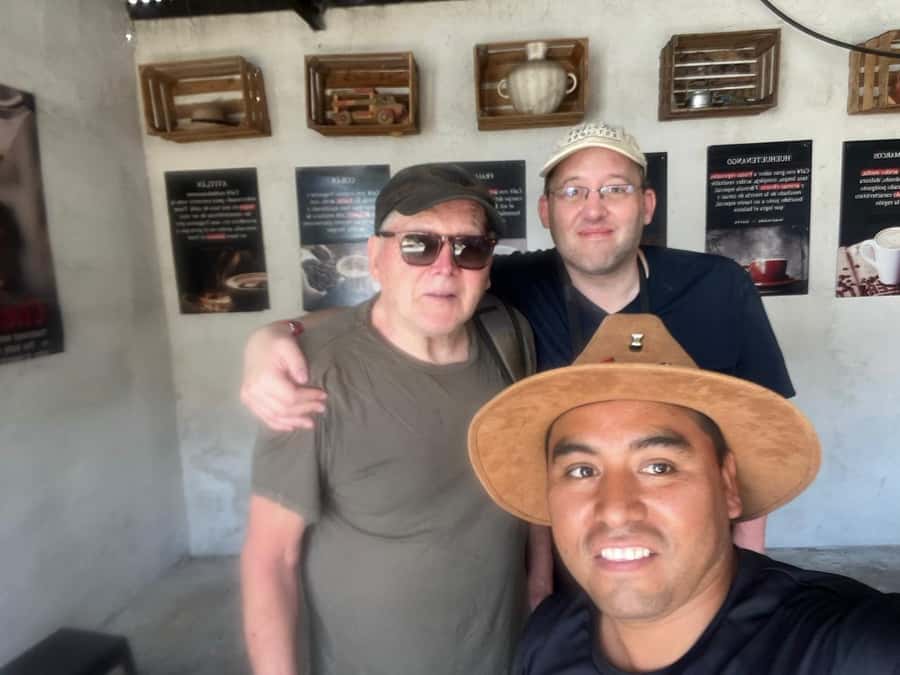
- Baudilio leads the experience: He handles the circuit and provides pickup in his vehicle from Antigua Guatemala.
- The visit takes place on a family farm: The farm has been passed down through generations, with local roasting, packaging, and distribution.
- You learn the full coffee process: Topics include plant care, growing conditions, fertilization, harvesting, processing, and preparation.
- Guatemala’s eight coffee regions are part of the lesson: The tour gives useful context beyond the particular farm you visit.
- Coffee tasting is included: You can sample two types of coffee, while extra drinks, food, and bags of coffee cost extra.
- It costs $55 per person: For three hours with transport, a guide, and a tasting, the price is reasonable if you value personal contact and practical knowledge.
Leaving Antigua for Ciudad Vieja
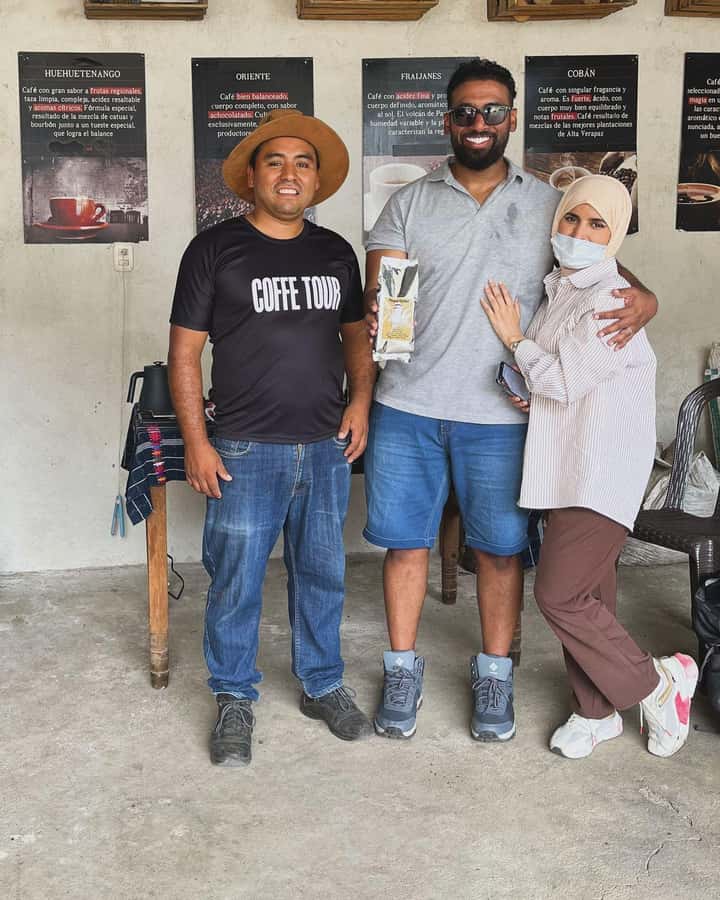
The experience begins with pickup in Antigua Guatemala. Baudilio, the person in charge of the circuit, arrives in his pickup vehicle, so you do not need to arrange separate transportation to the farm area. That matters in this part of Guatemala, where a short outing is easier when someone familiar with the route handles the driving.
From there, you head to Ciudad Vieja. The tour information does not give a precise driving time, so your total time in the vehicle may vary with your pickup point and local traffic. The scheduled visit itself includes about 105 minutes of guided sightseeing and walking.
I would treat the ride as part of the setting rather than dead time. You are moving from Antigua’s well-known colonial center toward a community where coffee farming remains tied to family income. The change helps explain why this experience feels different from a café tasting in town.
Wear clothes you can comfortably use outdoors. A hat or cap is important for sun protection, and closed-toe shoes are required. Bring cash and a charged smartphone, but keep the phone practical rather than precious. You may want it for photographs, yet the farm setting calls for shoes and clothing that can handle a working agricultural site.
More Coffee Tours in Antigua Guatemala
- Antigua ATV Coffee Tour
★ 5.0 · 380 reviews - Coffee and Gastronomic Bike Tour in Antigua
★ 5.0 · 284 reviews - Coffee Tour Adventure Antigua Guatemala
★ 5.0 · 121 reviews
Meeting a Coffee-Growing Family
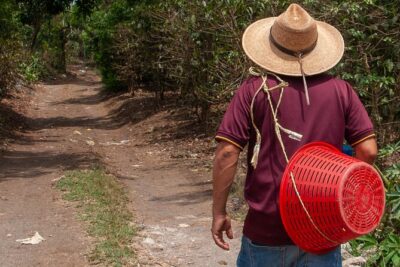
The strongest part of the visit is the personal welcome. Baudilio and his wife receive you at the family farm, and the experience has the feel of being shown around a home and workplace rather than being processed through a commercial attraction.
That distinction matters. You are not simply shown a polished display about coffee. You hear how a family farm operates, how the crop is handled, and how much effort goes into producing a drink that many people consume without thinking about its source.
Baudilio’s role also appears to be more than basic transportation. He explains the stages of cultivation and processing, answers questions, and connects farm work to the wider coffee trade. English and Spanish guiding are available, which makes the visit accessible to a wider range of visitors.
The family setting also creates room for small, human moments. You can speak with local people, ask about their work, and get a better sense of how coffee functions as an important source of income in Guatemala. I find that useful context. Coffee is not just a souvenir or a morning habit here. For small producers and their families, the crop represents time, labor, and household earnings.
Seeing How Coffee Plants Are Cared For
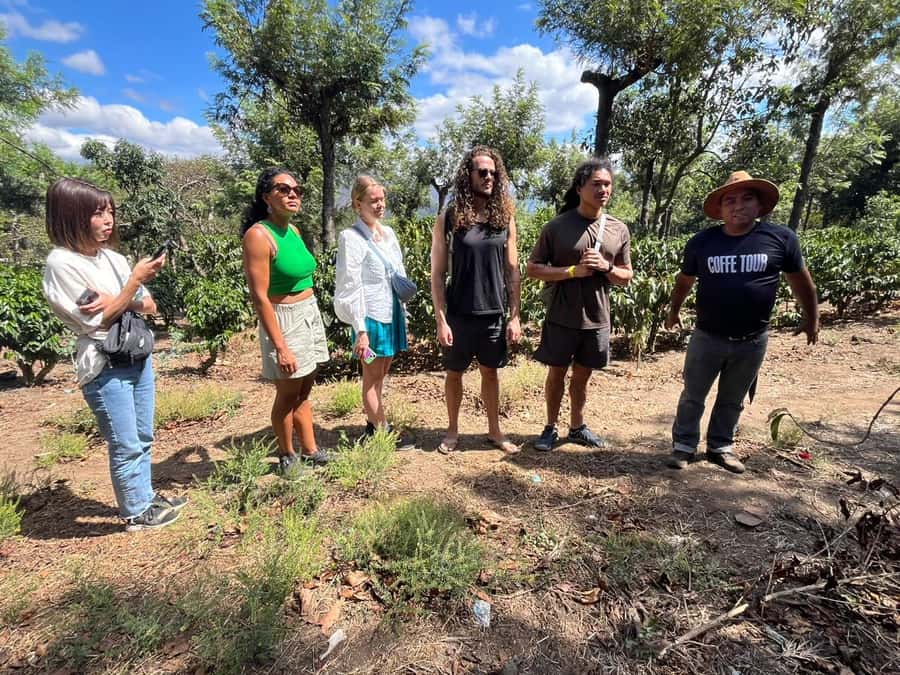
The farm visit explains what a coffee plant needs before it ever reaches a roaster. You learn about growing conditions, plant care, and the fertilization methods used by coffee growers.
This section is valuable because it slows the process down. A cup of coffee can seem simple, but the plant requires suitable conditions and regular attention long before beans are ready for processing. The tour gives you a clearer idea of the daily work involved in maintaining coffee plants and protecting the quality of the crop.
You will also hear about the work done by people in the fields. That human side is one of the most important themes of the experience. The tour places the coffee growers and their families at the center of the story, rather than treating the farm as a scenic backdrop.
The exact farm conditions and seasonal activity can vary, and the supplied information does not promise a particular harvest event or a chance to pick beans yourself. I would book this for the explanation and contact with the family, not for a guaranteed hands-on harvesting activity.
From Plant to Processed Coffee
The tour covers more than cultivation. You learn how coffee is processed and how the crop moves toward the final cup. The visit explains the stages involved in producing coffee, giving you a practical view of what happens after the plant has been tended in the field.
The farm family packages and roasts its own coffee, and distributes it locally. That detail gives the experience a useful connection to the finished product. You are not only hearing about an agricultural crop in the abstract. You can see how a local producer brings coffee closer to the people who drink it.
The processing discussion also helps explain the difference between growing coffee and selling coffee. Producers must care for the plants, manage the crop, process it, and present it for purchase. The tour’s focus on the price of the industry with the coffee growers encourages you to think about who benefits from coffee and how much labor sits behind a retail cup.
The information provided does not specify every processing method or each machine used on the farm, so do not expect a technical factory tour. Instead, expect a guided explanation of the main stages, tied to the family’s own work.
More things to do in Antigua Guatemala:
- From Antigua: Adventure, 2-Day Hiking to Acatenango Volcano
★ 4.4 · 1,189 reviews - From Antigua: Pacaya Volcano Tour in English/Spanish
★ 4.5 · 930 reviews - From Antigua: Pacaya Volcano Trek
★ 4.4 · 798 reviews - Antigua Cultural Walking Tour
★ 4.5 · 725 reviews
Learning About Guatemala’s Eight Coffee Regions
Guatemala is presented through eight coffee-growing regions. This broad overview adds useful national context to a visit focused on one local farm.
You may find this especially helpful if you already enjoy coffee but know little about where Guatemalan beans come from. The discussion shows that coffee is not one uniform product. Growing conditions vary by region, and those conditions affect how coffee is cared for and produced.
The tour does not promise a tasting flight covering all eight regions. The available information specifically indicates a tasting, and one detailed account describes sampling two types. Think of the regional lesson as a map for understanding Guatemalan coffee, not as a full professional cupping session.
I like this balance. You get enough background to understand why Guatemalan coffee matters, but the visit stays connected to real people and a particular family farm. It is more useful than a quick explanation in a café, especially if you want to understand the work behind the label.
Finishing With a Two-Coffee Tasting
The tasting gives the visit a pleasant finish. You can sample two types of coffee, compare them, and connect the flavor in your cup with the farming and processing stages you have just discussed.
Because the tasting follows the farm explanation, you have more to notice. You can think about how the coffee was grown, how it was prepared, and how the family handles its own roasting and packaging. The point is not simply to drink something warm. It is to understand the path from plant to cup.
Coffee is included in the $55 price. Extra food and drinks are not, and bags of coffee are also excluded. If you want to take home the family’s coffee, carry cash and treat that purchase as an additional expense.
The farm’s local distribution gives the coffee purchase a clear purpose. Buying a bag lets you continue the experience at home and supports the small producer directly. Still, you should not assume coffee is included in your ticket. It is not.
What $55 Really Gets You
At $55 per person, this is not the cheapest way to drink coffee in Antigua. It is also not simply a ride to a farm. Your price includes transportation from Antigua, a live guide, the farm visit, and a tasting over roughly three hours.
I consider that fair value for visitors who want a personal, educational outing. Transportation removes a practical problem, and the family setting gives the visit more character than a generic agricultural presentation. The time with Baudilio and his family is a major part of what you are paying for.
The value is less clear if your main goal is buying a large amount of coffee or spending a full day in the countryside. Pounds of coffee are not included, and the tour lasts only three hours. You may need another activity afterward, especially since the scheduled walking portion is about 105 minutes.
The tour is also a good fit for people who care about ethical spending and local income. The guide explains the effort required by small producers and their families, helping you see why a farm visit can be worth more than a quick tasting at a shop.
Practical Comfort and Age Restrictions
This is an outdoor activity, so comfort depends heavily on what you wear. Bring:
- A hat or cap
- Comfortable clothing
- Closed-toe shoes
- Cash
- A charged smartphone
Insect allergies are listed as a reason the activity may not be suitable. That is worth taking seriously because the visit takes place around plants and fields. The information does not specify what insect protection is provided, so ask before booking if you have a serious allergy.
Alcohol and drugs are not allowed. The activity is also marked as unsuitable for babies under one year and for people over 70, with a separate note mentioning people over 95. The age information is unusual and somewhat repetitive, so anyone in those age groups should confirm suitability before paying.
The walking time is not presented as a strenuous hike, but the tour does take place at a farm. If you need a highly accessible route, ask the provider about the walking surface and conditions before booking. Those details are not specified.
Who Will Enjoy This Coffee Farm Visit
I would recommend this experience to you if you:
- Want to understand coffee beyond roasting and tasting
- Prefer family-run activities to large commercial attractions
- Enjoy meeting local people
- Want transportation from Antigua
- Like learning how food is grown and processed
- Are curious about Guatemala’s role in coffee production
- Have a few hours available for a focused outing
It is particularly useful for coffee drinkers who rarely think about farming. The visit connects the drink in your cup with plant care, fertilization, processing, roasting, packaging, and family income.
Families with very young babies, people with insect allergies, and anyone who dislikes outdoor walking should check the conditions carefully. The tour may also feel too short if you want a full-day plantation visit or a detailed technical course in coffee production.
Booking Flexibility and Languages
You can choose an English or Spanish guide. Some content may appear in its original language, so ask about language arrangements if exact translation is important to you.
The activity offers reserve now and pay later booking, which helps if your Antigua plans are still shifting. Free cancellation is available up to 24 hours before the activity for a full refund. Starting times depend on availability, so check the schedule before choosing your day.
The pickup arrangement is simple: Baudilio arrives in his pickup vehicle at your Antigua location. Give yourself a little time to be ready, dressed for outdoor conditions, with your phone charged and cash packed.
Should You Book This Antigua Coffee Tour?
Book it if you want a personal connection to Guatemalan coffee, not just a pleasant drink. The family farm, Baudilio’s careful explanations, local roasting and packaging, and the chance to taste two types make this a strong three-hour choice near Antigua.
Skip it if you want a luxury plantation resort, a full-day excursion, or a guaranteed harvest activity. For most coffee lovers and curious visitors, though, $55 is a reasonable price for transport, a guide, a tasting, and a direct look at the work behind Guatemalan coffee.
FAQ
Where does the coffee farm experience take place?
The experience takes place in Guatemala’s Sacatepéquez Department, with the farm visit and guided walk in Ciudad Vieja. Pickup and return are in Antigua Guatemala.
How long does the coffee tour last?
The experience lasts three hours. The guided sightseeing and walking portion in Ciudad Vieja is listed as about 105 minutes.
Is transportation included?
Yes. Pickup and return transportation from Antigua Guatemala are included. Baudilio, who manages the circuit, arrives in his pickup vehicle.
Which languages are available?
The live tour guide is available in English and Spanish. Some content may be shown in its original language.
What will I learn about coffee?
You will learn about Guatemala’s eight coffee regions, plant care, growing conditions, fertilization, processing, and the daily work done by coffee growers. You will also learn why coffee is an important source of income for Guatemala.
Is a coffee tasting included?
Yes. A tasting is included in the experience. One detailed description of the visit indicates that two types of coffee may be sampled.
Can I buy coffee during the visit?
Pounds of coffee are not included in the ticket. The family roasts and packages its own coffee, distributes it locally, and may offer coffee for purchase, so bring cash if you want to buy some.
What should I bring?
Bring cash, a charged smartphone, a hat or cap, comfortable clothing, and closed-toe shoes.
Can I cancel for a refund?
Yes. You can cancel up to 24 hours in advance for a full refund. Reserve now and pay later booking is also available.
Just added in Antigua Guatemala
- Full day Antigua Guatemala from Quetzal Port★ 4.5 · 7 reviews
- Private transfer from Panajachel to Antigua Guatemala★ 5.0 · 2 reviews
- Guatemala Airport Roundtrip Transfer to Antigua Guatemala★ 3.5 · 5 reviews
- Colonial Antigua Guatemala walking tour & Hot Springs from Guatemala City★ 3.0 · 2 reviews
- Antigua Guatemala Full Day Tour★ 3.0 · 2 reviews
- Visit Antigua Guatemala and its colorful towns around – Private full-day tour★ 4.5 · 4 reviews
- Airport Transfer to Antigua Guatemala★ 3.0 · 2 reviews
- Iximché : Spiritual Ritual with a Mayan Priest★ 5.0 · 1 review
Coffee Experiences, compared.
San Salvador: Full Day Ruta de Las Flores and Coffee Farm
Read our review →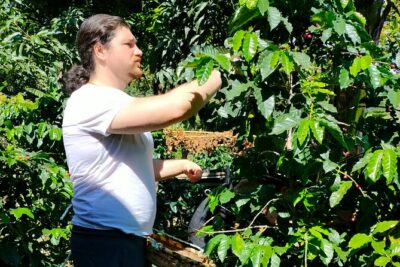

From Antigua or Guatemala : Coffee & Culture Full-Day Tour
Read our review →Browse the lists this tour appears in