
Review · COFFEE EXPERIENCES
Coffee Tour in Lake Atitlán
Coffee tells Lake Atitlán’s story. I like the way this tour connects the lake ride with hands-on coffee production, from planting and harvesting to roasting and grinding. I also like the chance to see San Juan La Laguna through local guides such as Victor, often called Vick, who explain coffee’s role in family life and the community.
The main caution is that the advertised two-and-a-half-hour schedule can stretch longer when chocolate, honey, weaving, or shopping stops are added. The coffee operation is small, and the tasting may be a single prepared cup rather than a formal flight of coffees. Ask for the exact plan before you set off.
In This Review
- Key points at a glance
- Why this Lake Atitlán coffee tour is worth considering
- Beginning with Lake Atitlán by public boat
- Walking through San Juan’s coffee plots
- From harvested fruit to roasted coffee
- The final cup in San Juan
- San Juan’s church, murals, and local workshops
- What the guides add to the day
- Group size, pace, and physical effort
- Price, timing, and cancellation
- Who should book this experience?
- Should you book the San Juan coffee tour?
- FAQ
- Where does the coffee tour start and end?
- Is the public boat included in the price?
- Is a tuk tuk included?
- How long does the experience last?
- Is lunch included?
- What is included after the coffee tour?
Key points at a glance
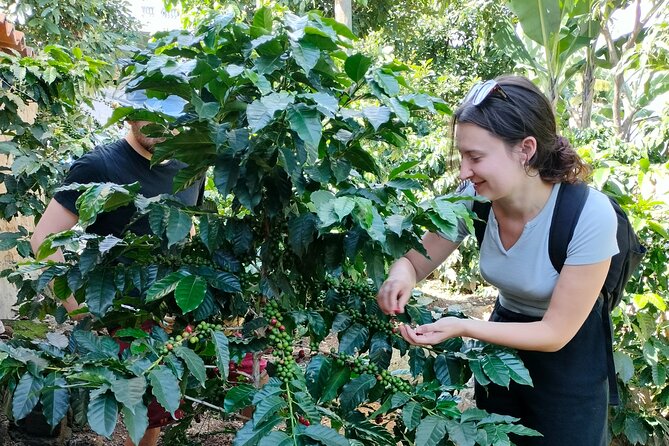
- The coffee story runs from plant to cup: You may handle coffee fruit, remove the outer layers, and learn about drying, sorting, roasting, and grinding.
- San Juan La Laguna is part of the experience: The tour includes town streets, the Catholic church, murals, local businesses, and views around the hills.
- Victor and Vick receive the strongest praise: Guests repeatedly describe them as warm, clear, flexible, and well informed about coffee and Guatemalan culture.
- The boat ride adds context: Your guide explains Lake Atitlán’s geography during the public boat journey from the pickup area toward San Juan.
- Extra stops can change the character of the tour: Chocolate, honey, textiles, and art may be added, but they are not always equal in depth to the coffee portion.
- Bring extra cash and comfortable shoes: Public transport costs about $3 per person, lunch is not included, and walking through the hills is part of the day.
Why this Lake Atitlán coffee tour is worth considering
At $35 per person, this is not simply a cup of coffee with a view. You are paying for a guide, transportation coordination, a walk through San Juan La Laguna, and an explanation of a product that shapes daily life across Guatemala.
I see the value most clearly if you are curious about how coffee is made and want help finding the right places in San Juan. You could visit several shops and workshops on your own, and one piece of feedback makes that point plainly: some stops are easy to reach without a guide. Still, a good guide saves you from sorting out the route, language, timing, and local context yourself.
The quality of the day depends heavily on your guide. Victor, also called Vick, is the name most often associated with the strongest experiences. Luis, Gaby, Evenia, and Ervin have also led successful tours. The best guides adjust the pace, answer questions, and explain how coffee connects to Guatemala’s economy, farming families, and local traditions.
That guide-dependent nature is important. This is not a highly standardized museum visit. It is a personal walk through a small community, so the tone and route may vary.
More around Lake Atitlan:
- Sunrise Hike Tour on Indian’s Nose Mountain
★ 5.0 · 133 reviews - Mayan Nose Sunrise Hiking
★ 4.5 · 62 reviews - Lake Atitlan Cultural Tour Exploring Mayan Villages
★ 5.0 · 34 reviews
Beginning with Lake Atitlán by public boat
The tour begins with pickup near your hotel or another agreed location, followed by a public boat ride toward San Juan La Laguna. The public boat and any tuk tuk ride are not included in the $35 price, with public transportation listed at about $3 per person.
The boat ride is more than a transfer. Your guide uses roughly 45 minutes to explain the geography of Lake Atitlán, giving you a useful sense of how the towns sit around the water and why boats are so important for moving between them.
I like this opening because it places the coffee tour in its setting. You are not arriving at an isolated farm with no sense of the area. You are crossing the lake, watching the shoreline change, and learning how San Juan fits into the wider Atitlán region.
Allow extra time for the boat. Public transport does not run on your private timetable, and the boat portion may feel less polished than a private transfer. That is also part of the local experience. You should carry small amounts of Guatemalan currency for transport and any purchases.
The advertised total duration is about two hours and 30 minutes to two hours and 50 minutes. Some private or loosely paced outings have lasted closer to four hours, particularly when additional workshops and town visits were included. If you have a later boat, bus, or dinner reservation, tell your guide at the beginning.
Walking through San Juan’s coffee plots
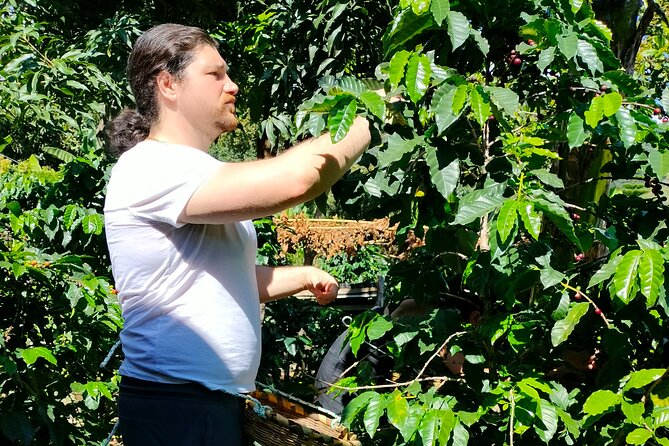
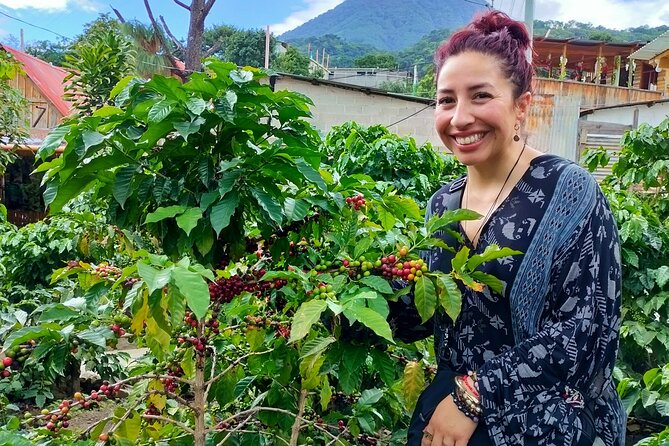
The main portion takes place in San Juan La Laguna, where you walk among coffee plants and learn how the crop is planted and harvested.
The farm setting is small-scale rather than industrial. That matters because you can focus on the work itself: how the fruit grows, what farmers look for during harvest, and how much labor is required before coffee reaches a grinder.
At times, you may get a hands-on look at the harvest by handling coffee fruit and peeling it to reveal the beans. This physical step helps correct a common misconception. Coffee beans are not ready-made brown beans growing on a tree. They begin inside a fruit and pass through several stages before roasting.
The walk may take you through hilly areas, so comfortable shoes are a sensible choice. You do not need special equipment, but sandals or smooth-soled shoes could be awkward on an uneven route.
Your guide may explain different types of coffee beans, the introduction of coffee to Central America, and the work of local cooperatives. The strongest version of this tour also covers drying, classification, roasting, and grinding. Victor has been especially praised for explaining not just the method, but the environmental, social, and economic effects of coffee production.
That wider context gives the tour its purpose. You are learning why a coffee crop matters to families and communities, not merely memorizing a list of processing steps.
From harvested fruit to roasted coffee
The journey from plant to cup is the heart of the experience. You can expect an explanation of several stages:
- Planting and caring for the coffee trees
- Harvesting the ripe fruit
- Removing the outer fruit and exposing the beans
- Drying and classifying the coffee
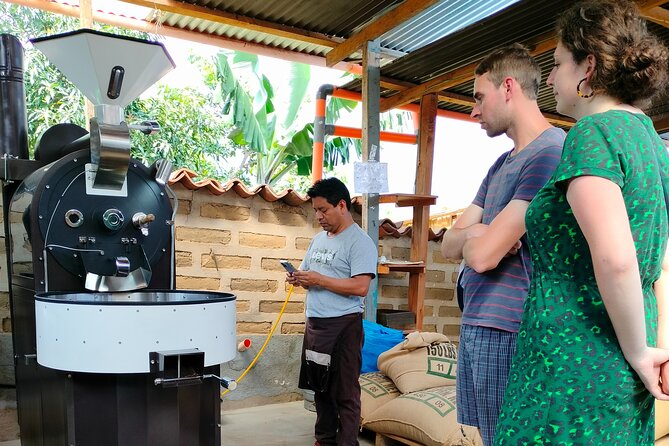
- Roasting the beans
- Grinding and preparing the final drink
The exact amount of hands-on work may depend on the season and the day’s local arrangements. The tour is not presented as a large factory demonstration, so you should expect a personal, small operation rather than a display of heavy machinery and multiple production lines.
That small scale has both strengths and limits. You get closer to the growers and the process, but the presentation may feel modest if you expect a formal coffee school. One participant found the coffee operation quite small and described the tasting as an opportunity to have one cup rather than a structured tasting session.
I would set your expectations at an educational farm visit with a final coffee, not a professional cupping workshop. If you already know a great deal about coffee, ask questions about altitude, bean varieties, drying, roasting, and flavor. The guides are most valuable when you engage them directly.
More coffee tours in San Pedro La Laguna:
- Coffee Walk Tour in San Juan La Laguna
★ 3.0 · 1 review - Antigua ATV Coffee Tour
★ 5.0 · 380 reviews - Coffee and Gastronomic Bike Tour in Antigua
★ 5.0 · 284 reviews - Coffee Tour Adventure Antigua Guatemala
★ 5.0 · 121 reviews
The final cup in San Juan
After the farm visit, the tour continues to a local café or coffee shop. Here you receive a hot or cold coffee, with the selection made to your liking when possible.
The final cup gives the earlier explanation a satisfying finish. You have seen the plant, learned about processing, and then tasted the finished product. Some guides also offer brewing advice and explain the flavors in straightforward language rather than turning the stop into a technical lecture.
Do not assume the coffee tasting means several samples. The supplied details promise coffee or tea after the tour, and individual experiences describe one prepared cup. If tasting several varieties is important to you, ask before booking or at the start of the tour.
This is also a good place to slow down. The tour can contain a lot of information, especially when you add chocolate, weaving, honey, and town history. A simple drink at the end gives you time to absorb what you have seen.
San Juan’s church, murals, and local workshops
The tour includes a stop at San Juan La Laguna’s Catholic church for photographs and a closer look at the building. The church is part of the town visit rather than a separate religious tour, so dress and behave respectfully.
Depending on the guide and the group, you may also see murals, galleries, textile workshops, chocolate businesses, or a honey operation connected with Mayan bees. These additions help you understand that San Juan’s identity is broader than coffee.
The chocolate stop can be educational, but it may sometimes be a short visit to a shop rather than a full factory tour. The honey visit can also be an optional addition, and it is not suitable for everyone. One guest specifically disliked being taken to a bee farm after saying they did not want to go. That is a clear reminder to state your preferences firmly and early.
The weaving demonstration is often a strong part of the extended route. You may see how local textiles are made and learn about the cultural meaning of the designs. At the same time, shopping can affect the mood. One account described pressure to buy from a gift shop and found similar textile products in several places around town.
You do not have to purchase anything. If you want to support local makers, bring extra quetzales and decide your budget beforehand. If you prefer not to shop, say so clearly and ask to spend more time on coffee, the church, or the town itself.
What the guides add to the day
The guide is the tour’s greatest strength and its main variable.
Victor and Vick receive the most enthusiastic praise for their warmth, English, patience, and command of the subject. They have been credited with explaining coffee’s place in Guatemalan culture, the work of farming families, local cooperatives, sustainability, and the history of coffee in Central America.
Several people also valued the personal feel of the walk. A guide who grew up around the local coffee industry can explain details that are easy to miss if you simply follow signs from one shop to another. The best conversations move naturally from coffee to family life, farming, Mayan traditions, textiles, and the daily rhythm of San Juan.
Other guides, including Gaby, Evenia, Ervin, and Luis, have also led enjoyable outings. Gaby was praised for humor and patience, while Evenia was described as serious about her work and strong in English.
Still, you should not ignore the negative experience connected with Luis. A two-hour coffee tour reportedly became a four-hour outing involving an unwanted bee farm, unclear phone calls, extra stops, and poor communication. The company apologized and said it would address the matter. This account is unusual beside the much more positive feedback, but it highlights a useful rule: your guide should respect a clear no.
At the beginning, confirm three things: the coffee portion, the expected finish time, and which optional stops you want. That simple conversation can prevent confusion.
Group size, pace, and physical effort
The maximum group size is 15 people. In quieter periods, the tour may operate with only one or two participants, creating a private-tour feel without a private-tour price.
A small group is helpful here. You can ask more questions, move at a comfortable pace, and spend longer at the coffee plot or café. Larger groups may make the farm walk less personal, though the maximum is still modest compared with large bus excursions.
The experience is near public transportation, and most people can participate. The route includes boat travel and walking through town and hills, so you should be comfortable on foot for the coffee portion. A tuk tuk may be used or discussed during some outings, but that cost is not included.
Lunch is not included. Since the listed duration is under three hours, this is easy to manage if you plan ahead. A longer version with extra workshops could run into a meal period, so carry water and allow time for food afterward.
Price, timing, and cancellation
At $35, the tour offers fair value if you want an organized introduction to San Juan and coffee production. The price is less compelling if you only want a quick coffee tasting, since the local café and several town businesses can be visited independently.
I would book this for the guide and context, not for luxury transportation or a polished production facility. The public boat and transport cost extra, and you should budget for optional purchases, lunch, and any tuk tuk ride.
The tour is commonly reserved about 11 days ahead, so booking earlier is sensible during busy periods. Confirmation is provided at booking, and free cancellation is available until 24 hours before the start time. Within 24 hours, the payment is not refunded, and changes are not accepted.
Who should book this experience?
You are a good match if you enjoy learning how ordinary products are made, asking questions, walking through local communities, and meeting guides who take pride in their home region.
Families can enjoy it too. Coffee can hold children’s attention when the visit includes hands-on steps, and cold chocolate drinks may be available for those who do not drink coffee. The unhurried pace can work well for a family, provided everyone is comfortable walking.
Couples and solo visitors should also find the format easy to handle. A small group or private-feeling outing gives you room to shape the conversation.
You may want another type of activity if you expect a formal tasting with several coffees, a large working plantation, or a tightly timed schedule. You should also be cautious if you dislike shopping stops or do not want optional activities. Tell the guide directly.
Should you book the San Juan coffee tour?
I would book it if you want coffee explained as part of Lake Atitlán life rather than served as an isolated drink. The combination of public boat, farm walk, processing lesson, church visit, and final cup gives you a useful introduction to San Juan in a short outing.
Book with realistic expectations. The coffee operation is small, the final tasting may be one cup, and extra stops can change the length and focus of the day. Confirm the route, ask for the guide’s name, and make clear which activities you do or do not want.
For the strongest chance of a rewarding day, request Victor or Vick if scheduling allows. At 97 percent recommendation and a 4.9 rating from 74 ratings, the overall record is excellent, but the guide’s communication matters. If you value local knowledge, a relaxed pace, and a closer look at the work behind Guatemalan coffee, this is a worthwhile Lake Atitlán outing.
FAQ
Where does the coffee tour start and end?
The meeting point is in San Juan La Laguna, Guatemala. The activity ends back at the meeting point.
Is the public boat included in the price?
No. The public boat and public transportation are not included. The stated transportation cost is about $3 per person.
Is a tuk tuk included?
No. Tuk tuk transportation is not included in the tour price.
How long does the experience last?
The approximate listed duration is between two hours and 30 minutes and two hours and 50 minutes. Some outings with added workshops and town visits have lasted longer.
Is lunch included?
No. Lunch is not included.
What is included after the coffee tour?
Coffee and/or tea is included after the tour. You receive a hot or cold coffee, with the selection made to your liking when possible.
Just added in San Pedro La Laguna
- indian´s nose / sunrise Trip★ 5.0 · 4 reviews
- Waterfall Hike★ 5.0 · 1 review
- Tour of San Juan Lake Atitlan★ 5.0 · 2 reviews
- Tour Hike to San Pedro Volcano★ 5.0 · 4 reviews
- Visiting the archaeological site of Iximche★ 5.0 · 1 review
- Transporte Compartido de San Pedro- Antigua viceversa★ 4.5 · 6 reviews
- Tour in the Atitlan Nature Reserve★ 5.0 · 6 reviews
- Toliman Volcano Hike★ 5.0 · 2 reviews
Coffee Experiences, compared.
San Salvador: Full Day Ruta de Las Flores and Coffee Farm
Read our review →
From Antigua or Guatemala : Coffee & Culture Full-Day Tour
Read our review →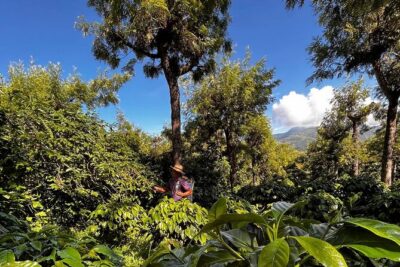
Browse the lists this tour appears in