
Review · MAYA HERITAGE TOURS
Lake Atitlan Cultural Tour Exploring Mayan Villages
Lake Atitlan rewards a full day. This tour links San Juan La Laguna, San Pedro La Laguna, and Santiago Atitlan through village walks, church visits, local crafts, food production, and lake transport. I especially like the Tz’utujil Mayan focus and the chance to see working textile, honey, and chocolate traditions rather than simply taking photos from a lakeside dock. I also like that guides such as Victor, Luis, Vick, and Lupe are praised for explaining local life in a relaxed, personal way. The main consideration is that San Juan includes several shopping stops, so the day may feel more commercial than expected if you want only historical sightseeing.
The tour costs $65 per person and lasts about six to seven hours. That is a fair price for a day covering three towns, transportation, guiding, and several demonstrations. Lunch is not included, and the pace is active, with walking, boat travel, and tuk-tuk rides. If you have only a short stay at the lake, this is an efficient way to get your bearings fast.
In This Review
- Key points to know before booking
- Why this tour works well around Lake Atitlan
- San Juan La Laguna: murals, honey, chocolate, and weaving
- San Juan’s Catholic church and the meeting of traditions
- San Pedro La Laguna: local life, Spanish schools, and a different rhythm
- Santiago Atitlan by lancha: the lake becomes part of the tour
- Santiago Atitlan: the spiritual center of the route
- Santiago Apostol Church and monastery: a compact final visit
- How the transport and pace affect your day
- Lunch, shopping, and what to carry
- Is $65 a good value?
- Who should book this Lake Atitlan tour?
- Final verdict: book it for breadth and local connection
- FAQ
- Where does the Lake Atitlan Cultural Tour take place?
- How long does the tour last?
- How much does the tour cost?
- Is transportation included?
- Is lunch included?
- How many people can join the tour?
- Does the tour visit churches?
- What is the cancellation policy?
Key points to know before booking
- Three distinctive Tz’utujil towns: San Juan, San Pedro, and Santiago each have a different feel, from artisan workshops to nightlife and spiritual traditions.
- Hands-on local production: You can taste Melipona honey, sample chocolate, watch waist-loom weaving, and see how local artists work.
- Lake transport is part of the day: The route may include a lancha, the local word for a small public or private boat, plus tuk-tuks between village sights.
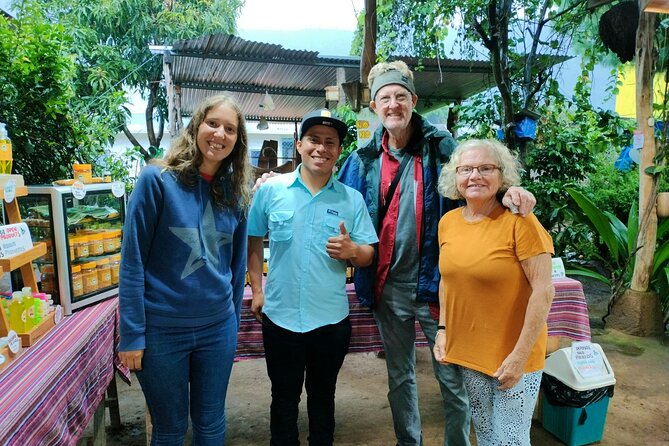
- Strong guide service: Victor, Luis, Vick, and Lupe receive repeated praise for clear communication, local insight, flexible pacing, and lunch suggestions.
- Shopping is built into San Juan: Buying textiles, paintings, chocolate, or honey is optional, but bring a small backpack if you plan to purchase souvenirs.
- A useful first-day tour: The broad overview helps you understand the lake’s villages before returning to explore one area at a slower pace.
Why this tour works well around Lake Atitlan
Lake Atitlan is not one single destination. It is a collection of lakeside communities, each with its own Mayan identity, tourist scene, religious traditions, and daily rhythm. Moving between them by boat gives you a better sense of how the villages relate to one another.
This tour is built as a cultural sampler. You are not spending half a day at one museum or viewpoint. Instead, you are walking through streets, entering churches, watching craft demonstrations, visiting markets, and talking with a guide who can explain the details that are easy to miss.
The route begins and ends at the meeting point, with public or private transport included. The group can have up to 15 people. That is small enough for a more personal day, though the experience will depend somewhat on the guide assigned and the number of people in your group.
The strongest part of the day is the guiding. Victor is praised for explaining the lake’s communities, ecosystem, volcanoes, and past in a calm manner. Luis receives particular praise for keeping the day interesting and suggesting a good restaurant. Lupe is noted for adjusting the pace and comfort level for a family. These details matter because a village tour can otherwise become a quick procession of shops and photo stops.
More Maya Heritage Tours in Lake Atitlan
- Mayan Nose Sunrise Hiking
★ 4.5 · 62 reviews - Mayan Nose Sunrise Hiking + Chichicastenango Market Tour
★ 5.0 · 22 reviews - Authentic tour of Mayan art and culture in Lake Atitlan
★ 5.0 · 4 reviews
San Juan La Laguna: murals, honey, chocolate, and weaving
San Juan is the longest stop, at about two hours and ten minutes. It is also the part of the tour with the greatest number of organized visits, so you will see a lot in a short period.
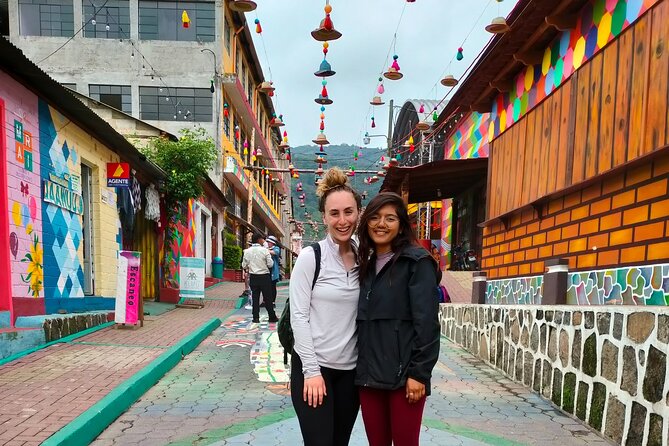
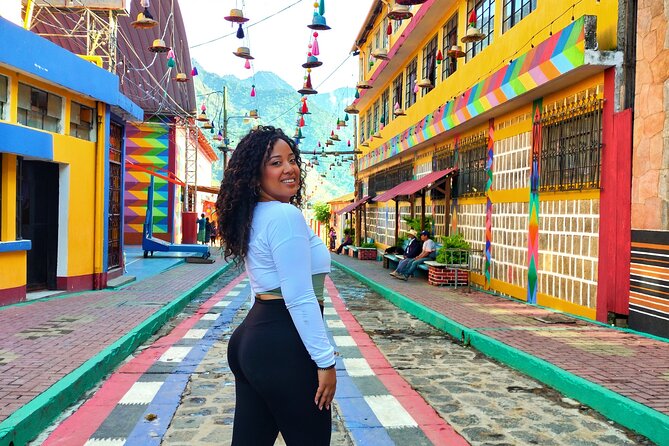
The walking tour follows streets decorated with murals. These paintings are not just colorful backdrops. Your guide explains how they relate to local identity, Mayan beliefs, community life, and the town’s story. This is one place where having a local guide makes a real difference. Without context, a mural may look attractive. With context, it becomes a way to read how the community presents itself.
The Melipona bee visit adds a distinctive touch. These native bees are important in Mayan tradition, and you can taste organic honey along with related products. The tasting is brief, but it connects food production with local belief and ecology.
Next comes the handmade chocolate factory. You see the traditional cocoa process from bean to bar and sample the finished chocolate. If you have already done a chocolate tour in Antigua, this portion may feel familiar. Still, it fits naturally into a day focused on local production, and the tasting gives the stop a pleasant reward.
The cooperative art gallery shows paintings and discusses the artists’ techniques and sources of inspiration. This helps place the murals and paintings in the same cultural setting rather than treating them as isolated souvenirs.
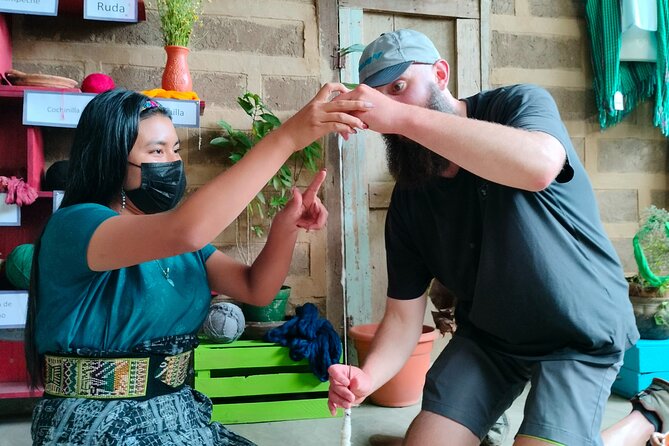
The women’s weaving collective is one of the more meaningful stops. You can watch a woman work with a waist loom and hear how colors and patterns carry symbolic meaning. This is a live demonstration, not simply a rack of finished clothing. You will also have the option to shop, and purchases support local families and entrepreneurs.
That shopping element deserves an honest warning. San Juan includes several opportunities to buy textiles, paintings, honey, and chocolate. You are not required to purchase anything, but the schedule may feel sales-oriented if you prefer a purely educational tour. I would bring a backpack, especially if you like handmade goods and do not want to carry small bags all day.
San Juan’s Catholic church and the meeting of traditions
The Iglesia Catolica de San Juan La Laguna is a short 20-minute visit. The church was founded in 1633 and rebuilt in 2016. Its story reflects the long meeting of Spanish Catholic practice and Tz’utujil Mayan belief.
Inside, you can see contemporary art, traditional altars, and details that show religious blending. The value of this stop is not grand scale. It is the chance to see faith as a living part of community life, rather than as a separate subject from local culture.
Twenty minutes is enough for an introduction, but not for a slow architectural study. If churches are a major interest, you may want to return independently. As part of this full-day route, the short visit keeps the schedule moving.
San Pedro La Laguna: local life, Spanish schools, and a different rhythm
San Pedro receives about one hour and 40 minutes. Since the tour begins in San Pedro, this stop can feel more personal when the guide is from the town. Vick, for example, is associated with San Pedro and is praised for answering questions about daily life with patience.
The route includes the central park, cobbled lanes, the market, and small family shops. This is the most useful place to observe ordinary routines alongside tourism. You see a town that remains firmly Tz’utujil while also serving as one of the lake’s best-known bases for international visitors.
San Pedro is also known for Spanish schools. The tour explains why the town attracts people who want to study Spanish in Guatemala, with academies recognized beyond the country. That point gives you a clearer sense of why the town has a large foreign presence.
The town has two distinct moods. During the day, it can feel calm and rooted in local routines. At night, bars and events draw visitors from around the world. The tour focuses on the daytime side, but the guide can help explain the contrast.
A market and park visit may not sound dramatic, yet they are valuable when you want to understand how the lake towns work. You are seeing public spaces used by residents, not only places prepared for sightseeing. That makes San Pedro a good counterpoint to the craft-focused stops in San Juan.
More around Lake Atitlan:
- Sunrise Hike Tour on Indian’s Nose Mountain
★ 5.0 · 133 reviews - Coffee Tour in Lake Atitlán
★ 5.0 · 74 reviews - 5-Hour Private Birdwatching Experience in San Juan La Laguna
★ 5.0 · 24 reviews - Horseback Riding Tour in San Pedro La Laguna
★ 5.0 · 14 reviews
Santiago Atitlan by lancha: the lake becomes part of the tour
The journey to Santiago is one of the day’s pleasures. A lancha ride across Lake Atitlan changes the pace and gives you views of the water, villages, and volcanoes from a different angle. Several guests particularly enjoyed the boat portion, and one person described the private boat connection as a reason the route was easy to manage.
Transport details can vary because the tour includes public or private transport. Confirm the exact meeting and boat arrangements when you book, especially if you are staying outside San Pedro. The local boats are practical transport, not a luxury cruise, so think of the ride as part of everyday life around the lake.
Santiago Atitlan: the spiritual center of the route
Santiago is given about one hour and 40 minutes and offers the strongest historical and spiritual focus. It was the last major stronghold of the former Tz’utujil kingdom to resist the Spanish conquest. Your guide places the town within that story while also explaining how ancestral traditions continue today.
The village is known for its Catholic church and the veneration of Maximon, a sacred figure tied to the area’s blend of Catholic and Mayan practices. This is a sensitive subject, and the value of a good guide is clear. You need context to understand that these traditions are not simply a tourist display. They reflect generations of religious change, local continuity, and community identity.
You also walk through squares and street markets where traditional dress and crafts remain visible. The stop offers more than buying souvenirs. Textiles and clothing show how people express place, family, and belief through color and pattern.
The guide also discusses shamans, Mayan ceremonies, and the spiritual relationship between local people, the lake, and the volcanoes. The exact depth of this conversation can depend on your questions and the guide’s approach. Some guests wanted more historical and cultural explanation, so do not hesitate to ask for detail if that is your main reason for booking.
Santiago Apostol Church and monastery: a compact final visit

The final stop is the Iglesia Parroquial Santiago Apostol, a 20-minute visit to a church and monastery complex built in 1547. It is presented as one of the area’s oldest religious sites.
Look for the way Spanish construction methods mix with Mayan symbols in the walls, facade, and altarpieces. The old monastery includes rooms used by missionary friars and a courtyard where Bible lessons were taught to Indigenous people. A historic garden looks toward San Pedro Volcano and provides a quieter finish to the Santiago visit.
Again, the time is short. You will gain an overview rather than a detailed architectural tour. The church works best as part of the wider day because you have already seen the living mix of Catholic and Mayan practice in San Juan and Santiago.
How the transport and pace affect your day
This is not a sit-back-and-watch-the-view excursion. You will walk through village streets, use local transport, and change settings several times. Tuk-tuk rides add local flavor and can make short uphill or town-to-town connections easier.
The boat ride is scenic, but conditions on the lake can affect comfort. The supplied details do not promise a specific boat type for every departure, so ask ahead if transport arrangements matter to you.
The six to seven-hour length is long enough to cover the three towns without turning the day into a rushed checklist. Still, each church receives only 20 minutes, and some stops are built around demonstrations and shopping. If you like slow mornings, long meals, and unplanned wandering, this route may feel busy.
The pace suits you best if you want a broad introduction. You can return later to San Juan for art and textiles, San Pedro for Spanish study or nightlife, or Santiago for more time with its religious traditions.
Lunch, shopping, and what to carry
Breakfast and lunch are not included. Guides have suggested traditional restaurants and lakeside places, and the meal recommendations receive warm praise. Even so, budget separately for lunch and ask your guide when and where the group will stop.
San Juan gives you the best chance to buy handmade goods. Textiles, paintings, honey, and chocolate are all part of the route. Shopping is optional, but the number of stops makes it easy to spend more than planned.
I would carry:
- A small backpack for purchases
- Cash for lunch and optional shopping
- Comfortable shoes for cobbled streets
- Water for the walking portions
- Space in your schedule for a full six to seven hours
These are practical suggestions based on the route’s walking, food, transport, and shopping mix. No special equipment is listed as required.
Is $65 a good value?
At $65, the tour offers solid value if you want transport and a guide to connect several villages in one day. You receive access to the village walks, church visits, demonstrations, tastings, and transfers, with a maximum group size of 15.
The strongest value comes from saving time and avoiding the work of arranging boats and local connections yourself. A guide also adds meaning to the murals, weaving patterns, church interiors, and Mayan traditions.
The price is less compelling if you plan to spend most of the day shopping or if you already know the three towns well. Lunch is extra, and purchases are entirely your responsibility. You are paying mainly for coordination, transport, and interpretation, not for a long list of paid monument admissions.
The tour is booked about 34 days ahead on average, which suggests planning early if your dates are fixed. It operates daily from 9:00 a.m. to 5:00 p.m. and offers free cancellation up to 24 hours before the start time. Cancellations or changes made inside that window are not accepted for a refund.
Who should book this Lake Atitlan tour?
I would recommend it to first-time visitors, couples, solo travelers, families, and anyone with only a short stay. The route gives you three different towns, several cultural demonstrations, and enough time to learn how the lake’s communities differ.
It is also a good choice if boat navigation makes you uneasy. The guide handles the movement between villages, while you focus on the views and visits. Families may appreciate the flexible approach noted by guests who toured with Lupe.
I would be more cautious if you dislike shopping stops, want a specialist art or religious tour, or prefer to spend an entire day in one village. In that case, use this tour as an introduction, not a final word on Lake Atitlan.
Final verdict: book it for breadth and local connection
Book this tour if you want a well-organized first look at Mayan village life around Lake Atitlan. San Juan supplies the crafts and tastings, San Pedro shows daily life and the modern visitor scene, and Santiago brings the strongest spiritual and historical focus.
The guides are the main reason to choose it. Victor, Luis, Vick, and Lupe are praised for communication, warmth, clear explanations, flexibility, and useful food suggestions. The only real drawback is the shopping-heavy feel in San Juan and the limited time inside each church.
For $65, the combination of transport, guiding, three villages, and local demonstrations makes sense. Bring a backpack, leave room for lunch, ask questions, and treat the day as an overview of the lake rather than a slow exploration of one town.
FAQ
Where does the Lake Atitlan Cultural Tour take place?
The tour is based in San Pedro La Laguna and visits San Juan La Laguna, San Pedro La Laguna, and Santiago Atitlan.
How long does the tour last?
The experience lasts approximately six to seven hours.
How much does the tour cost?
The listed price is $65 per person.
Is transportation included?
Yes. Public or private transport is included. The route may involve local boats and tuk-tuks between village stops.
Is lunch included?
No. Breakfast and lunch are not included in the tour price.
How many people can join the tour?
The activity has a maximum group size of 15 travelers.
Does the tour visit churches?
Yes. The route includes the Catholic Church of San Juan La Laguna and the Iglesia Parroquial Santiago Apostol in Santiago Atitlan.
What is the cancellation policy?
You can cancel at least 24 hours before the start time for a full refund. Cancellations or changes made less than 24 hours before the start are not accepted for a refund.
More History Tours in San Pedro La Laguna
- 2-Hour Culture and Historical Tour From Guatemala
★ 5.0 · 21 reviews - From Flores: Tikal VIP Exclusive cultural Tour All inclusive
★ 5.0 · 9 reviews - Historical and Cultural Walking Tour of Antigua Guatemala
★ 4.5 · 8 reviews - Antigua Sightseeing: Private Walking Tour Culture and History
★ 5.0 · 8 reviews
More Maya Heritage Tours in San Pedro La Laguna
- Private Ancestral Mayan Walk between Santa Cruz and Tz’ununa
★ 5.0 · 2 reviews - From San Ignacio: Tikal Maya Site Day-Trip with Local Lunch
★ 4.8 · 94 reviews - Tikal Private Day Tour Maya Adventure from Flores
★ 5.0 · 73 reviews - Lake Atitlan: Mayan Ceremony at the Sacred Caves
★ 5.0 · 52 reviews
Just added in San Pedro La Laguna
- indian´s nose / sunrise Trip★ 5.0 · 4 reviews
- Waterfall Hike★ 5.0 · 1 review
- Tour of San Juan Lake Atitlan★ 5.0 · 2 reviews
- Tour Hike to San Pedro Volcano★ 5.0 · 4 reviews
- Visiting the archaeological site of Iximche★ 5.0 · 1 review
- Transporte Compartido de San Pedro- Antigua viceversa★ 4.5 · 6 reviews
- Tour in the Atitlan Nature Reserve★ 5.0 · 6 reviews
- Toliman Volcano Hike★ 5.0 · 2 reviews
Maya Heritage Tours, compared.
Lake Atitlan: Mayan Ceremony at the Sacred Caves
Read our review →
3 Mayan Villages Tour to Lake Atitlan (full day)
Read our review →
Tour to Tikal: from Mundo Maya Airport in Flores
Read our review →
Lake Atitlan: Mayan Ceremony at the Sacred Caves
Read our review →
Browse the lists this tour appears in