
Review · MAYA HERITAGE TOURS
Authentic tour of Mayan art and culture in Lake Atitlan
Three villages, one lake, many ways to see it. This seven-hour cultural tour from San Pedro La Laguna visits San Juan, San Pedro, and Santiago Atitlan, with time for weaving, painting, chocolate, honey, markets, churches, and Mayan spirituality. I especially like the focus on local Tz’utujil culture and the chance to meet makers rather than simply shop for finished souvenirs. I also like that the group is limited to 16 people, which should make questions and conversation easier.
The main consideration is pace. Three villages in one day gives you a useful introduction, but it does not leave unlimited time in any one place. Lunch costs extra, and the pickup details need confirming because the listed meeting point is the Rija’tzuul Na’ooj Community Library in San Juan La Laguna, while pickup may be arranged from your location.
In This Review
- Key points at a glance
- What this Lake Atitlan culture tour really offers
- San Juan La Laguna: murals, weaving, and natural color
- San Pedro La Laguna beneath the volcano
- Santiago Atitlan and the story of Maximón
- Why the guide matters more than the checklist
- Timing, pickup, and what to bring
- Who will get the most from this $57 tour
- Should you book it?
- FAQ
- Where does the tour start?
- What time does the tour begin?
- How long does the experience last?
- Which villages does the tour visit?
- Is lunch included?
- What is the cancellation policy?
Key points at a glance
- Natural dyes and old weaving methods: In San Juan, women’s cooperatives demonstrate textiles colored with plants and tree bark.
- Three distinct Tz’utujil communities: You see how San Juan, San Pedro, and Santiago each express their identity in different ways.
- Chocolate, honey, and Mayan bees: Small food workshops add taste and agriculture to the cultural visit.
- Maximón and religious blending: Santiago Atitlan offers the clearest look at the meeting of Catholic and Mayan belief.
- A small-group format: The maximum group size is 16, useful in workshops, markets, and narrow village streets.
- Good value at $57: Bottled water, a guide, and a full day of visits are included, but lunch is not.
What this Lake Atitlan culture tour really offers
This is not mainly a sightseeing circuit for quick photographs. It is a village-to-village look at Mayan art and daily culture around Lake Atitlan. You move through three towns with strong Tz’utujil roots, seeing how identity appears in cloth, murals, paintings, food, faith, and local commerce.
The day begins at 9:00 am and lasts about seven hours. The schedule gives roughly three hours in San Juan La Laguna, two hours in San Pedro La Laguna, and two hours in Santiago Atitlan. That division makes sense: San Juan has the broadest program of workshops and tastings, while the other two stops focus more on village life, churches, markets, and spiritual traditions.
You receive bottled water, but lunch is not included. At $57 per person, I consider the cost fair if you want an organized cultural day with a local guide. It is less attractive if you only want transportation between towns, since the price rests on the explanations, introductions, and visits along the way.
The guide named in the strongest praise is Chema, described as kind, attentive, and patient. English is not his first language, but he works to improve it and makes a clear effort to explain the tour. That matters here because the value of the day comes from context. A mural, textile, or church can look attractive on its own, but the story behind it is what makes the stop worthwhile.
More Maya Heritage Tours in Lake Atitlan
- Mayan Nose Sunrise Hiking
★ 4.5 · 62 reviews - Lake Atitlan Cultural Tour Exploring Mayan Villages
★ 5.0 · 34 reviews - Mayan Nose Sunrise Hiking + Chichicastenango Market Tour
★ 5.0 · 22 reviews
San Juan La Laguna: murals, weaving, and natural color
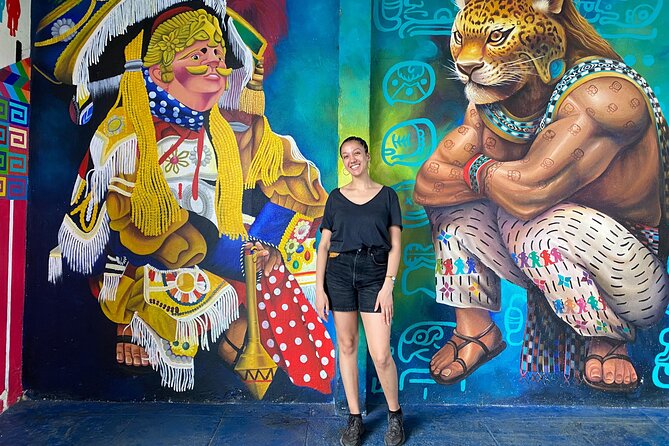
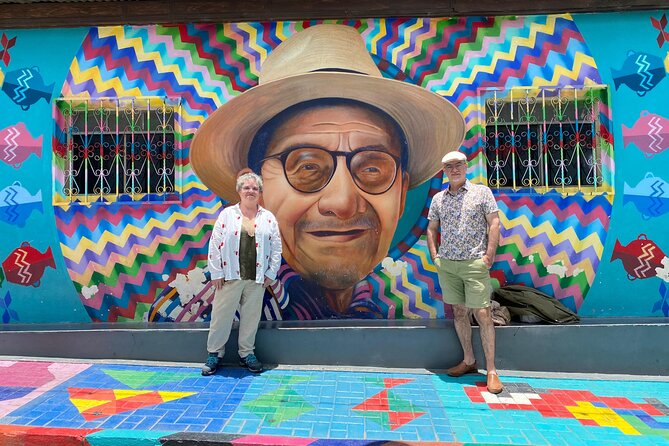
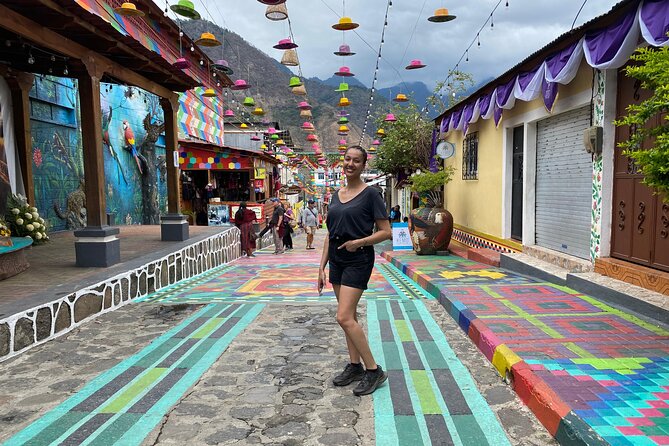
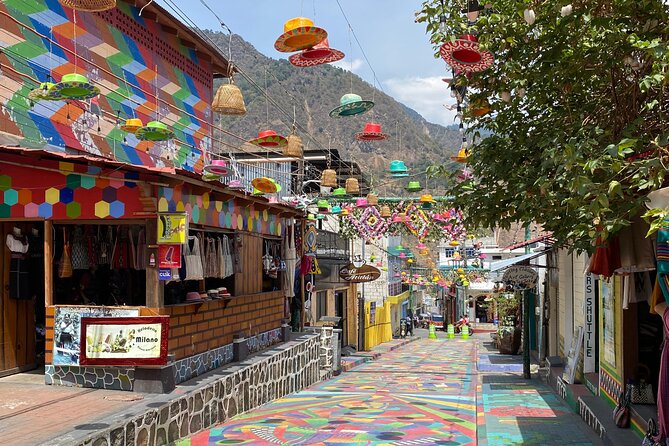
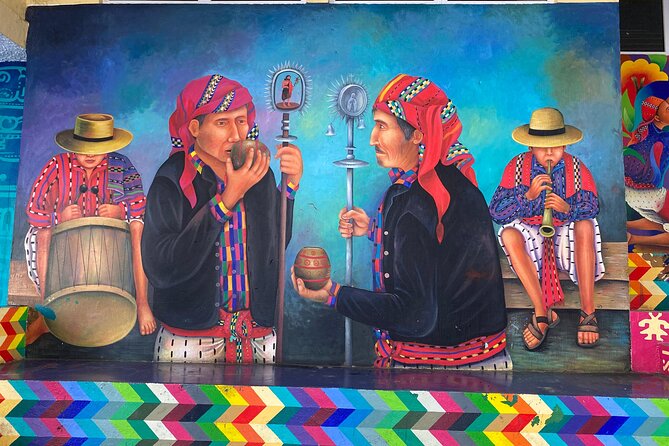
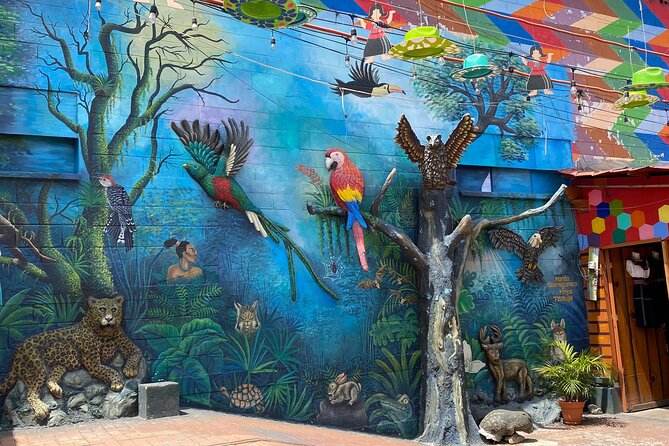
San Juan receives the longest visit, and it is the heart of the tour. This Tz’utujil village is presented through the connection between culture, nature, and spirituality. You can expect a walk through colorful murals that express Mayan ideas about the world, identity, and the relationship between people and nature.
The murals are useful early in the day because they give you a visual key for the rest of the tour. Instead of seeing local art as decoration alone, you begin to recognize that it can carry community memory and belief. I would pay attention to the guide’s explanations here and ask questions, especially if you want to understand the symbols rather than simply photograph them.
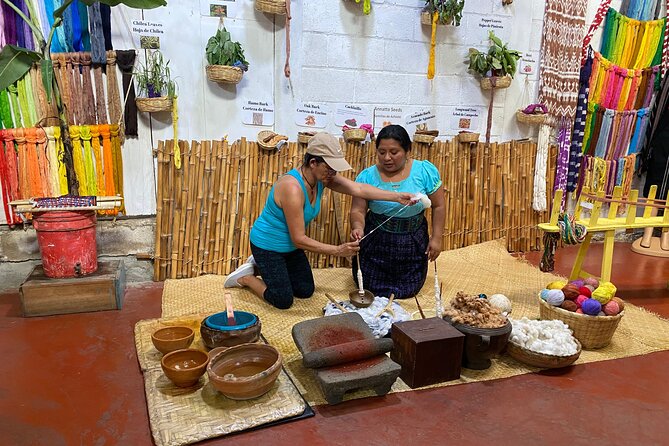
The women’s weaving cooperatives are another major reason to choose this experience. You can meet local weavers and learn how textiles are made with older techniques. The natural dyes come from plants and tree bark, giving the visit a clear connection to the surrounding environment.
This is also where the tour moves beyond a standard craft stop. You are not only looking at finished cloth. You are learning about the work behind it, the materials used, and the continued role of women’s cooperatives in keeping these methods active. If you plan to buy a textile, this background can help you judge what you are seeing and understand why handmade work costs more than a factory-made souvenir.
San Juan also includes indigenous art workshops where local painters express their identity and their connection to nature. The word indigenous can be used too broadly in many tourism descriptions, but here the focus is specific: local artists representing their own community and traditions.
Small chocolate workshops add a different kind of stop. You can taste natural flavors and learn how chocolate is made at a local level. The honey visit brings agriculture into the picture, with an introduction to pure honey and the role of the Mayan bee.
That combination is one of the tour’s best features. Art, weaving, chocolate, and honey are not separate subjects. Together, they show how culture is tied to materials, food, farming, work, and trade. The tasting portions may be modest, so think of these visits as short educational stops with samples, not as a full food tour.
The final San Juan visit is the Catholic Church of St. John the Baptist. Its importance comes from the way indigenous and Christian traditions meet there. This kind of religious blending is central to understanding the area, and it gives the church more meaning than a quick architectural photo stop.
With three hours in San Juan, the schedule should allow time for several workshops without making every stop feel rushed. Still, exact timing can vary. If you have a strong interest in weaving or painting, tell Chema early so you can give those parts your full attention.
San Pedro La Laguna beneath the volcano
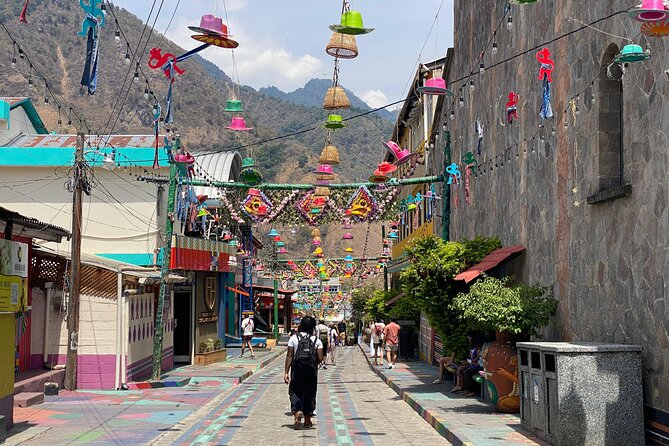
San Pedro La Laguna offers a different mood from San Juan. It sits at the foot of San Pedro Volcano and combines Tz’utujil heritage with a younger international and backpacking scene. The contrast is useful: you see a village that is both culturally rooted and connected to visitors, language students, cafés, and small businesses.
One of San Pedro’s best-known features is Spanish study. The town has several schools with local teachers and views over the lake. This tour does not promise a Spanish lesson, but the language-school setting helps explain why San Pedro feels different from the other stops.
You also visit artisan cafés, including places connected with local organic coffee production. This should appeal to you if you like seeing how local products reach cafés and daily life, rather than only visiting formal museums. The coffee stop is also a natural chance to slow down after the more information-heavy visits in San Juan.
The local market gives you another view of the town. You may find fruits, textiles, and traditional products arranged among ordinary daily shopping. Markets are often more revealing than polished craft shops because they show what people use, sell, and eat in regular life.
San Pedro’s Church of San Pedro Apostol adds a historical and religious stop. It is described as a colonial church surrounded by local devotion and history. With only two hours in San Pedro, you will not explore every corner of the town, but the selection creates a sensible cross-section: volcano views, coffee, market life, language learning, and faith.
The drawback is that San Pedro can feel less focused than San Juan. Its attractions are spread across several parts of local life, so you need to stay attentive to the guide’s thread. If you want a single, concentrated craft experience, San Juan provides that more clearly. If you want to see how a lake town balances local culture with modern visitor life, San Pedro earns its place.
Santiago Atitlan and the story of Maximón
The final stop, Santiago Atitlan, is described as one of the most culturally grounded villages around the lake. Its identity comes through hand-embroidered textiles, local markets, craft workshops, older streets, and a strong spiritual connection to Maximón.
Maximón is a Catholic Mayan deity honored with offerings of tobacco and liquor. The subject can be unfamiliar, and it deserves respectful attention. This is not a themed performance arranged for quick entertainment. The visit introduces a living religious tradition that reflects the way Catholic and Mayan belief can exist together in the same community.
You also visit the Church of Santiago Apostle, one of the oldest temples in the area. The church provides another chance to see religious blending in practice, but the experience is not limited to the building. The surrounding streets, markets, and workshops help place the church within the daily life of Santiago.
The hand-embroidered textiles are a major artistic feature. If San Juan shows you the process and materials of weaving, Santiago gives you another look at how clothing and embroidery express place and identity. The two stops work well together, though you should avoid assuming that every textile or design has the same meaning. Ask before photographing people or close details of their work.
Two hours is enough for a guided introduction, but this is the stop where you may wish for extra time. Santiago has several subjects that deserve thought: religious practice, local art, markets, and the town’s older streets. The tour gives you a strong first look, but not a complete study of the village.
More around Lake Atitlan:
- Sunrise Hike Tour on Indian’s Nose Mountain
★ 5.0 · 133 reviews - Coffee Tour in Lake Atitlán
★ 5.0 · 74 reviews - 5-Hour Private Birdwatching Experience in San Juan La Laguna
★ 5.0 · 24 reviews - Horseback Riding Tour in San Pedro La Laguna
★ 5.0 · 14 reviews
Why the guide matters more than the checklist
The listed stops are appealing, but the guide determines how useful the day becomes. In this case, Chema’s strengths are patience, kindness, and attention to the group. Those qualities are important when a tour moves through sensitive cultural subjects and small community workshops.
You should expect English explanations, though perhaps not the polished delivery of a guide who grew up speaking English. The available information indicates that Chema makes a serious effort to communicate clearly and is working to improve his English. If you are patient and willing to ask a question twice when needed, you can still get a great deal from the day.
I also like the personal scale suggested by the maximum of 16 people. A group of that size is not private, but it is more workable than a large coach group. In a weaving cooperative or small workshop, fewer people usually means a better chance to hear the explanation and look closely at the work.
The current score is 4.8 out of 5 from four ratings. That is a positive signal, though the sample is small. The strongest praise centers on the guide’s effort, care, and ability to connect people with several communities. I would treat that as the tour’s main strength, rather than assuming every departure will follow the exact same rhythm.
Timing, pickup, and what to bring
The stated start time is 9:00 am, with an approximate duration of seven hours. The listed start point is Biblioteca Comunitaria Rija’tzuul Na’ooj in San Juan La Laguna, but pickup is also offered. The pickup wording indicates that the operator can arrange to collect you if you provide your location, and an address can be sent for the starting point.
Confirm the exact pickup plan before the morning of the tour. This is especially important if you are staying outside San Juan or arranging your own boat transport. The tour ends back at the meeting point, so you should also know where you will be dropped off.
Bottled water is included. Lunch is not, so plan your budget and ask the guide how the meal break fits into the day. Since the schedule is divided among three towns, you should not assume you will have a long, leisurely restaurant stop unless that is confirmed in advance.
The tour is offered in English, uses a mobile ticket, and is near public transportation. Most people can take part. Comfortable walking shoes make sense because the program includes markets, churches, workshops, and village streets, though no special accessibility limits are stated.
Who will get the most from this $57 tour
I would choose this tour if you want cultural context but do not want to arrange several boats, guides, and workshop visits yourself. It suits you especially well if you enjoy meeting makers, learning about local materials, and seeing how religion and community identity appear in ordinary places.
It is also a good fit for a first visit to Lake Atitlan. You get three different village perspectives in one day, which can help you decide where to return for a longer stay. The tour is not designed for a slow, private photography walk or an extended market-shopping session.
Families, couples, solo visitors, and small groups can all find value here, since most people can participate and the group cap is 16. You should be comfortable with a full day of movement and with listening through translated cultural explanations.
At $57, the value is strongest when you make use of the guide. Ask about the dyes, the paintings, the Mayan bee, the church traditions, and Maximón. If you treat the day as a simple transfer service, the price may seem high. If you see it as a guided introduction to three communities, bottled water and the small-group limit make the cost reasonable.
Should you book it?
Book this tour if your priority is local art, Mayan culture, and village life around Lake Atitlan. San Juan gives you the strongest hands-on cultural focus, San Pedro shows the mix of local tradition and modern visitor life, and Santiago brings the day to a thoughtful close with Maximón, textiles, churches, and spiritual practice.
I would skip it only if you need a slow pace, a guaranteed included lunch, or a highly polished English presentation. Otherwise, the mix is well chosen, the price is sensible, and Chema’s patient approach appears to be a real asset. Confirm pickup, bring money for lunch, and reserve at least 24 hours ahead if your plans may change. Free cancellation is available until 24 hours before the 9:00 am start, with no refund for later cancellations or changes.
FAQ
Where does the tour start?
The listed starting point is Biblioteca Comunitaria Rija’tzuul Na’ooj in San Juan La Laguna, Guatemala. Pickup may also be arranged, so confirm the exact location with the operator.
What time does the tour begin?
The stated start time is 9:00 am.
How long does the experience last?
The tour lasts approximately seven hours.
Which villages does the tour visit?
It visits San Juan La Laguna, San Pedro La Laguna, and Santiago Atitlan.
Is lunch included?
No. Bottled water is included, but lunch is not.
What is the cancellation policy?
You can cancel at least 24 hours before the start time for a full refund. Cancellations or changes made less than 24 hours before the experience are not accepted for a refund.
More Maya Heritage Tours in San Pedro La Laguna
- Private Ancestral Mayan Walk between Santa Cruz and Tz’ununa
★ 5.0 · 2 reviews - From San Ignacio: Tikal Maya Site Day-Trip with Local Lunch
★ 4.8 · 94 reviews - Tikal Private Day Tour Maya Adventure from Flores
★ 5.0 · 73 reviews - Lake Atitlan: Mayan Ceremony at the Sacred Caves
★ 5.0 · 52 reviews
Just added in San Pedro La Laguna
- indian´s nose / sunrise Trip★ 5.0 · 4 reviews
- Tour of San Juan Lake Atitlan★ 5.0 · 2 reviews
- Waterfall Hike★ 5.0 · 1 review
- Tour Hike to San Pedro Volcano★ 5.0 · 4 reviews
- Visiting the archaeological site of Iximche★ 5.0 · 1 review
- Transporte Compartido de San Pedro- Antigua viceversa★ 4.5 · 6 reviews
- Toliman Volcano Hike★ 5.0 · 2 reviews
- Tour in the Atitlan Nature Reserve★ 5.0 · 6 reviews
Maya Heritage Tours, compared.
Lake Atitlan: Mayan Ceremony at the Sacred Caves
Read our review →
3 Mayan Villages Tour to Lake Atitlan (full day)
Read our review →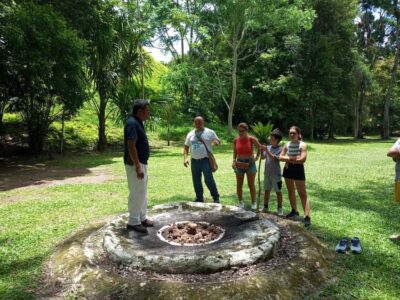
Tour to Tikal: from Mundo Maya Airport in Flores
Read our review →
Lake Atitlan: Mayan Ceremony at the Sacred Caves
Read our review →
Browse the lists this tour appears in