
Review · WORKSHOPS
Bean-to-Bar Chocolate Workshop in ChocoMuseo Antigua
Chocolate can be a very good afternoon plan. At ChocoMuseo Antigua, you learn how cacao becomes chocolate through roasting, shelling, crushing, tasting, and making your own bar. I like the hands-on cacao work and the cheerful teaching style, especially when Diana or Jocelyn leads the group. I also like that the class includes drinks and a 90-gram chocolate creation to take home.
The main thing to understand is that this is an entertaining introduction, not a professional chocolate-making course. You help process cacao beans, but the chocolate used for your finished bar is already prepared. That may disappoint you if you expect to turn raw beans into a finished bar in two hours. For most people, though, the mix of food, culture, and simple activities makes this a sweet value at $32.48.
In This Review
- Quick reasons to book
- What the ChocoMuseo class is really like
- From cacao pod to roasted bean
- Cacao tea and Aztec-style hot chocolate
- Making your own 90-gram chocolate bar
- How the guides shape the experience
- Is $32.48 a fair price?
- Who will enjoy this workshop most?
- Timing, meeting point, and small practical tips
- The attached shop and café
- The main drawbacks to consider
- Should you book the ChocoMuseo workshop?
- FAQ
- Where is the Bean-to-Bar Chocolate Workshop held?
- How long does the workshop last?
- What is included in the price?
- Do I receive chocolate to take home?
- When can I collect my handmade chocolates?
- Is hotel transportation included?
- How many people can join the workshop?
- Is the workshop near public transportation?
- Can most people participate?
- Can I cancel for a full refund?
Quick reasons to book
- You handle real cacao beans: Roast, shell, crush, and taste the beans as you follow the process from cacao pod to chocolate.
- You sample several chocolate drinks: The workshop includes cacao tea and hot chocolate prepared in different styles, including an Aztec-style version.
- You make a 90-gram chocolate bar: Add toppings and create a personal bar to take home after it sets.
- You get lively instruction: Diana and Jocelyn receive repeated praise for humor, energy, and keeping children and adults involved.
- You join a small group: The maximum is 12 people, which gives you a better chance to participate and ask questions.
- You should plan extra time afterward: Your chocolates may not be ready to collect until about 45 minutes after the workshop ends.
What the ChocoMuseo class is really like
The workshop takes place at ChocoMuseo La Antigua, at 4a Calle Poniente number 8, opposite Central Park. That puts you in an easy-to-reach part of Antigua, close to public transportation and the center of town.
The scheduled activity lasts about two hours. The class is designed as a group experience, with no more than 12 participants. That limit matters. A chocolate demonstration can turn into a spectator event when too many people crowd around a counter. Here, the small size gives you a reasonable chance to roast beans, handle ingredients, and shape your own chocolate.
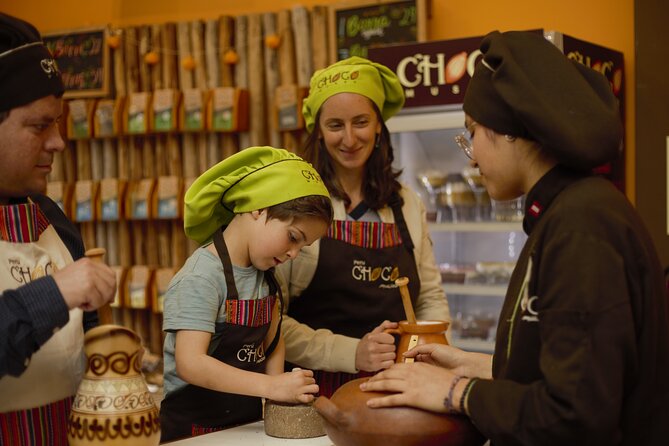
The tone is light and social. You might sit beside couples, families, solo visitors, or people from several countries. One particularly praised guide, Diana, begins by learning everyone’s name and later uses those names during the presentation. Small touches like that help a class feel less stiff.
This is not a quiet museum lecture. Expect questions, jokes, tasting, and some group participation. Diana and Jocelyn are both praised for keeping children engaged, but the class also suits adults and solo visitors. One solo participant found it easy to meet other people during the activity, which is a useful bonus if you are exploring Antigua on your own.
More Workshops and Classes in Antigua Guatemala
- Authentic Guatemalan Cooking Class in Antigua
★ 5.0 · 438 reviews - Guatemalan Cooking Class & Market Tour
★ 5.0 · 213 reviews - Guatemalan Cooking Class and Market Tour
★ 5.0 · 145 reviews
From cacao pod to roasted bean
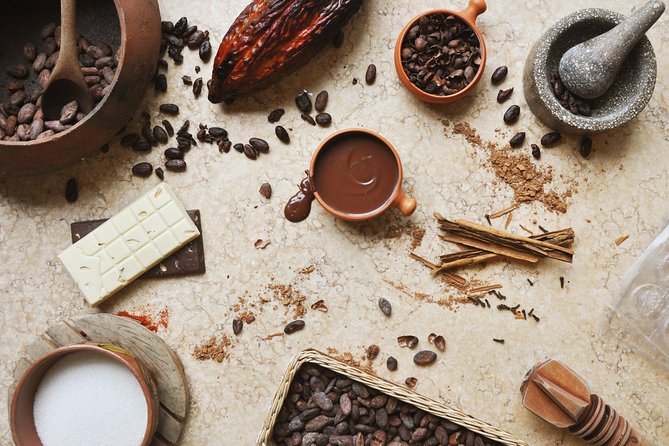
The class begins with the cacao plant and the raw material behind every chocolate bar. You see a cacao pod opened and get to taste a raw cacao bean. That first bite is useful because it shows how far cacao must go before it resembles the sweet chocolate sold in shops.
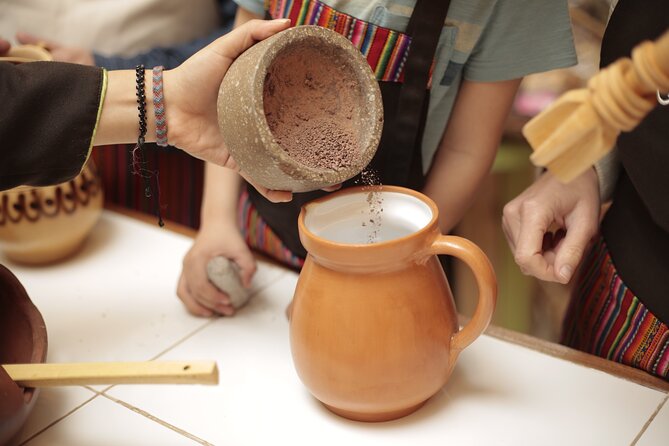
You then help roast the beans, remove their shells, and crush them. These steps give you a physical sense of the work. You are not simply watching someone operate equipment behind a counter. You handle the beans and see how their texture and flavor change.
The shelling stage is especially helpful for understanding why cacao is not ready to eat straight from the pod. The bean and shell have to be separated, and the roasted pieces need further processing before they become smooth chocolate. You also use the crushed cacao in drinks, so the activity connects directly to what you taste later.
The workshop also discusses cacao farming, different types of cacao, and the role of chocolate in Guatemala and Mayan culture. Several class descriptions praise this part for connecting chocolate to agriculture and local traditions rather than treating it as just a sugary snack.
Still, keep your expectations in check. The cultural explanation is presented for a general audience, with a playful style. One critical assessment found some historical claims too loose and the presentation too theatrical. If you want an academic account of cacao origins, this will feel simplified. If you want an accessible introduction during a holiday in Antigua, the approach is easier to enjoy.
Cacao tea and Aztec-style hot chocolate
The drink tasting is one of the best parts of the class because it shows that cacao is more than a candy ingredient. After the beans are roasted and shelled, the group prepares cacao tea using the shells. You also make hot chocolate in an Aztec-style preparation.
These drinks give you different ways to think about cacao. The tea is tied to the shells left behind during processing, while the hot chocolate shows how crushed cacao can become a drink rather than a bar. You taste several chocolate-based beverages as part of the workshop, and the preparation keeps the group involved.
One unusual detail from the class is a lesson about what a mosquito is useful for. The supplied information does not explain the exact point, so I would treat it as one of the guide’s playful surprises rather than a formal part of the chocolate process. The larger point is clear: the instructors use humor and odd little facts to keep attention from fading.
The drink portion also helps pace the session. You move from listening to handling beans, then to preparing and tasting something. For children, that change of activity helps. For adults, it keeps the class from feeling like a long sales presentation.
Making your own 90-gram chocolate bar
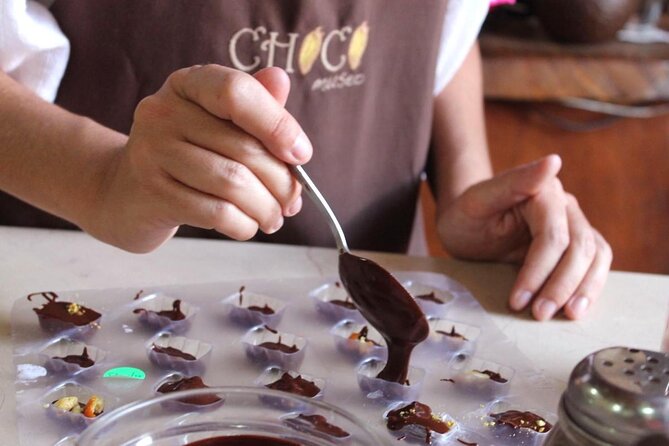
The final creative task is decorating and shaping your own chocolate bar. You work with chocolate that has already been prepared, then choose from a range of toppings and make a personal combination.
This is where the title needs a little explanation. You do participate in the bean-to-bar process, especially during roasting, shelling, and crushing. But you do not complete every industrial or craft step needed to transform your own beans into a finished bar. The chocolate for the final creation is prepared in advance.
That is not necessarily a flaw. It makes the activity practical for a two-hour class, and it allows you to leave with a bar that is ready to set rather than waiting through a long production process. It also means young children can focus on the fun part, decorating chocolate, without handling complex equipment.
The included portion is 90 grams of handmade chocolate. Some people describe it as delicious, while one person found the flavor only average and noted that it melted quickly while walking home. Antigua can be warm, so carry it carefully and do not plan to leave it in a hot bag.
Your bar may not be ready at the exact moment the formal class ends. You may need to wait around 45 minutes before collecting it. Build that pause into your schedule. You can browse the attached shop or café, return to Central Park, or simply enjoy a slower break before picking it up.
More things to do in Antigua Guatemala:
- From Antigua: Adventure, 2-Day Hiking to Acatenango Volcano
★ 4.4 · 1,189 reviews - From Antigua: Pacaya Volcano Tour in English/Spanish
★ 4.5 · 930 reviews - From Antigua: Pacaya Volcano Trek
★ 4.4 · 798 reviews - Antigua Cultural Walking Tour
★ 4.5 · 725 reviews
How the guides shape the experience
The instructor can make or break a short workshop, and the strongest praise here goes to Diana and Jocelyn. Diana is described as funny, attentive, and good at remembering names. Jocelyn is praised for her energy and for keeping a family with children aged 6 and 8 involved.
That matters because the class asks you to participate in front of other people. A cold or overly technical instructor could make roasting, tasting, and decorating feel awkward. A warm instructor turns those same tasks into an easy group activity.
The teaching style is energetic rather than formal. You may be asked questions, encouraged to taste unfamiliar ingredients, or drawn into a small joke. Most people will find that pleasant. If you prefer to observe quietly, the interactive approach may feel a little forced.
The group can also affect your experience. A small class is a strength, but personalities vary. One class included a pair who asked many technical questions and interrupted often. The instructor handled them politely, though the session moved more slowly. That is a reminder that no group workshop runs exactly to the minute.
Is $32.48 a fair price?
At $32.48 per person, the price is reasonable if you value an activity rather than just a souvenir. The fee includes the two-hour class, all ingredients and materials, chocolate drink tastings, and your 90-gram handmade bar.
You are also paying for instruction and access to several stages of cacao processing. A chocolate bar from the shop would cost less than the full admission price, but buying a bar would not give you the roasting, shelling, drink-making, and group experience.
The value is strongest for families, couples, and solo visitors who want a break from churches, ruins, and cobbled streets. Antigua offers plenty of sightseeing, but a food workshop gives you something active to do. It also introduces an important part of Guatemalan food culture in a way that does not require a full-day trip.
The value is weaker if you are mainly interested in technical chocolate production. You will not make every part of the finished chocolate from your own beans. You may also find the cultural material too simplified if you already know a great deal about cacao.
Who will enjoy this workshop most?
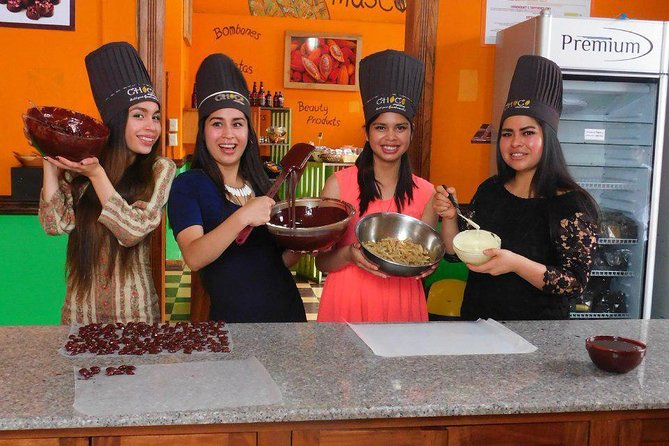
I would choose this for several kinds of visitors:
- Families with children who enjoy tasting and making things
- Couples looking for a relaxed shared activity
- Solo visitors who want an easy social setting
- Anyone curious about cacao, Guatemalan food, or Mayan traditions
- People with a spare afternoon in central Antigua
- Chocolate fans who want a souvenir they helped create
The activity is suitable for most people, and the maximum group size is 12. The supplied details do not list a minimum age, so families with very young children should confirm that point before booking. The experience includes handling cacao and participating at a counter, so you should also be comfortable taking part in simple hands-on tasks.
It is less suitable if you dislike group activities, do not eat chocolate, or want a serious agricultural or historical course. The class is designed to be fun first, with learning built into the food and demonstrations.
Timing, meeting point, and small practical tips
You meet at ChocoMuseo, 4a Calle Poniente number 8, in front of Central Park in Antigua Guatemala. Hotel pickup and drop-off are not included, so you make your own way there and return to the same meeting point at the end.
The central location makes this easy to add between sightseeing stops. You do not need to arrange a separate vehicle, and public transportation is nearby. Allow extra time to locate the shop and settle in, especially if you are coming from outside central Antigua.
Book ahead if your schedule is tight. The activity is often reserved about 23 days in advance, and one class description notes that there are only two workshops each day. Confirmation arrives when you book, and the experience can be canceled free of charge up to 24 hours before the start time.
Remember the chocolate pickup delay. The formal workshop lasts about two hours, but your bar may be available roughly 45 minutes later. That can make the total time closer to three hours, depending on how quickly the chocolate sets and is released.
The attached shop and café
ChocoMuseo includes a shop and café, which gives you something to do while waiting for your handmade bar. It is also a practical place to find edible gifts after the class.
You might want to set a souvenir budget before entering. After tasting several drinks and making a bar, more chocolate can seem like an obvious idea. The shop adds convenience, but purchases there are separate from the workshop price.
The café and shop also make the meeting point useful even for companions who do not want to participate. The supplied details do not promise a particular seating arrangement or menu, so think of them as optional places to browse rather than guaranteed parts of the class.
The main drawbacks to consider
The first drawback is the difference between the workshop name and the finished product. You learn the bean-to-bar process and work with beans, but your personal chocolate bar is made from chocolate prepared before the class. I would describe the experience as a guided cacao workshop with chocolate decorating, not a complete small-batch production course.
The second issue is accuracy and presentation. The material about cacao origins and history is intended for a broad audience and delivered with jokes. If you care about precise historical detail, you may want to treat the lecture as an introduction and verify more complex claims elsewhere.
The third issue is timing. The class is advertised at about two hours, but collecting the chocolate may take another 45 minutes. This is not a serious problem if you know about it in advance. It is a nuisance if you have a bus, dinner reservation, or another scheduled activity right afterward.
Finally, the finished bar can melt quickly. Pick it up when you are ready to protect it, and avoid carrying it around Antigua for hours.
Should you book the ChocoMuseo workshop?
I would book it if you want an upbeat, food-focused activity in central Antigua. The strongest reasons are the small group, the good instructors, the chance to work with cacao beans, the drink tasting, and the personal 90-gram bar.
I would skip it only if you expect a rigorous chocolate-making course or a carefully sourced academic presentation about cacao. For everyone else, $32.48 buys a useful mix of culture, sweets, conversation, and a souvenir you made yourself.
If you are traveling with children, ask for a session led by Diana or Jocelyn if the schedule allows. If you are solo, book with confidence: the class naturally creates conversation. And if you have only one free afternoon, leave enough time for the extra chocolate pickup before making other plans.
FAQ
Where is the Bean-to-Bar Chocolate Workshop held?
It is held at ChocoMuseo La Antigua, at 4a Calle Poniente number 8, opposite Central Park in Antigua Guatemala.
How long does the workshop last?
The workshop lasts approximately two hours.
What is included in the price?
The price includes chocolate drink tastings, all materials and ingredients needed for the activity, and 90 grams of handmade chocolate.
Do I receive chocolate to take home?
Yes. You receive approximately 90 grams of handmade chocolate that you create during the workshop.
When can I collect my handmade chocolates?
You may need to wait about 45 minutes after the workshop ends before your chocolates are ready to take with you.
Is hotel transportation included?
No. Hotel pickup and drop-off are not included. You meet at ChocoMuseo and return to that meeting point at the end.
How many people can join the workshop?
The maximum group size is 12 participants.
Is the workshop near public transportation?
Yes. The meeting point is near public transportation.
Can most people participate?
Yes. The activity information states that most participants can take part.
Can I cancel for a full refund?
Yes, if you cancel at least 24 hours before the experience start time. Cancellations made less than 24 hours in advance are not refunded, and changes within that period are not accepted.
More Chocolate and Cacao Trips in Antigua Guatemala
- Discover Chocolate Making in Antigua Guatemala
★ 4.5 · 18 reviews - Private Chocolate Tasting Experience in Guatemala
★ 5.0 · 9 reviews - Guatemalan Bean to Bar, Ceremonial Cacao and Chocolate Experience
★ 5.0 · 8 reviews - Chocolate workshop; gastronomic experience of cocoa.
★ 5.0 · 7 reviews
Just added in Antigua Guatemala
- Full day Antigua Guatemala from Quetzal Port★ 4.5 · 7 reviews
- Private transfer from Panajachel to Antigua Guatemala★ 5.0 · 2 reviews
- Guatemala Airport Roundtrip Transfer to Antigua Guatemala★ 3.5 · 5 reviews
- Colonial Antigua Guatemala walking tour & Hot Springs from Guatemala City★ 3.0 · 2 reviews
- Antigua Guatemala Full Day Tour★ 3.0 · 2 reviews
- Visit Antigua Guatemala and its colorful towns around – Private full-day tour★ 4.5 · 4 reviews
- Airport Transfer to Antigua Guatemala★ 3.0 · 2 reviews
- Iximché : Spiritual Ritual with a Mayan Priest★ 5.0 · 1 review
Workshops, compared.
Two Hours Private Backstrap Weaving Workshop in Antigua
Read our review →
Browse the lists this tour appears in