
Review · WORKSHOPS
Chocolate workshop; gastronomic experience of cocoa.
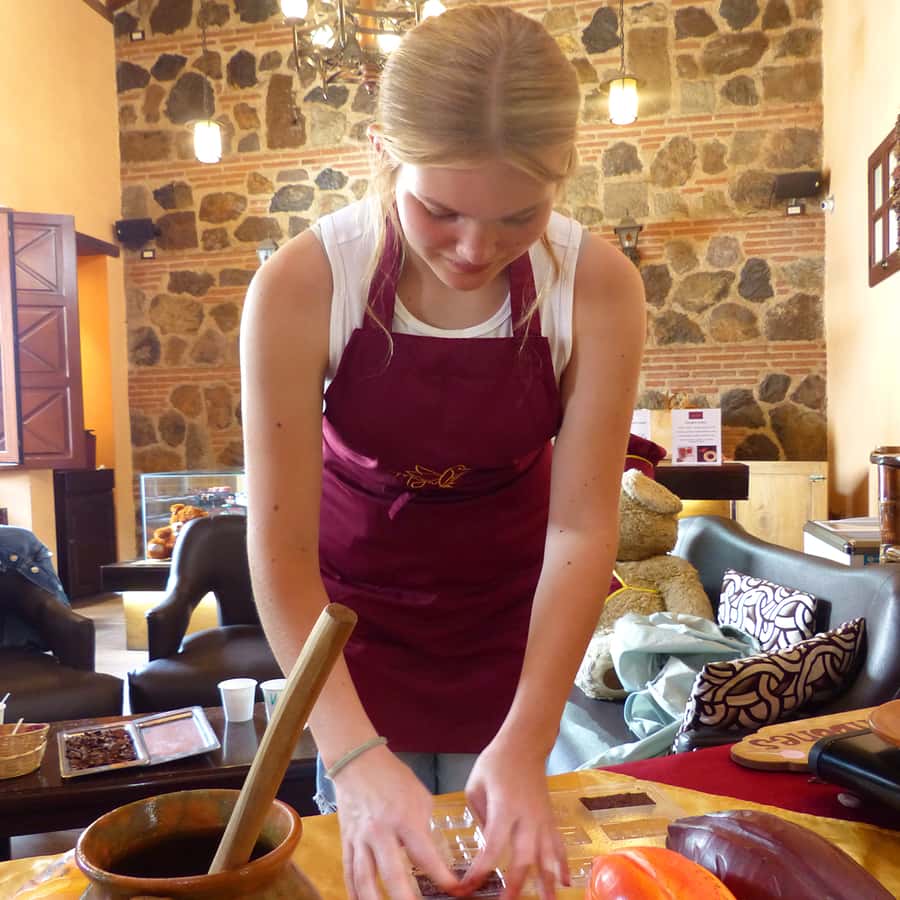
Chocolate starts with a bean. In Antigua, this hands-on workshop shows how that bean becomes a bar while connecting cocoa to Mayan culture and Guatemalan food traditions. I especially like the full start-to-finish process, and I like that you leave with chocolate you made yourself. The main drawback is that instruction is in Spanish, though patient guides and translation tools have helped visitors who speak little Spanish.
The workshop takes place near Antigua Guatemala’s Parque Central, so it fits neatly into a day of sightseeing. I also appreciate the small private-group format, which should make it easier to ask questions and work at your own pace. Just note that the actual workshop lasts about 1.5 hours, not a full day, and children under seven cannot take part.
In This Review
- Key points about the cocoa workshop
- Starting with Mayan cocoa in Antigua
- Tasting cocoa through all five senses
- Sorting, roasting, and shelling your beans
- Grinding cocoa and making your own bar
- What the $32 price includes
- A practical stop near Parque Central
- Who will enjoy this experience most?
- What the strongest praise tells you
- Booking and timing advice
- Should you book the cocoa workshop?
- FAQ
- Where does the chocolate workshop take place?
- How do I identify the meeting point?
- How long does the workshop last?
- What steps do I complete during the workshop?
- Do I take chocolate home?
- What language is the workshop conducted in?
- Is the workshop suitable for young children?
- Is the experience wheelchair accessible?
- Can I cancel or pay later?
Key points about the cocoa workshop
- Learn the Mayan role of cocoa: Begin with the origin, importance, and uses of cocoa during Mayan times.
- Use all five senses: Taste and smell Guatemalan aroma cocoa at several stages of preparation.
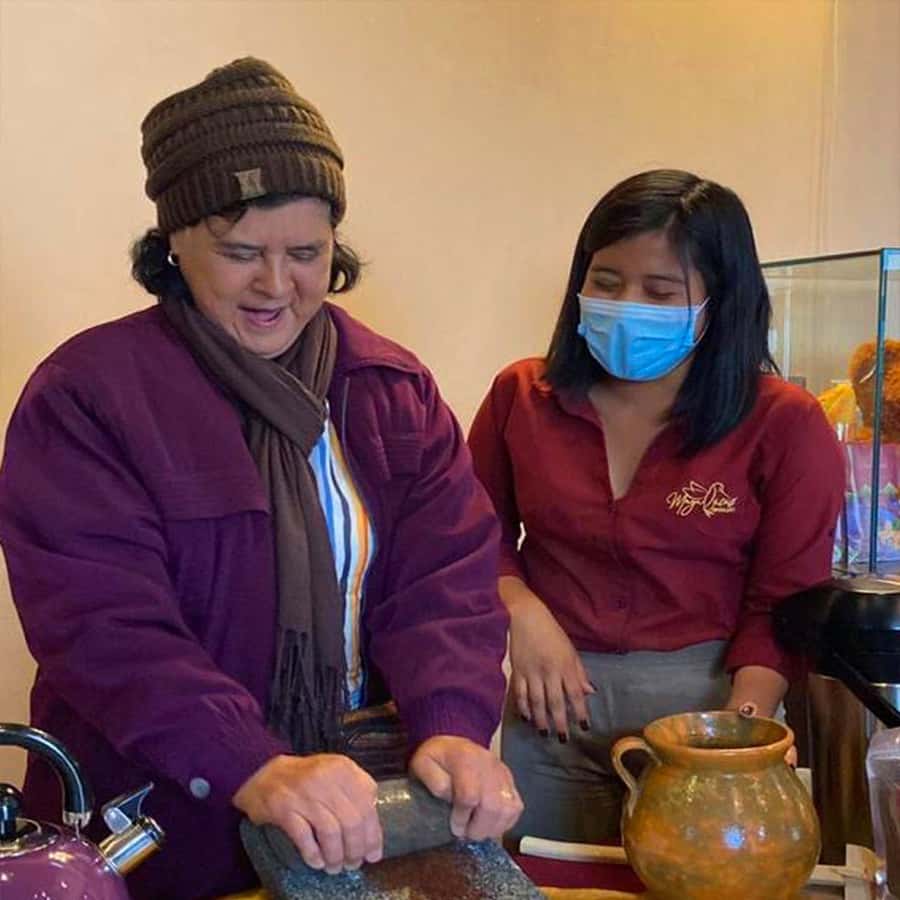
- Do the work yourself: Sort, roast, shell, and grind the beans before forming your chocolate.
- Take home your own bar: The chocolate you make is included, along with tastings and workshop materials.
- Meet near Parque Central: The yellow house is one block from the central park at 6a Avenida Norte 6.
- Spanish-led and family-focused: Guides such as Ingrid, Andrea, and Bea have made the session accessible to mixed-language families, though the activity is not for children under seven.
Starting with Mayan cocoa in Antigua
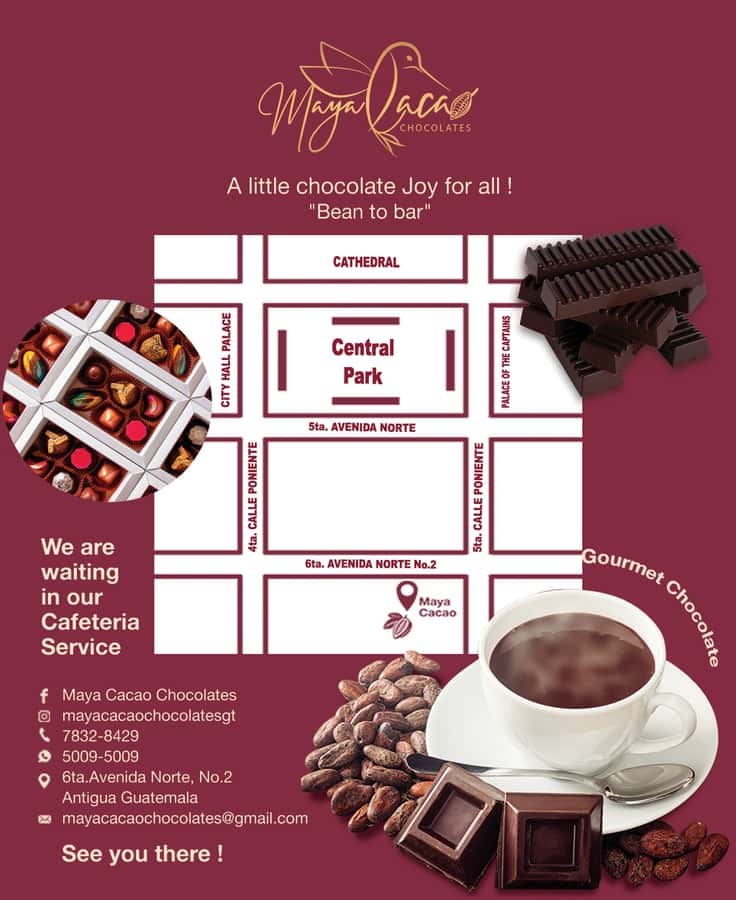
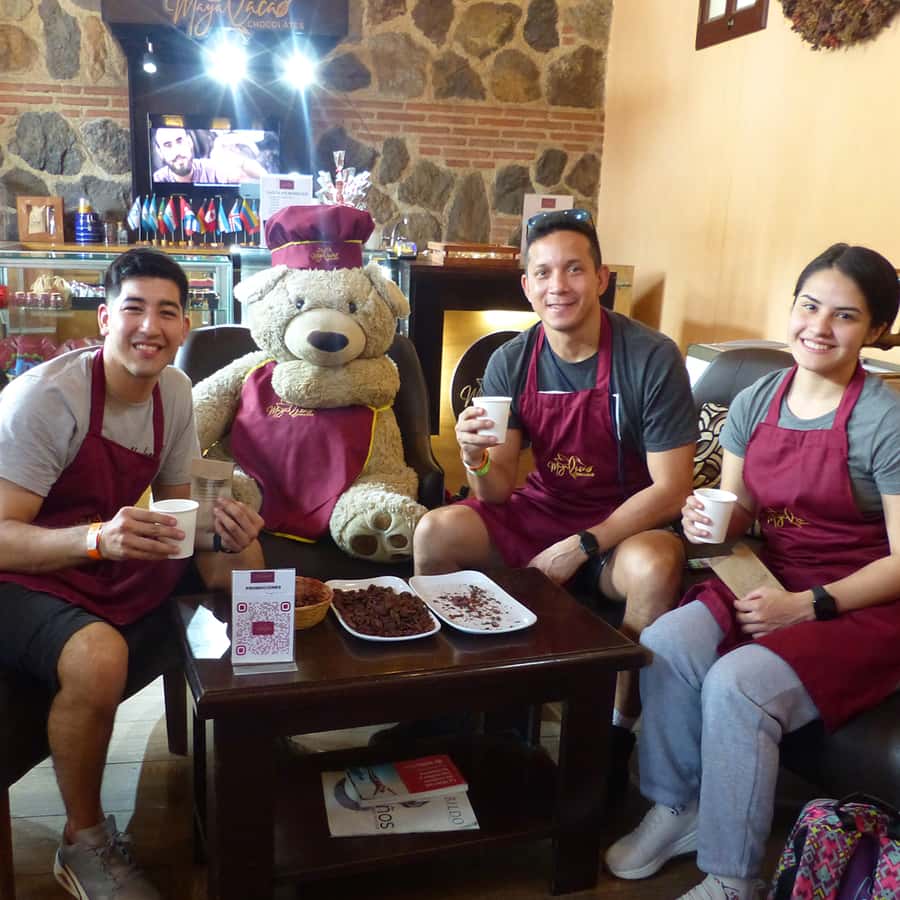
The experience begins at 6a Avenida Norte 6, one block from Parque Central in Antigua Guatemala. Look for a mustard-colored house on 6th Avenue North. A teddy bear at the door welcomes you, which is a useful landmark in a city where addresses can sometimes feel less clear than the map suggests.
You do not begin by making candy. First, you learn why cocoa mattered to the Maya, including its origin, importance, and traditional uses. This opening gives the tasting some context. Instead of treating cocoa as a sweet snack only, you begin to see it as a food with a long place in Guatemalan culture.
That cultural introduction is one of the better reasons to choose this activity over a quick chocolate tasting. You are not simply handed finished samples. You learn how the raw ingredient changes as you handle it, heat it, remove its shell, and grind it.
The session is conducted in Spanish. That matters if you do not speak the language. Ingrid has been especially patient with families who needed translation, and Andrea has supported a hands-on class with written information and Google Translate helping bridge the gap. You should still expect the experience to work best if you can follow basic Spanish or arrive ready to use a translation app.
More Workshops and Classes in Antigua Guatemala
- Authentic Guatemalan Cooking Class in Antigua
★ 5.0 · 438 reviews - Bean-to-Bar Chocolate Workshop in ChocoMuseo Antigua
★ 5.0 · 353 reviews - Guatemalan Cooking Class & Market Tour
★ 5.0 · 213 reviews
Tasting cocoa through all five senses
The central idea is to experience aroma cocoa with your eyes, nose, hands, ears, and taste buds. You sample cocoa through different processes, so the flavor is not treated as one fixed thing.
This is useful because many people know chocolate only in its finished form. Here, you can notice how roasting and grinding affect the bean before it becomes a smooth bar. The aromas and flavors become part of the lesson, not just an extra treat at the end.
The tastings are included in the $32 price. That helps the value, especially because the fee also covers materials and the chocolate bar you make. If you enjoy food workshops where the process matters as much as the final bite, this is a more satisfying use of an afternoon than a simple product sample.
Still, the session is not presented as an advanced professional confectionery course. The available information describes a guided gastronomic experience, not a certificate class or a technical pastry workshop. You should book it for cultural context, sensory learning, and the pleasure of making chocolate, rather than for highly specialized training.
Sorting, roasting, and shelling your beans
The practical part begins with the cocoa beans. You learn to sort them before roasting, giving you a closer look at the raw ingredient and the care needed before processing.
Roasting is an important step because it changes the aroma and prepares the beans for the next stages. The activity lets you take part rather than watch a staff member do everything. That makes the workshop more memorable, especially for families and couples who want a shared task.
After roasting, you shell the beans. This is a simple but revealing step. The outer covering needs to be removed before the cocoa can be ground, and doing it yourself helps explain why a finished chocolate bar involves more work than its polished appearance suggests.
The hands-on pace also gives the guides a chance to adjust their explanations. Bea, for example, has been praised for extending her explanations as needed and for being especially friendly. That kind of patience is valuable in a workshop where people may have different ages, language skills, and cooking experience.
You should expect to handle the ingredients directly. If you prefer a quiet demonstration with no participation, this may feel more active than you want. For most people, though, the physical work is the point.
Grinding cocoa and making your own bar
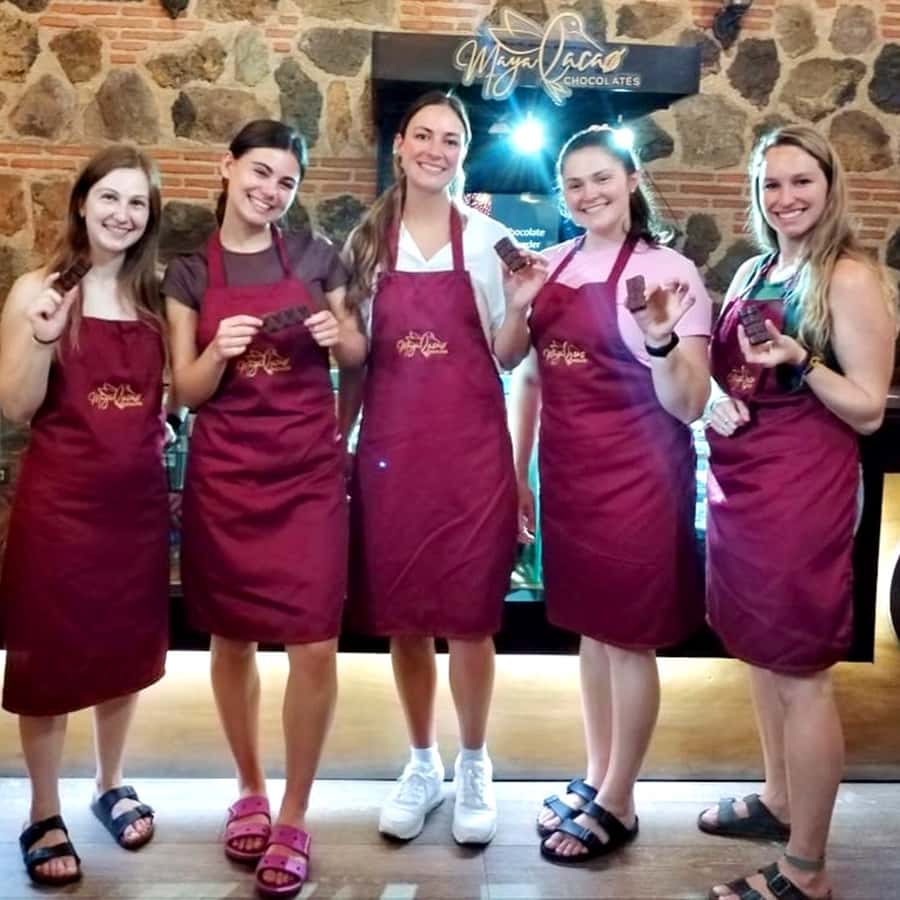
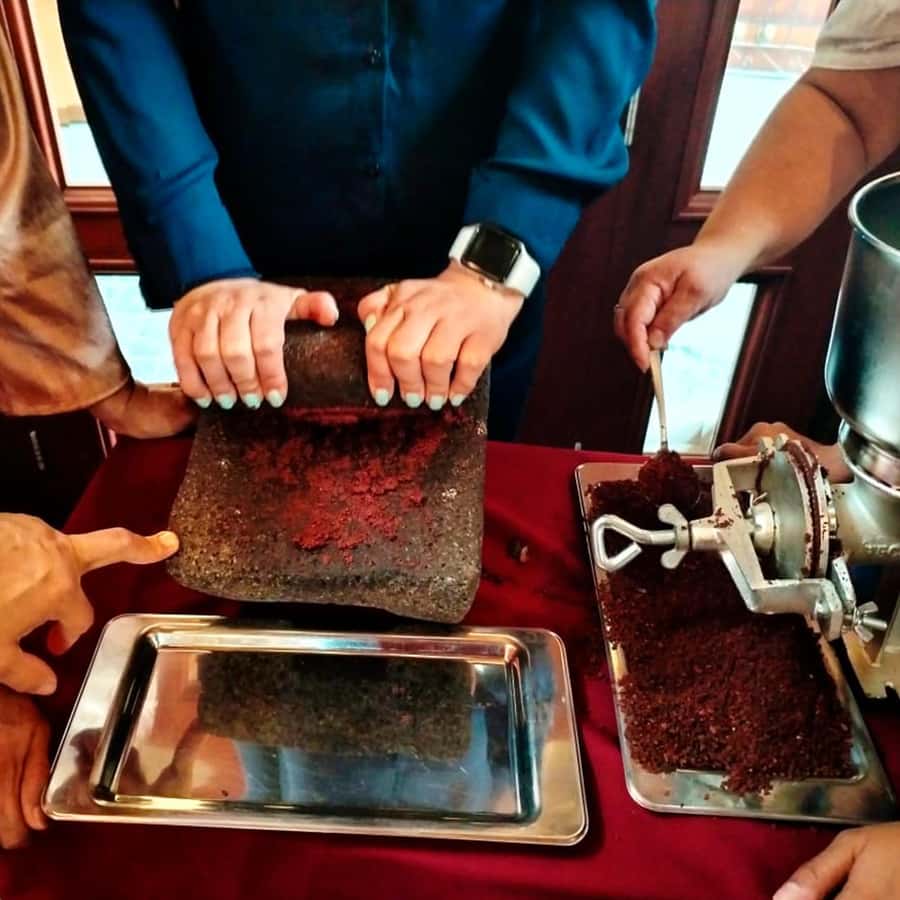
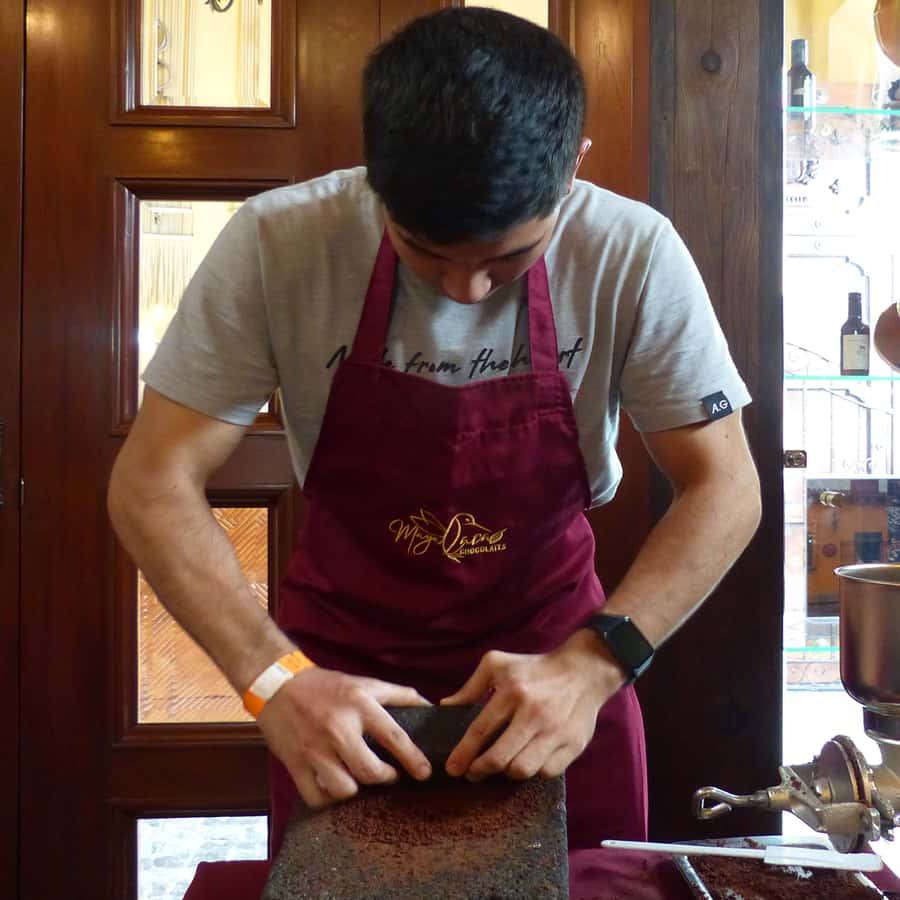
Once the beans are prepared, you grind your own cocoa. This is the moment when the raw bean begins to feel like the chocolate you recognize.
The process gives you a better sense of texture and aroma. You are not just tasting a finished sweet made by someone else. You are helping turn the cocoa into something you can shape and take with you.
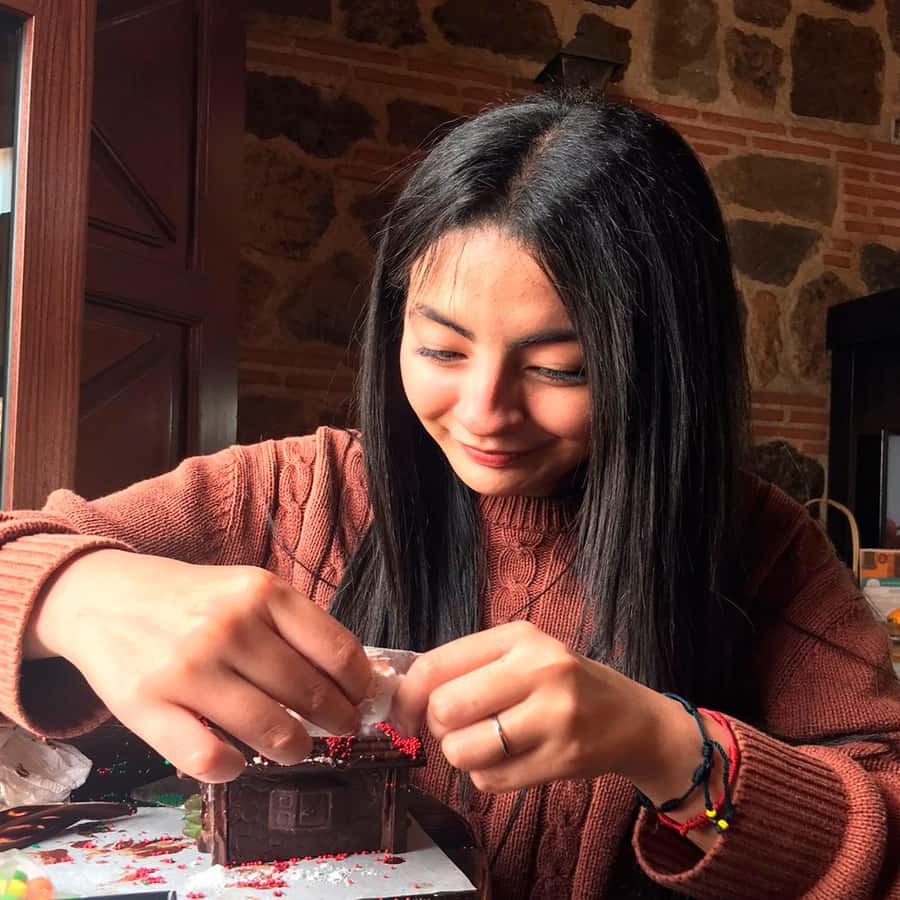
At the end, you form your chocolate bar. The exact design choices are not specified, so you should not expect a long menu of fillings or elaborate decoration. The important part is ownership: the bar is made by you, and it becomes a small edible souvenir of Antigua.
The chocolate is described as high quality and free of preservatives. That detail may matter if you pay close attention to ingredients. It also helps explain why the final product is treated as a fresh workshop creation rather than a mass-produced gift.
You can take your bar home after the session. It is a practical souvenir, though you may want to protect it from heat during the rest of your day. The experience information does not state any special packaging or storage method, so ask the guide if you plan to carry it for several hours.
More things to do in Antigua Guatemala:
- From Antigua: Adventure, 2-Day Hiking to Acatenango Volcano
★ 4.4 · 1,189 reviews - From Antigua: Pacaya Volcano Tour in English/Spanish
★ 4.5 · 930 reviews - From Antigua: Pacaya Volcano Trek
★ 4.4 · 798 reviews - Antigua Cultural Walking Tour
★ 4.5 · 725 reviews
What the $32 price includes
At $32 per person, the cost is reasonable for a private, hands-on activity that includes the materials, tastings, and your finished chocolate bar. You are paying for instruction and participation, not simply for a chocolate sample.
The value is strongest if you take part in every stage. Sorting, roasting, shelling, grinding, and shaping make the fee feel more justified than a short tasting at a shop counter. The Mayan cocoa introduction adds another layer, giving the session a cultural purpose as well as a food focus.
The price may feel less attractive if you want a long class. The workshop itself lasts about 1.5 hours, while the activity is valid for one day and offers available starting times based on the schedule. It is best viewed as a compact experience that fits around Antigua sightseeing, not as an all-day excursion.
You also receive a 5 percent discount on the entire store. That can improve the value if you want to buy more chocolate or cocoa products afterward. The supplied details do not specify the store’s full product range, so treat the discount as a useful bonus rather than the main reason to book.
A practical stop near Parque Central
The central location makes this easy to combine with other plans in Antigua. You do not need to arrange transport to a distant farm or production site. Find 6a Avenida Norte 6, look for the mustard-colored house, and use the teddy bear at the entrance as your final visual clue.
One point deserves attention: clear directions have been an area for improvement. Paola Vanessa Perez specifically found the arrival instructions less clear than the rest of the experience. Give yourself extra time to locate the door, especially if you are unfamiliar with Antigua’s street layout.
The private-group format is another practical advantage. You are not placed into a large public class, so the guide can respond to your questions and help with the manual steps. The details do not state the maximum group size, so you should not assume the group will be limited to just two people.
The workshop is wheelchair accessible, which makes it available to a wider range of visitors. You may still want to confirm the exact setup when booking if you have specific mobility needs, since the information confirms accessibility but does not describe the room layout or work surfaces.
Who will enjoy this experience most?
I would recommend it to couples, families with older children, and anyone who likes food experiences with a clear sense of place. The Mayan background and Guatemalan cocoa focus give the class more character than a generic chocolate-making session.
It suits people who learn by doing. If you want to roast, shell, grind, and shape the product yourself, you get the full benefit. It is also a good choice for a mixed-age family, provided every child is at least seven.
Language should be part of your decision. The instructor speaks Spanish, but the experience has worked for English-speaking families with patience, written information, and Google Translate. If you speak no Spanish and dislike using translation tools, communication may require more effort.
The activity is less suitable for children under seven, since they are not allowed to participate. It may also disappoint visitors looking for a full-day farm visit, extensive transportation, or a large meal. None of those are part of the experience described here.
What the strongest praise tells you
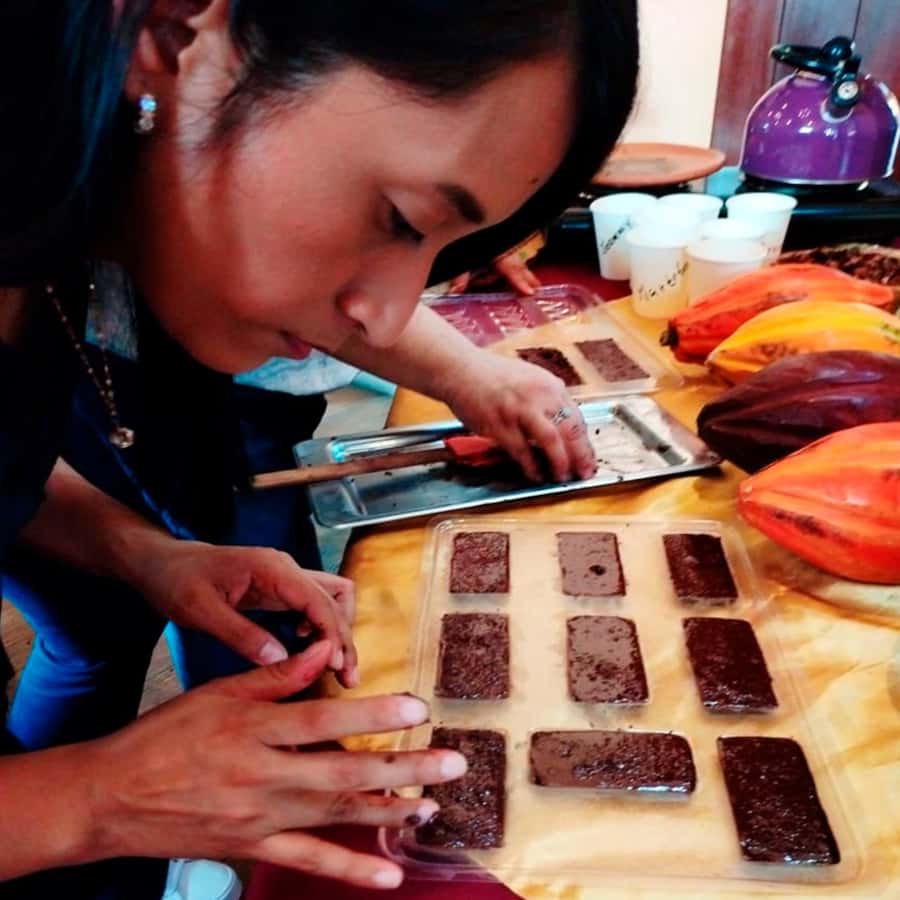
The most consistent praise centers on the guides and the complete process. Andrea led a class that covered every step from sorting the beans to forming the bars. Ingrid helped a family communicate across a language barrier, staying patient and interactive while translation took place. Bea has been praised for clear, flexible explanations and a warm manner.
Those details tell you something important about the experience. The quality depends partly on the person leading your session, but the guides appear prepared to adjust their approach. That is especially helpful when one person in your group speaks Spanish better than the others.
The chocolate itself also receives strong approval. It is described as very good, without preservatives, and suitable as a family activity. The overall rating is 5 out of 5 from seven published ratings, a small sample but a positive signal.
I would not treat the perfect score as proof that every session will be flawless. The unclear arrival directions are a real practical note, and Spanish instruction may slow communication. Still, the strong marks for friendliness, information, and hands-on work match the main features promised by the activity.
Booking and timing advice
You can cancel up to 24 hours in advance for a full refund. You can also reserve now and pay later, which helps if your Antigua plans are still shifting.
The activity is listed as valid for one day, with starting times based on availability. Since the hands-on session is about 1.5 hours, place it where you have enough time to arrive, find the house, and continue to your next plan without rushing.
Wear something comfortable for practical work, though no specific clothing requirement is provided. The most useful preparation is to arrive ready to handle cocoa and follow a Spanish-led lesson with help from translation if needed.
Afterward, you can use the 5 percent store discount if you want additional cocoa products. Keep your handmade bar somewhere cool and protected while you continue sightseeing, since no storage details are provided.
Should you book the cocoa workshop?
Book it if you want a short, personal food experience near Antigua’s center and like the idea of making a souvenir rather than buying one. The $32 fee covers the materials, tastings, instruction, and bar you take home, making it fair value for a private 1.5-hour session.
I would choose it especially for families with children seven and older, couples, and visitors curious about Mayan cocoa traditions. Spanish speakers will have the easiest time, but English speakers can manage with patience, written information, or Google Translate.
Skip it if you want an English-language class, a full-day excursion, or a factory-style tour with advanced chocolate techniques. Otherwise, the mix of history, tasting, manual work, and homemade chocolate makes this a useful and enjoyable addition to an Antigua itinerary.
FAQ
Where does the chocolate workshop take place?
It takes place at 6a Avenida Norte 6 in Antigua Guatemala, one block from Parque Central.
How do I identify the meeting point?
Look for a mustard-colored house on 6th Avenue North. A teddy bear is at the door to welcome you.
How long does the workshop last?
The workshop lasts approximately 1.5 hours. The activity is valid for one day, with starting times depending on availability.
What steps do I complete during the workshop?
You learn to sort, roast, shell, and grind your own cocoa before forming your chocolate bar.
Do I take chocolate home?
Yes. Your materials, tastings, and a chocolate bar made by you are included.
What language is the workshop conducted in?
The instructor speaks Spanish. Written information and translation tools may help participants who speak little Spanish.
Is the workshop suitable for young children?
No. Children under seven are not suitable for this activity.
Is the experience wheelchair accessible?
Yes, the experience is listed as wheelchair accessible.
Can I cancel or pay later?
You can cancel up to 24 hours in advance for a full refund. You can also reserve now and pay later.
More Chocolate and Cacao Trips in Antigua Guatemala
- Discover Chocolate Making in Antigua Guatemala
★ 4.5 · 18 reviews - Private Chocolate Tasting Experience in Guatemala
★ 5.0 · 9 reviews - Guatemalan Bean to Bar, Ceremonial Cacao and Chocolate Experience
★ 5.0 · 8 reviews - Wine and Chocolate Tour in Antigua
★ 5.0 · 3 reviews
Just added in Antigua Guatemala
- Full day Antigua Guatemala from Quetzal Port★ 4.5 · 7 reviews
- Private transfer from Panajachel to Antigua Guatemala★ 5.0 · 2 reviews
- Guatemala Airport Roundtrip Transfer to Antigua Guatemala★ 3.5 · 5 reviews
- Colonial Antigua Guatemala walking tour & Hot Springs from Guatemala City★ 3.0 · 2 reviews
- Antigua Guatemala Full Day Tour★ 3.0 · 2 reviews
- Visit Antigua Guatemala and its colorful towns around – Private full-day tour★ 4.5 · 4 reviews
- Airport Transfer to Antigua Guatemala★ 3.0 · 2 reviews
- Iximché : Spiritual Ritual with a Mayan Priest★ 5.0 · 1 review
Workshops, compared.
Bean-to-Bar Chocolate Workshop in ChocoMuseo Antigua
Read our review →
Two Hours Private Backstrap Weaving Workshop in Antigua
Read our review →
Browse the lists this tour appears in