
Review · WALKING TOURS
Colonial and Cultural Walk in Antigua Guatemala
Antigua rewards slow walking. This 2.5-hour city tour links grand churches, old convents, public washhouses, and the famous Santa Catalina Arch, giving you a useful first look at Guatemala’s former colonial capital. I like the broad route, which covers many key sights without transport, and I like the chance to hear local history from guides such as Gerardo, Corrado, or Jose. The main drawback is that several interiors cost extra, so the advertised $27 is not the full sightseeing budget.
I also like the personal touch reported by several guests. Guides have adjusted the pace, allowed time for photos, offered practical advice about food and shopping, and helped people organize the rest of their stay. The tour is strongest for history and orientation, but it is not a food walk, shopping tour, or detailed inside visit to every building.
In This Review
- Five useful things to know before you go
- Starting at La Merced, Antigua’s baroque calling card
- Cathedral ruins and the old civic center
- San Pedro and the story of Hermano Pedro
- Tanque de la Union and Santa Clara’s graceful facade
- San Francisco and the city’s devotional heart
- Jade Maya, where stone becomes culture
- Santa Catalina Arch and the final church
- What the guide adds to a city you can walk alone
- Timing, walking effort, and weather
- Is $27 a fair price?
- Who should book this Antigua walk?
- Should you book it?
- FAQ
- Where does the Colonial and Cultural Walk begin?
- Where does the tour end?
- How long does the tour last?
- How much does the tour cost?
- What is included in the price?
- Are church entrance fees included?
- How many people can join the tour?
- Is the tour conducted in English?
- Is the tour suitable for someone with limited fitness?
- What happens if the weather is poor?
- Can I cancel for a full refund?
Five useful things to know before you go
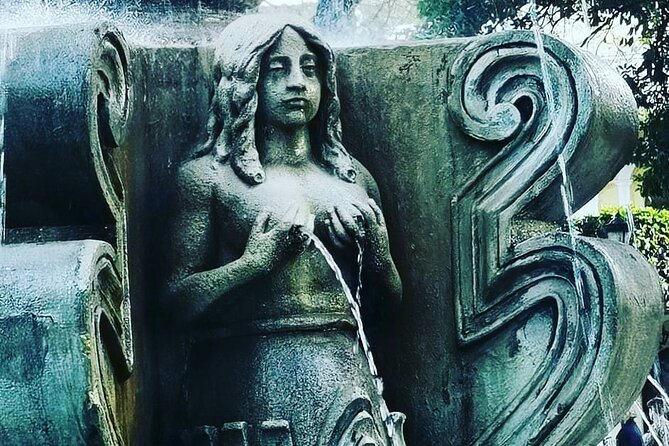
- You walk through Antigua’s greatest hits: The route includes the cathedral, Central Park, San Francisco, La Merced, the Santa Catalina Arch, Tanque de la Union, and former convent sites.
- The guide adds the real value: The buildings are easy to see on your own, but the stories about earthquakes, colonial life, religion, and local culture give them meaning.
- Budget for entrance fees: Cathedral, San Francisco Church, and La Merced are listed at Q20 each, even though most stops have no admission charge.
- The group can be small: The maximum is 15 people, and some departures have been private or nearly private.
- English ability may vary: Several people enjoyed tours in English or Spanish, while one person found the guide’s English limited. Clarify your preferred language in advance.
- Start at La Merced and finish in Central Park: This makes the walk easy to combine with lunch, further sightseeing, or a relaxed afternoon in the center.
Starting at La Merced, Antigua’s baroque calling card
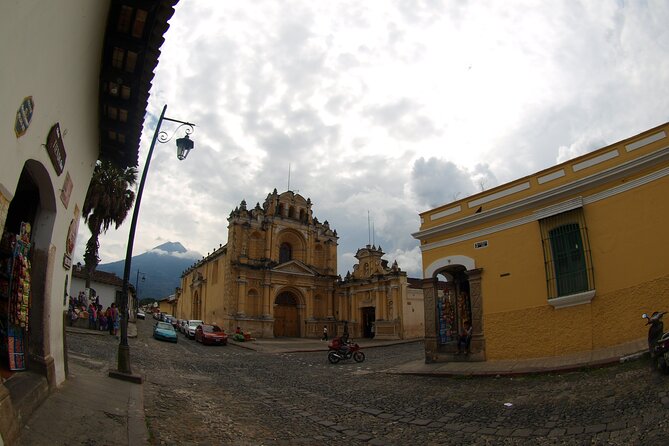
The walk begins at Iglesia de la Merced on 1a Calle Poniente. That is a practical starting point because La Merced is one of Antigua’s most attractive churches, with a warm, ornate baroque style that feels very different from the city’s stripped-down earthquake ruins.
The church is also one of the tour’s longer stops, with about 25 minutes set aside. You may view the facade, hear about its place in Antigua’s religious life, and possibly go inside if the church is open and you pay the Q20 admission listed for this stop.
I would arrive a little early and confirm the meeting point. One person had trouble connecting with the guide after a change in meeting arrangements, so clear communication matters. The confirmation is issued when you book, and the operator is near public transportation, but the actual tour itself is on foot.
More Walking Tours in Antigua Guatemala
- Antigua Cultural Walking Tour
★ 4.5 · 725 reviews - Antigua Guatemala: City Highlights Guided Walking Tour
★ 5.0 · 462 reviews - Antigua Classic Cultural Walking City Tour – the best
★ 4.5 · 227 reviews
Cathedral ruins and the old civic center
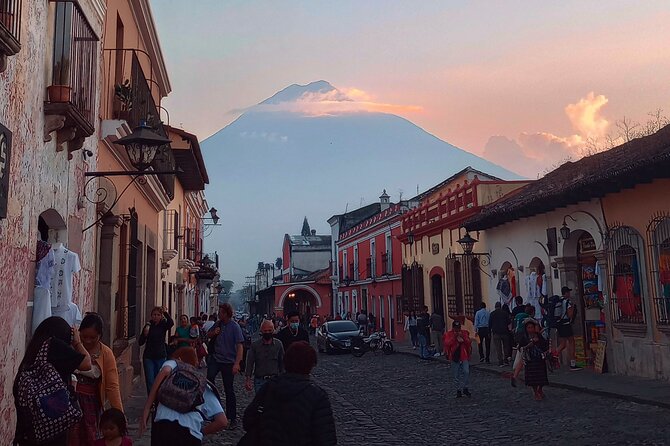
From La Merced, the route moves through the old center toward Catedral de San Jose and the buildings around Parque Central. This is where Antigua begins to make sense as more than a pretty collection of pastel walls.
The cathedral area introduces you to the city’s colonial religious power. The itinerary also points out the Fountain of the Sirens, the Captain General’s Palace, and the old town hall, described as the Very Noble Town Hall. These buildings frame the central plaza and show how religious, military, and civic authority once worked side by side.
The cathedral is a highlight, but you should pay attention to the admission note. A Q20 entrance fee is listed, so ask the guide whether the price covers the interior on your departure. Most of the walking stops are free, yet these separate charges can add up quickly.
The cathedral visit is especially useful if you want context about Antigua’s repeated earthquakes and rebuilding. The city’s old masonry, damaged facades, and partial structures are not random ruins. They reflect a place repeatedly shaped by natural disasters and changing political conditions. Several people found that this historical explanation was the best part of the walk.
San Pedro and the story of Hermano Pedro
The Iglesia Santo Hermano Pedro de San José Betancur introduces a more personal side of Antigua’s religious past. The church is connected with Santo Hermano Pedro, who founded a hospital for poor people during the colonial period.
The stop takes about 15 minutes. That is enough time for a clear explanation and a look at the church, though not a long visit. I like this part because it shifts the focus from grand colonial buildings to care for the poor, an important counterpoint to the palaces and churches surrounding the center.
The tour also includes San Francisco el Grande, where Hermano Pedro is buried. This stop lasts about 20 minutes and includes the church and tomb. You should expect another Q20 charge for San Francisco if you enter.
That extra fee is reasonable if you care about religious history or want to see the tomb, but it changes the value calculation. At $27, the tour is fairly priced for a guided orientation. Add Q20 for the cathedral, Q20 for San Francisco, and Q20 for La Merced, and the day becomes more expensive than the headline price suggests.
Tanque de la Union and Santa Clara’s graceful facade
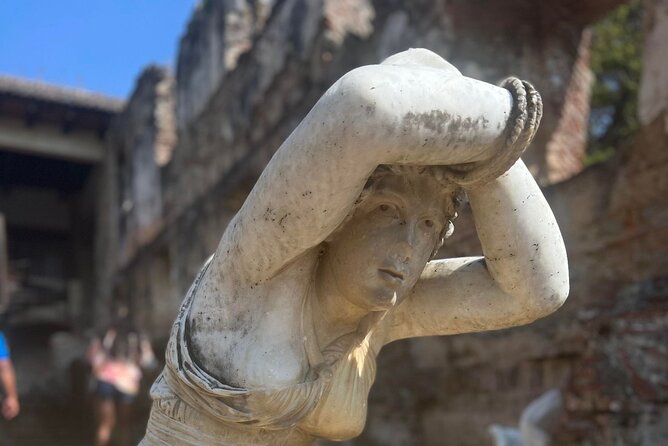
Tanque de la Union is one of Antigua’s most memorable public spaces. The old public washhouse recalls the hundreds of women who came here to do laundry. It is a simple place, but it gives you a glimpse of ordinary daily life, far removed from the formal world of churches and government buildings.
The stop is scheduled for about 15 minutes. You will likely hear how the washhouse functioned and why it remains so well known. I find this kind of stop valuable because it makes colonial history more human. A public laundry tells you about work, water, neighborhood life, and the role of women in a way a grand facade cannot.
Across from the tank is the facade of the Convento Santa Clara. The convent was built with generous donations from local residents, and its position opposite the washhouse makes the pairing visually strong. You can compare a religious institution with a public neighborhood facility in the same small area.
The tour mainly passes the Santa Clara facade rather than promising a long interior visit. That distinction matters. If you want to explore convent courtyards and interiors in detail, you may need to return on your own and pay any applicable admission. One useful feature of this walk is that the guide helps you identify which places deserve a second visit.
More things to do in Antigua Guatemala:
- From Antigua: Adventure, 2-Day Hiking to Acatenango Volcano
★ 4.4 · 1,189 reviews - From Antigua: Pacaya Volcano Tour in English/Spanish
★ 4.5 · 930 reviews - From Antigua: Pacaya Volcano Trek
★ 4.4 · 798 reviews - Antigua, Guatemala: Volcano Acatenango Overnight Hiking
★ 4.6 · 645 reviews
San Francisco and the city’s devotional heart
San Francisco el Grande is one of the more substantial church visits on the route. It remains an important place of devotion to Santo Hermano Pedro, and the tomb gives the stop a clear focus.
The guide may explain how the church connects with Antigua’s religious traditions and with the wider story of Hermano Pedro’s work. Unlike a quick photo stop, this visit has enough time for you to look around and ask questions.
Still, keep your expectations realistic. This is a walking overview, not a specialist architectural tour. The guide’s strength is placing each site in a larger story about Antigua, Guatemala’s culture, and daily life. If you want technical detail about every painting, altar, or construction phase, you may want a separate museum or church visit.
Jade Maya, where stone becomes culture
The Jade Maya museum and showroom adds a different subject to the morning. Here you learn about jade, its value in Maya belief, and its connection with Maya culture. The stop lasts about 25 minutes, making it one of the longer visits on the route.
This is a welcome change after several churches and colonial facades. Antigua’s story is not only Spanish and Catholic. A jade museum gives you a chance to consider Indigenous traditions and the importance of a stone that held spiritual and social meaning for Maya communities.
The museum is also useful for shoppers who want context before looking at jade products. The route description calls it an original jade factory, museum, and showroom, so you should expect a retail element as well as exhibits. You are not required to buy anything, and the tour price does not list a jade purchase as part of the experience.
Some guides have been praised for explaining Indigenous people and local culture clearly. That is worth seeking out. When you meet the guide, tell them if you want more discussion of Maya traditions rather than only church architecture. The walk can be adjusted to your interests when time allows.
Santa Catalina Arch and the final church
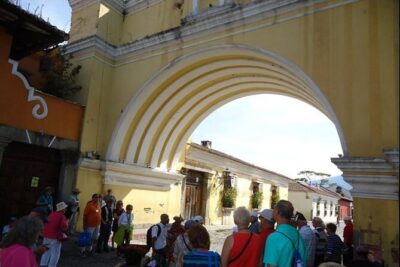
The Arco de Santa Catalina is Antigua’s most photographed landmark, and the tour gives it about 18 minutes. Its unusual structure once allowed nuns from the Convent of Santa Catalina to move between buildings without crossing the street.
The arch is beautiful, but its real appeal comes from understanding why it was built. The guide can turn a familiar photo stop into a small lesson about convent rules, privacy, and the way religious communities occupied the city.
The route then returns to Iglesia de La Merced for the longer church stop described earlier, or may use La Merced as the opening point before moving through the city. The stated meeting point is La Merced and the stated ending point is Parque Central, so confirm the exact order with your guide. The written route includes La Merced as a 25-minute visit, while the walking section also begins there.
You finish at Parque Central, a convenient place to continue exploring. From there, you can revisit a church, look for lunch, or use the guide’s suggestions about restaurants, shopping, currency exchange, and restrooms. Those practical tips have been especially useful for people starting their first day in Antigua.
What the guide adds to a city you can walk alone
Antigua is easy to explore on foot. You can find the arch, churches, fountains, and central plaza without much trouble. The reason to pay for this tour is not navigation alone. It is the explanation between the stops.
The strongest guide feedback centers on historical detail, patience, and flexibility. Gerardo has been praised for answering questions, helping with Spanish practice, adjusting the tour to personal interests, and offering advice for the rest of a Guatemala trip. Corrado was described as helpful and well informed, and Jose has taken people beyond the listed sights.
That does not mean every departure will feel identical. One person found the guide’s English limited and felt the manner was occasionally abrupt. If English is important to you, send a message before booking and confirm that the tour will be conducted at a comfortable level. Several people enjoyed a bilingual Spanish and English format, but language quality can vary by guide.
The tour also seems capable of feeling personal. Some departures have had only one guest, while the maximum group size is 15. A small group gives you more room for questions and photos. A full group may feel less flexible, especially on narrow streets or inside busy churches.
Timing, walking effort, and weather
The duration is listed as approximately 2 hours 30 minutes. Individual timing adds up to a little more than two hours, and one person was told the walk would take about two hours while expecting three. I would plan on roughly two and a half hours, then allow extra time if you ask questions, stop for photos, or enter all three churches.
You need moderate physical fitness. The activity is a walking tour through city streets, with repeated standing and moving between stops. No special athletic ability is indicated, but comfortable shoes are sensible, especially on Antigua’s old streets.
The experience requires good weather. If poor weather cancels the tour, you are offered another date or a full refund. Rain can appear during the day, so a light rain layer is practical even though the operator may help with an umbrella. One guide gave an umbrella to a guest during intermittent rain, but you should not rely on that for every departure.
Service animals are allowed. The tour is near public transportation, though no private transport is included or needed for the route.
Is $27 a fair price?
At $27 per person, I consider this a fair price for a guided introduction to Antigua, especially if you are new to the city or want a clear historical framework before exploring alone. You are paying for the guide’s time, local interpretation, and the convenience of linking many major sights in one route.
The value is strongest when you ask questions and use the guide’s advice afterward. It is weaker if you mainly want to enter every church, shop, or eat along the way. Food, shopping, and a dedicated cultural tasting component are not included.
Plan for up to Q60 in additional church admissions if you enter the cathedral, San Francisco Church, and La Merced. The other listed stops have no admission fee. Ask at the start which interiors are open and which charges apply that day, since the schedule may change.
Free tip-based walks may be available in Antigua, so you should compare what matters to you. A free walk may cover similar streets. This paid option makes more sense if you want a smaller group, a named guide, a planned route, bilingual conversation, and practical help for the rest of your stay.
Who should book this Antigua walk?
I would choose this tour for a first morning in Antigua. It gives you orientation, a useful list of places to revisit, and a basic understanding of how colonial institutions, Catholic devotion, Maya culture, and everyday public life fit together.
It suits solo visitors particularly well because the route is easy to follow and the guide can adapt the conversation. Couples and friends who want history with their sightseeing should also find plenty to enjoy.
I would hesitate if you want a food-focused outing, extensive shopping time, or long interior visits. I would also confirm the guide’s English ability before booking if you are not comfortable with Spanish. Finally, allow some flexibility around the advertised duration and ask about the three Q20 church fees.
Should you book it?
Book this walk if you want a well-paced introduction to Antigua’s history, churches, public spaces, and Maya connections. The guide is the main reason to choose it, and Gerardo in particular has earned strong praise for patience, local advice, and personal attention.
Skip it if you prefer to wander alone, avoid admission fees, or want food and shopping included. For most first-time visitors, though, $27 buys a useful morning, and the route leaves you better prepared to explore Antigua on your own.
FAQ
Where does the Colonial and Cultural Walk begin?
The tour begins at Iglesia de la Merced, at H768+G89 &, 1a Calle Poniente, Antigua Guatemala.
Where does the tour end?
The stated ending point is Parque Central de Antigua Guatemala, at H748+QG4, 4 Avenida Norte.
How long does the tour last?
The tour lasts approximately 2 hours and 30 minutes. Timing may vary depending on questions, photos, and church visits.
How much does the tour cost?
The listed price is $27 per person.
What is included in the price?
A tourist guide is included.
Are church entrance fees included?
No. The listed additional fees are Q20 for San Francisco Church, Q20 for the Cathedral, and Q20 for La Merced.
How many people can join the tour?
The maximum group size is 15 people.
Is the tour conducted in English?
English and Spanish have both been used on departures. Since guide language ability can vary, confirm your preferred language before the tour.
Is the tour suitable for someone with limited fitness?
The experience requires a moderate level of physical fitness because it is a walking tour through Antigua.
What happens if the weather is poor?
If bad weather causes cancellation, you are offered a different date or a full refund.
Can I cancel for a full refund?
Yes. You can cancel up to 24 hours before the experience start time for a full refund. Changes or cancellations made less than 24 hours before the start time are not accepted for a refund.
Just added in Antigua Guatemala
- Full day Antigua Guatemala from Quetzal Port★ 4.5 · 7 reviews
- Private transfer from Panajachel to Antigua Guatemala★ 5.0 · 2 reviews
- Guatemala Airport Roundtrip Transfer to Antigua Guatemala★ 3.5 · 5 reviews
- Colonial Antigua Guatemala walking tour & Hot Springs from Guatemala City★ 3.0 · 2 reviews
- Antigua Guatemala Full Day Tour★ 3.0 · 2 reviews
- Visit Antigua Guatemala and its colorful towns around – Private full-day tour★ 4.5 · 4 reviews
- Airport Transfer to Antigua Guatemala★ 3.0 · 2 reviews
- Iximché : Spiritual Ritual with a Mayan Priest★ 5.0 · 1 review
Walking Tours, compared.
Antigua Classic Cultural Walking City Tour – the best
Read our review →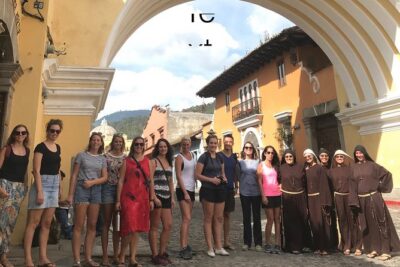
Walking Tour of the Wonders of La Antigua Guatemala
Read our review →
Browse the lists this tour appears in